




Air grouses on interfaith commission at upcoming meet: Rev Lim
Those involved in interfaith efforts should use a feedback forum next week to openly voice out any dissatisfaction or concerns over a proposed interfaith commission, said a participant today.
Those involved in interfaith efforts should use a feedback forum next week to openly voice out any dissatisfaction or concerns over a proposed interfaith commission, said a participant today.
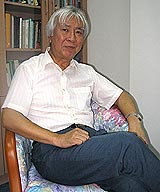 Catholic Research Centre director Rev Fr OC Lim (pic left) said instead of shunning the initiative, all those concerned should participate with an open mind and speak out on issues that bothers them most.
"This feedback forum and interfaith initiative should not be pre-empted by suspicions and fears," said the outspoken priest from the St Francis Xavier parish in Petaling Jaya when contacted.
He said a statutory form of an interfaith body is better as it would be "a platform to raise interfaith issues".
"But we must also acknowledge the fact that there will always be tension among representatives of the different faiths, as is everywhere in the world."
Lim said he has yet to read the draft proposal on the commission but felt that a statutory mechanism "would have more clout".
"I understand that moderate Muslims are present on the steering committee which prepared the draft, which would be representative of the Muslim community to a certain extent.
"At least this commission (would be) an improvement from the (Malaysian Consultative Council of Buddhism, Christianity, Hinduism and Sikhism) which has no Muslim partner," he added.
Coordinated by the Bar Council human rights sub-committee and led by a steering committee of about 40 groups and individuals from the different faiths in Malaysia, the initiative continues to be rejected by some Muslim groups.
Representatives from minority groups
Echoing Lim's views, steering committee chairperson Malik Imtiaz Sarwar said the participants would be the ones to decide what form and feature the proposed body would eventually take.
"There are ideas to follow this up with advocacy efforts and dissemination of related information. So, it really depends on what the conference wants at the end of the day," he said when contacted.
On representation, he said the initiative is being publicised and more minority groups are being approached to participate.
"There will be representatives present from the minority communities including the Orang Asal, Orang Asli, Baha'i, I-Kuan-Tao as well as various Christian and Hindu denominations."
Citing protest arguments by the Research and Information Center of Islam (Ricoi) and the Allied Coordinating Committee of Islamic NGOs (Accin), he said these were not representative of all Muslims.
"But they appear to be speaking for all. Then there are those who are silent on the matter, but this does not mean they are opposed to the initiative. They only need some persuasion to see the true objective of interfaith efforts."
Malik said these groups should participate at the national dialogue so that people can listen and decide for themselves based on the arguments made.
"A dialogue or discussion is to achieve a clearer understanding on both sides of the fence, which is what the conference is all about.
"We should not carry on perpetuating the divide between Muslims and non-Muslims, something this initiative is meant to bridge," he said, acknowledging that trust may be an issue.
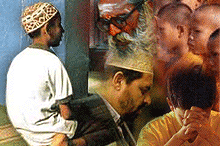 "Faith and conscience are the closest things to a person's heart, which is why it is important to express what we really feel when ventilating our grievances openly," he added.
Whatever topic the opponents want left out of the realms of discussion, he added, should be made known to the audience at the conference.
He reiterated that in its present form, the proposed commission was a civil society initiative.
"It is not yet a statutory body, so why can't this (feedback) forum be used for the purpose of a dialogue? If parties are really open about dialogue, then they should attend it," he said.
Different option
"In fact, the conference would be enriched by their arguments but by withholding participation, I believe that they are depriving the public of valuable viewpoints," he added.
Malik said the steering committee's suggestion was only one such proposal and that there may be more ideas.
"The conference may not even endorse the proposal in its statutory form but it is better to consider a different option, given the current options which are either confrontational, ineffective or inconclusive," he added.
The human rights advocate also stressed on the importance of drawing a distinction between views expressed by religious organisations and those of the steering committee or related to the initiative.
He felt that by taking an absolute stance and rejecting the initiative, opposing parties were effectively rejecting the validity of real interfaith issues in the daily life of all Malaysians.


Are you sure you want to delete this comment?
This action cannot be undone.