


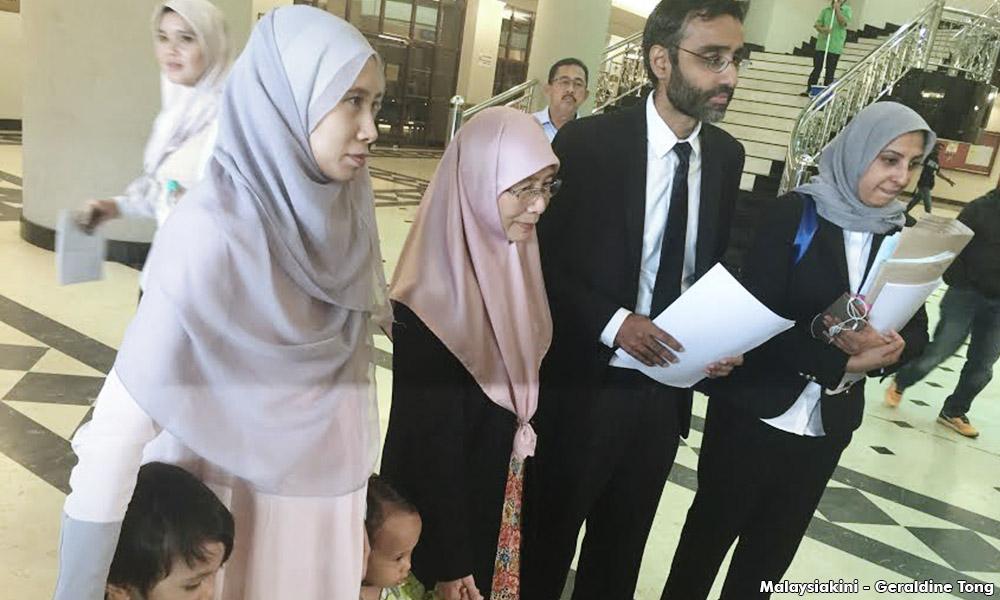

Anwar's family files judicial review for physical contact in prison visits
The family of jailed former opposition leader Anwar Ibrahim has filed an application for judicial review to allow physical contact between the family and him during prison visits.
They have named Home Minister Ahmad Zahid Hamidi and two others as the respondents.
The family of jailed former opposition leader Anwar Ibrahim has filed an application for judicial review to allow physical contact between the family and him during prison visits.
They have named Home Minister Ahmad Zahid Hamidi and two others as the respondents.
Ten applicants were named – Anwar himself, his wife and PKR president Dr Wan Azizah Wan Ismail, their four daughters including PKR vice-president Nurul Izzah Anwar as well as four of their oldest grandchildren.
"We came to file this (judicial review) today because, during the last Hari Raya, we were not even allowed to bersalaman (shake hands)," Wan Azizah told reporters at the lobby of the Kuala Lumpur courthouse today.
"This is one way for us to hopefully get contact visit when we go for prison visits," she added.
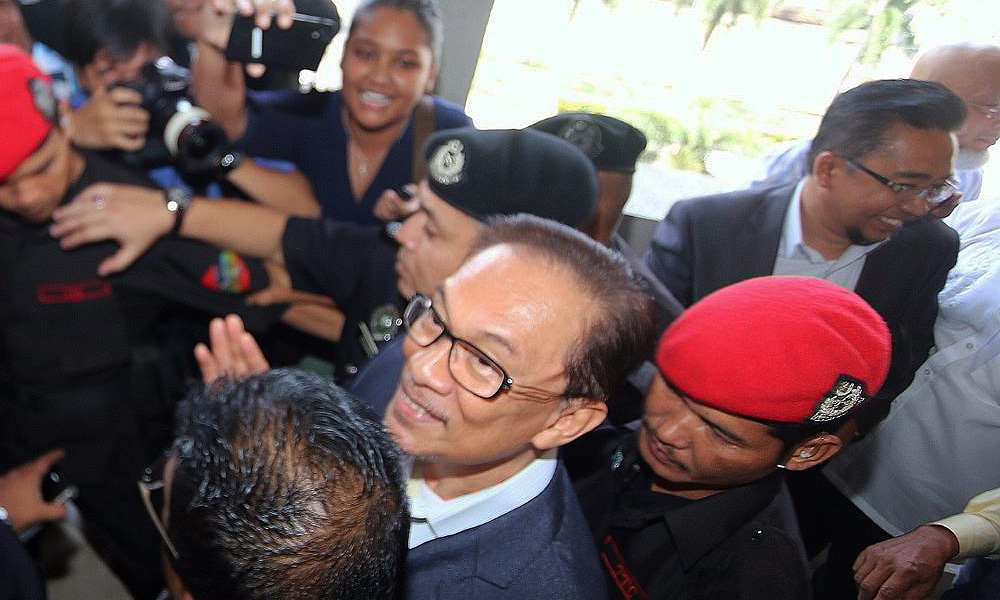 She said that it has been traumatic for their grandchildren to not be able to have physical contact with their grandfather.
"Most of the time, we have to coax them to talk because they see grandfather but they cannot (understand the glass window in between)," she explained.
"Which is different from when they see him in court," one of the daughters, Nurul Nuha Anwar, added.
Wan Azizah also revealed that now only the immediate family is allowed to visit Anwar in prison once every three weeks, and for 40 minutes only.
'Our conversations are recorded'
During the visits, she said, there is a glass window separating them and the family is given one intercom phone to speak with Anwar, and their conversations are recorded.
While the glass window and phone is standard operating procedure for the prison, the family's counsel Latheefa Koya said there is nothing in the Prisons Act that actually states things must be done this way.
"It (the procedure) applies to all prisoners. That is why this application is so important because the outcome of this would have a wide impact on all prisoners to be able to touch their family during imprisonment when they are being visited.
"This is not just for Anwar, but he happens to be our client and this is his instruction, along with his family.
"If you deprive a prisoner or his family, you are actually punishing both sides," Latheefa said.
Fellow counsel N Surendran added that someone who is imprisoned is still entitled to all their basic rights, except their right of movement.


Are you sure you want to delete this comment?
This action cannot be undone.