




Tsunami alert within 15 minutes, says minister
Malaysians can expect to be informed within 15 minutes in the event another tsunami occurs, said Science, Technology and Innovation Minister Jamaluddin Mohd Jarjis.
Malaysians can expect to be informed within 15 minutes in the event another tsunami occurs, said Science, Technology and Innovation Minister Jamaluddin Mohd Jarjis.
 "Information will be channelled directly by radio and television, through websites and direct line in 15 minutes or less," he told reporters at the Parliament lobby today.
He said it is important that the public is informed within the shortest possible time once the meteorological department verifies the information, so that the impact is minimised.
While information can be sent out via television, radio and mobile phones in urban areas, other methods are required for rural areas - such as the use of public address systems of mosques.
The ministry is also in discussions with the information ministry to ensure that alerts are sent out quickly and accurately, particularly after midnight.
Other agencies such as the Malaysian Communications and Multimedia Commission and Internet service provider Jaring, will assist the government as well.
Malaysians living in the north-west of the country were caught by surprise by the Dec 26 tsunami. And at 12.09am last Tuesday, residents of many high-rise buildings dashed out after they felt tremors from an earthquake off Sumatra.
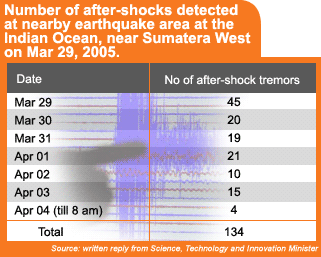 Statistics released by the ministry today revealed that 134 after-shock tremors had been detected in affected areas since then. (
See table
)
Statistics released by the ministry today revealed that 134 after-shock tremors had been detected in affected areas since then. (
See table
)
Educating the public
Jamaluddin also cited a need for physical preparations such as the proposal Management and Assistance Natural Disaster Committee, to be set up under the Prime Minister's Department.
"The public must be educated to realise the dangers and how to react," he said.
Education strategies will include seminars, forums, and training and awareness programmes, and a website on tsunamis.
The government has allocated RM19 million for the tsunami national early warning system, expected to be operational by year's end. It will communicate directly with the Pacific Tsunami Warning Centre and Regional Indian Ocean Tsunami Early Warning Centre, and co-ordinate with the Inter-governmental Oceanography Commission.
It will be able to detect tremors which could create a tsunami, using seismograph units, a wave detector and Deep Analysis Reporting for Tsunami tool.


