




Former squatters seek Suhakams help to obtain land
Representatives of 72 families have asked the Human Rights Commission of Malaysia (Suhakam) to intervene in their 14-year plight to secure land to build houses, after being evicted from squattter houses along the Sungai Buloh railway line.
Representatives of 72 families have asked the Human Rights Commission of Malaysia (Suhakam) to intervene in their 14-year plight to secure land to build houses, after being evicted from squattter houses along the Sungai Buloh railway line.
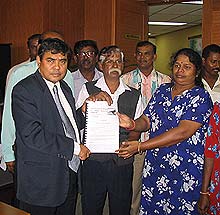 About 12 of them handed a memorandum to commissioners N Siva Subramaniam and Hamdan Adnan today, detailing their plight and the failure of the Selangor government to keep to its word since 1992.
The families, who are now living in longhouses (transit housing) in Rawang, also asked Suhakam to keep them informed of any progress made.
"We urge Suhakam to investigate our claims within two weeks and arrange a meeting with the menteri besar, Gombak district officer and Selangor Economic Development Corporation," said their leader S Muniandy.
"We want a guarantee from Suhakam that our rights will not be infringed upon (any longer) and that these will be protected."
The commissioners told the group that they would do what they could.
The families were among 229 households evicted on Jan 7, 1992 by the railway authority KTM Bhd, which wanted the land for the 'double tracking' project.
'Too small'
On April 3, the group lodged a police report against Selangor Menteri Besar Dr Mohd Khir Toyo after he decided that the families would not be allocated land, as promised, but that they would have to buy low-cost houses at RM28,000 each.
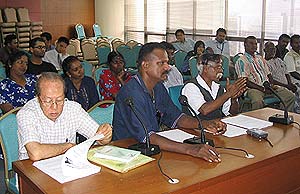 They have five months to take up the houses or default on the offer, but Muniandy said they were reluctant to buy the units because these are "too small" at 650 sq ft.
Initially, the Gombak land office had offered each family a plot of land measuring 40 x 60 ft in Matang Pagar, Rawang.
Although the area was to have been cleared and levelled within six months, this did not happen. Instead, the Gombak authorities told the families in a written response dated July 24, 1995, to "be patient".
In 1996, the Selangor government announced that the site would be used for a housing project.
Two years later, the affected families were given a choice of either buying units at RM17,000 or waiting for plots of land.
The 72 families opted for the latter, but the promise has yet to materialise. They then filed a legal suit against the state on March 30, 2000.
After several postponements, the case is scheduled to be heard at the end of the year in the Shah Alam High Court. In the interim, they have obtained an injunction to stop work on the land.


Are you sure you want to delete this comment?
This action cannot be undone.