
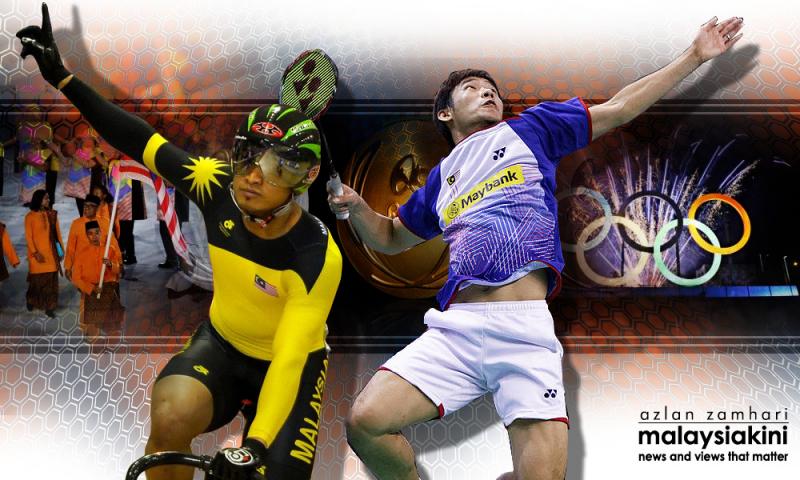
Olympic athletes - made in Malaysia or overseas product?
COMMENT Why do athletes need to train overseas? Do we really need to spend millions in government money to produce world-class athletes? Is Malaysia really lacking basic training facilities?
There are several reasons why sending our athletes overseas for training and competition is currently necessary for a majority of sports, with the exception of badminton. Even our diving team is based out of China for significant portions of the year.
To produce a world beater, you need to surround them all year-long with a competent support team as well as competitions that will push them to new heights
COMMENT Why do athletes need to train overseas? Do we really need to spend millions in government money to produce world-class athletes? Is Malaysia really lacking basic training facilities?
There are several reasons why sending our athletes overseas for training and competition is currently necessary for a majority of sports, with the exception of badminton. Even our diving team is based out of China for significant portions of the year.
To produce a world beater, you need to surround them all year-long with a competent support team as well as competitions that will push them to new heights.
When I choose to relocate our elite national training base 10 years ago, I choose Australia based primarily on four reasons:
1. Talent. World-class coach, strength and conditioning trainers, sports psychologists, sports scientists.
2. Competition and competitors. Australia has a wealth of competitors and world-class competitions regularly held throughout the year. It is one of the four leading nations in track cycling. The other three are Great Britain, France and Germany.
3. Close proximity to Malaysia. Seven to eight hours direct flight.
4. Sporting venues: According to Wikipedia, Australia has 59 velodromes. The state of Victoria has 21 velodromes. Melbourne is the only city in the world with two world-class indoor velodromes. In comparison, Malaysia has two velodromes. One of them has not been in use for the past few years and the other is outdoor and training is subject to weather conditions.
Do a survey of every athlete from the two blue-ribbon events - athletics and swimming - and you would find a very large number are based in the United States. Why? Because that is where the ecosystem for those two sports are. Athletes can also get scholarships no matter what passport they are holding.
Our own Azizulhasni Awang currently studies full time at Victoria University in Melbourne. The administrators at that university are fully supportive and work with his training and competition schedule so he can balance the two.
Overseas training not cheap
Basing athletes’ overseas year-round is not cheap. Our government can expect to pay US$100,000 per year or more per athlete for accommodation, food, training costs, and expert consultants. Only world-class athletes who perform consistently well are given the opportunity to justify that level of expenditure. Up-and-coming athletes are given opportunities in shorter stints of one to three months at a time. In comparison, the cost of supporting an athlete based locally would be 20-30 percent.
Could we base our elite national team here and still get the same results? In track cycling in the past 10 years, I would have to say no. Firstly, there are currently no indoor wood 250m tracks in Malaysia or even in South-East Asia. The closest certified world-class indoor facility is in Perth, a four-hour flight from KL. It is absolutely crucial for athletes to train at facilities similar to what they compete on.
What if we build a 250m world-class indoor track in Malaysia? Could we then base our elite programme locally and achieve results equal to or better than we have with our overseas programmes? It would be a lot more viable.
But you still need to have world-class staff and regular competitions. We are currently giving local staff international exposure and opportunities to upgrade themselves. I have seen that paying dividends. In Rio, a number of our core staff were Malaysian. They did an excellent job with our team’s preparation and should be given a lot of credit with our bronze medal success.
Even with our local coaches, a number of them who were my former teammates are turning out to be excellent coaches. They are responsible for the development of numerous up-and-coming talent. I believe in the next five years, we will be well equipped to have sporting talent 100 percent born and bred in Malaysia.
Malaysia Boleh!
JOSIAH NG is Malaysia's pioneer Olympic track cyclist, having participated at the Athens 2004, Beijing 2008 and London 2012 and also a Commonwealth Gold Medallist 2010. Three-time Olympian and Commonwealth Gold Medalist in Track Cycling for Malaysia. Retired and currently based in Melbourne, Australia.


Are you sure you want to delete this comment?
This action cannot be undone.