


Fear hardliners more than Shiites, activist tells Malaysian gov’t
A senior Indonesian journalist has called on the Malaysian government to be more fearful of influence from the hardline Islamist groups, rather than adopting an anti-Shiite stand.
Mohamad Taufik Al-Jufry, who is of Arab descent, claimed that such influence could come from adherents of the Wahhabi school of thought.
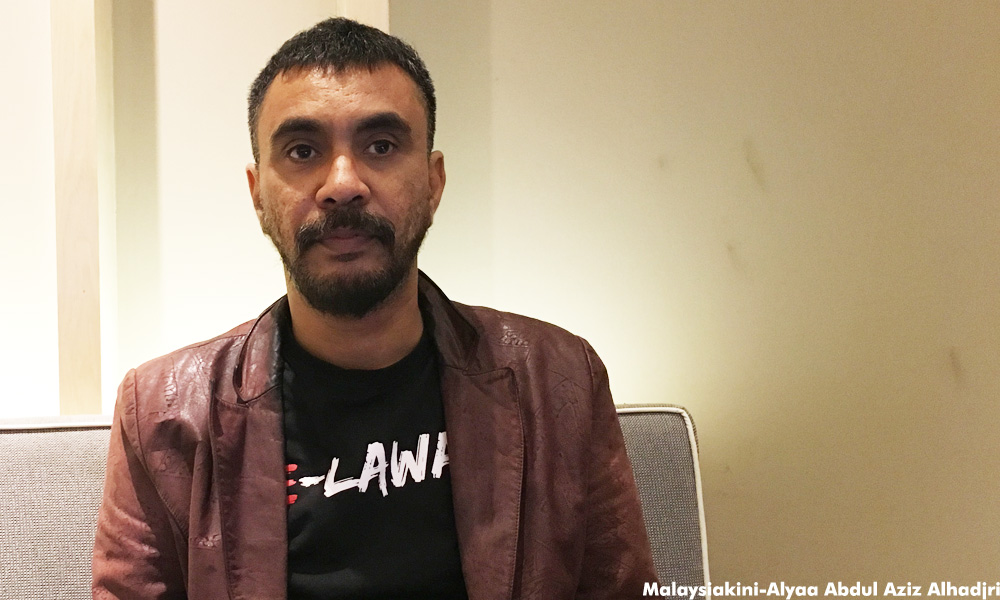
“In actual fact, the Malaysian government should not be afraid of Shiites,” Taufik said in an interview with Malaysiakini in Shah Alam.
A senior Indonesian journalist has called on the Malaysian government to be more fearful of influence from the hardline Islamist groups, rather than adopting an anti-Shiite stand.
Mohamad Taufik Al-Jufry, who is of Arab descent, claimed that such influence could come from adherents of the Wahhabi school of thought.
“In actual fact, the Malaysian government should not be afraid of Shiites.
“The ones who should be feared are those who preach a hardline stance like the Wahhabis,” Taufik said in an interview with Malaysiakini in Shah Alam.
Taufik said this when asked for comment on the Malaysian government’s warm welcome for prominent Indonesian figures of Arabic descent, who were invited to lead mass sessions singing praises to the Prophet Muhammad SAW.
Such events, promoted as ‘Malam Selawat Perdana’ or ‘Malam Cinta Rasul’, have been attended by Prime Minister Najib Abdul Razak, Deputy Prime Minister Ahmad Zahid Hamidi and other top Umno leaders, along with thousands of Malaysians.
'No such practice in time of the Prophet'
Critics of such events have argued that there was no such practice during the time of Prophet Muhammad SAW, and these should therefore be rejected.
In Indonesia, the figures, who are commonly referred to as ‘Habib’ or the ‘beloved one’ in Arabic, have been linked to attempts at spreading the Shiite ideology.
 “The Habib are not necessarily Shiites and Shiites are not necessarily Habib,” Taufik said in response to such claims.
But at the same time, he also claimed that Shiite teachings had preceded the arrival of Sunni Islam in Indonesia and that it was brought by a Habib.
“Culturally, the Malays are (like) Shiites. For example, the practice of singing praises to Prophet Muhammad SAW and putting up tombstones on our graves.
“Those are traditions of the Shiites,” he further claimed, in reference to the Islam as it was practiced in the early days of the Malay archipelago, comprising Indonesia and Malaysia.
He said this while stressing that the figures who had led the sessions in Malaysia were not the ones advocating a hardline stance.
“The Arabs who preach Wahhabi, many (in Indonesia) rejected them including the Habib...,” he claimed.
“However, the ones who bring peace, like Habib Sheikh, are revered and much beloved... they invite people to recite zikir (rhythmic repetition of God’s name), not preach intolerance,” he said in reference to Habib Syech Abdul Qodir Assegaf, who have made numerous appearances in Malaysia since 2013.
Abdul Qodir is most known in Malaysia for his song titled ‘Ya Hanana’ (How Blessed We Are) - which extols virtues of Prophet Muhammad SAW.
‘Malays should retain their own identity’
Commenting further on what has been described as an Arabisation of the Malays, Taufik said: “This is dangerous... Islam is not Arabic. Malays should retain their own identity.
“Islam in Malaysia is (culturally) different from Islam in Arabia... In Indonesia, we can see there is more resistance against Arabisation,” he said.
Taufik was, once again, quick to add that the rejection in Indonesia is only towards the Arabs, whom he accused of spreading Wahhabism, rather than the concept of Islam as being a blessing to all mankind.
“Arabisation in this case is Wahhabi, where we could see it leading towards a hardline stance... the feeling that they are the only righteous ones. That is what must be rejected.
“It is not about (rejecting) Arabs but Wahhabi...,” he claimed.
The Malaysian National Fatwa Council has, since 1996, gazetted a fatwa that declares the Shiite ideology as deviant.
The Malaysian government and top Umno leaders have also largely adopted an anti-Shiite stand, cracking down on organisations and publications deemed to be spreading the ideology.
However, as argued by Taufik, there appears to be a recent development in Malaysia, which is seeing Islam in in the country being being practised in very conservative and extreme ways.
This, some claimed, may be why the ideology of hardline Islam, as preached by the terror groups such as the IS, seems to have taken root in the country.


Are you sure you want to delete this comment?
This action cannot be undone.