


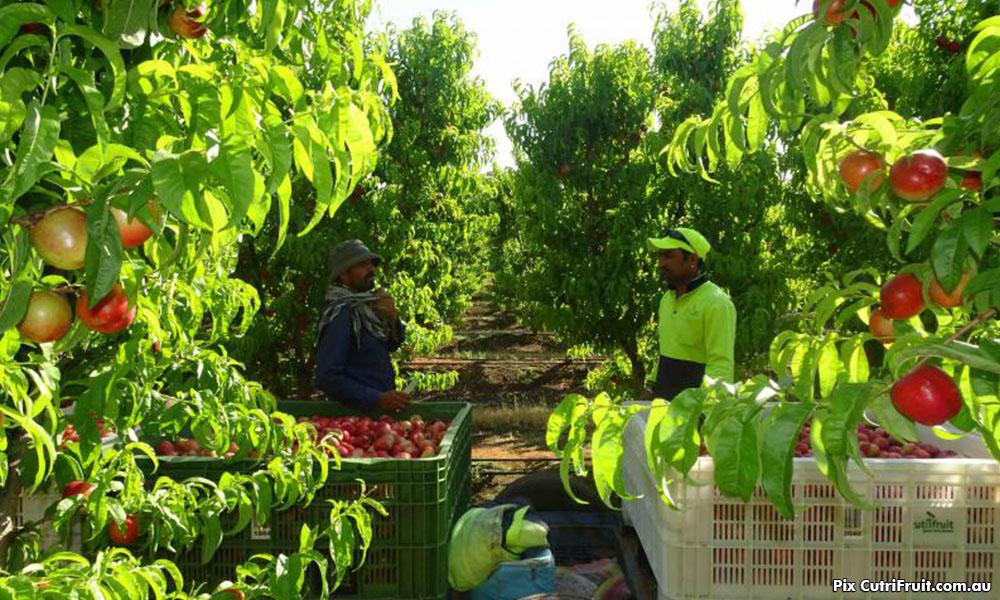

Illegal M'sian workers, exploited and indebted, stranded in Australia
A number of Malaysians are stuck working illegally in fruit orchards in Australia, earning well below the minimum wage, as they are exploited by and indebted to their employers.
"These people - misled, indebted and exploited - are picking some of the fruit that you and your family will buy from (retailers) Coles, Woolworths and Costco and eat this summer," reported The Canberra Times in a detailed expose on what it described as "black market labour".
A person, referred to as Jimmy, a worker turned illegal labour-hire syndicate middleman, said some of the notorious exploiters of illegal workers paid their workers so little that after rent and expenses, they are left in debt.
"Some of them owe money, some are negative," Jimmy said.
A Malaysian man working illegally on a farm spoke to The Canberra Times and said that he could not leave because his employer, called Lee the Afghan, is withholding his pay...
A number of Malaysians are stuck working illegally in fruit orchards in Australia, earning well below the minimum wage, as they are exploited by and indebted to their employers.
"These people - misled, indebted and exploited - are picking some of the fruit that you and your family will buy from (retailers) Coles, Woolworths and Costco and eat this summer," reported The Canberra Times in a detailed expose on what it described as "black market labour".
A person, referred to as Jimmy, a worker turned illegal labour-hire syndicate middleman, said some of the notorious exploiters of illegal workers paid their workers so little that after rent and expenses, they are left in debt.
"Some of them owe money, some are negative," Jimmy said.
A Malaysian man working illegally on a farm spoke to The Canberra Times and said that he could not leave because his employer, called Lee the Afghan, is withholding his pay.
According to him, he earns just A$80 (RM260) a day, minus a 13 percent commission pocketed by his employer as well as an A$10-per-day rent.
Jimmy insisted that he looks after his workers, paying them wages of at least A$13 per hour, from which he deducts rent and travel fees.
The casual salary rate in Australia is A$22 per hour.
Jimmy also said that he provides about two dozen illegal Malaysian labourers to local farmers in the area, and that the wages of these workers depend on various factors.
They include the integrity of the middleman, the deal the middleman has struck with the farmer and the availability of work and the desperation of the worker.
Workers stay in a run-down house
For Jimmy, he houses his workers in a run-down house rented from a local farmer, where two to three workers sleep on thin matrresses on the floor in each of the four rooms.
This is better than the alternatives, said Jimmy who is proud of his housing arrangements for his workers.
The alternatives, he said, include clusters of caravans in empty lots or dilapidated farm houses in the region.
The Malaysian man, who could not leave due to his wages being withheld, said that up to 25 workers employed by Lee live in a run-down house on a dirt road between two orchards, where they sleep on mattresses on the floor.
"It is very difficult to cook and to shower. It is very difficult to live there," he said.
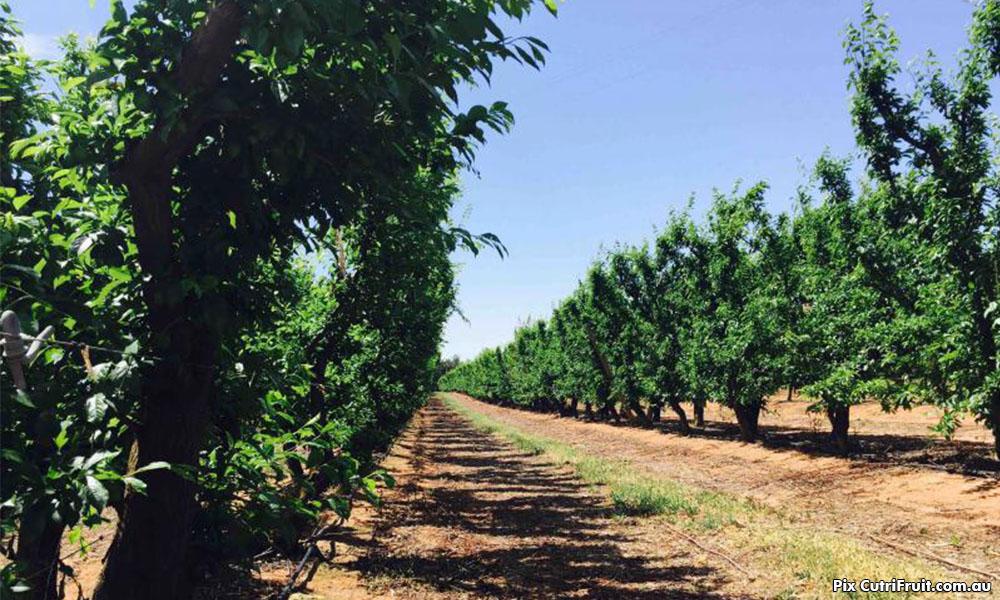 Another Malaysian illegal labourer, named Mohammad, said in a previous job on a farm, he earned as little as A$20 a day.
In his current job with a more honest contractor, he now earns around A$13 an hour.
The Canberra Times got a foothold into this "underworld of illegal workers and human exploitation in Australia's horticulture sector" with the help of one Mohammad Rowi.
Rowi first became interested in going to Australia to work, after he saw an advertisement for a well-paid job posted on the wall of a store in Jeli, Kelantan.
He had just lost his job as a surveyor and, desperate to support his family, he called the number on the advertisement.
He met a Malaysian fixer, draped in gold jewellery, who showed Rowi his personal bank statement to show what he could earn on a farm in Australia.
Rowi was then "guaranteed" work on a farm in Australia, in return for a fee of A$1,500.
"These funds financed an expensive lie. As an illegal worker, he would have no rights, and risked deportation if he dared to complain to a boss, who would also be breaching the law by employing him," The Canberra Times reported.
The 'fixer' never showed up
When Rowi arrived in Australia, his 'fixer' never showed up and Rowi eventually found a job with a Vietnamese labour hire contractor known as Cindy.
He worked on a grape farm seven days a week, sometimes from 6.30am to 9pm, earning about A$80 a day.
The Canberra Times said this wage is as little as a quarter of what is required under Australian law.
Rowi later found a better-paying contractor and new farms to work on, which allowed him to earn a fluctuating daily wage of between A$50 and A$110 a day, minus the cost of rent and transport.
Though this was still well below the legal award wage, Rowi started being able to save a small amount of money.
After eight months of this work, Rowi was driving other illegal workers to a farm when he met an accident and the vehicle's tyre blew out.
He was charged by the local police for dangerous driving, and because he had no visa, he was remanded in prison.
Rowi stayed in prison for 258 days as his case was dragged through courts, and repeatedly adjourned due to a lack of translators.
Eventually, in late June, the Malaysian consulate-general in Melbourne got him a pro bono lawyer, Vicknaraj Thanarajah.
Rowi pleaded guilty to a single charge in October, was released and ordered to leave Australia within six days.
He will return home, having saved nothing after expenses, to his wife and two daughters, the second a baby girl he has never met as he left Malaysia before she was born.
Meanwhile, Thanarajah decided to enlist the help of a journalist to expose the exploitations of illegal labour in Australia.
'This is modern-day slavery'
"I thought to myself, this guy can expose what is happening to thousands of Malaysian workers.
"This is modern-day slavery," Thanarajah is quoted as saying.
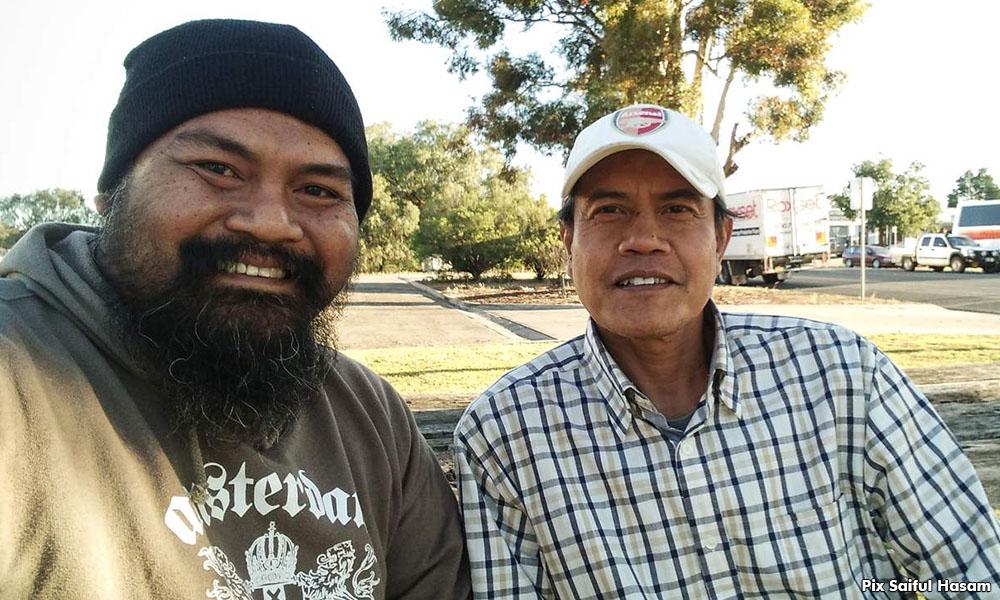 Utusan Malaysia undercover reporter Saiful Hasam (on left in photo) travelled to Australia and slipped into the opening that Rowi created as an illegal worker.
Saiful was taken to a farm that houses 12 illegal workers, with a number of others having left over a wage dispute. There, he sleeps on a mattress on the floor.
"There are so many stories about the hardships here.
"(They chase the) Australian dream, but they end up being ripped off. But they have no choice," he told The Canberra Times.
The farm that Saiful is working on belongs to a company controlled by a leading Australian stone fruit supplier, Cutri Fruit.
To test whether they are aware that their fruits are sourced from places exploiting illegal workers, Saiful, still disguised as an illegal worker, met with Cutri Fruit's research, development and innovations manager Marc Intervera.
Saiful's cover story is that he wants to work directly with Cutri Fruit to boost his wages.
After confirming that Saiful is working on Cutri’s orchards, Intervera asked him whether he is an illegal worker.
Saiful confirmed that he is working illegally and Intervera immediately declined hiring him.
"You have to work through Lee, anyway. You are not legal. I can't employ you direct, you don't have the paper.
"That is why we use the contractor because, I don't know, they dodgy it up.
"But we can't, I can't do it direct. But I can have a chat to Lee though," Intervera is heard as saying in the conversation secretly recorded by Saiful.
The Canberra Times reported that Cutri Fruit had said in a statement that it would "never knowingly exploit illegal workers" and it required its labour hire contractors to commit in writing that they would act lawfully.
It has sacked two contractors, including one last month, and demanded that its existing contractors prove they operate with integrity.
Meanwhile, Saiful left the farm, having earned a net wage of A$100 for over 24 hours of work over four days.
It should have been A$110, but Saiful was short-changed A$10. And, after paying off the rent to the syndicate, he is left with just A$30.
"I feel so sad for those I left behind. There are a thousand stories here, there are a thousand sad stories," Saiful said.


Are you sure you want to delete this comment?
This action cannot be undone.