


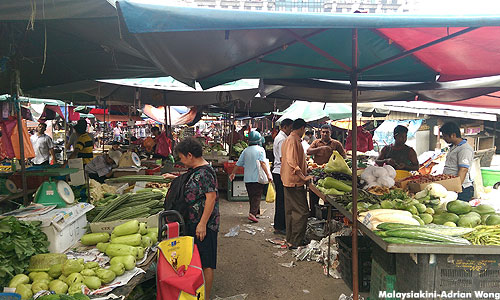

Myanmar labour halt no issue for wet market traders
Myanmar’s decision to stop sending labour to Malaysia will not affect the wet markets that rely heavily on workers from the country, traders said.
This is because most traders hire undocumented workers or refugees, traders at Pasar Borong Kuala Lumpur, where most of the workers are from Myanmar, told Malaysiakini.
This contrasts with manufacturers, who said that 71 percent of workers in factories were documented Myanmar workers.
Myanmar’s decision to stop sending labour to Malaysia will not affect the wet markets that rely heavily on workers from the country, traders said.
This is because most traders hire undocumented workers or refugees, traders at Pasar Borong Kuala Lumpur, where most of the workers are from Myanmar, told Malaysiakini.
This contrasts with manufacturers, who said that 71 percent of workers in factories were documented Myanmar workers.
“Some of our workers have refugee certifications and some don’t,” said a trader at Pasar Borong Kuala Lumpur who only wanted to be identified as Yap.
He was referring to the identification cards issued by UN refugee agency UNHCR.
According to UNHCR, there are 135,475 Myanmar refugees in Malaysia, of which about 55,000 are Rohingyas.
“A lot of them are ‘underground’ immigrants. They come here illegally,” Yap said.
Another vegetable seller, Choi, said he only employed workers who had UNHCR cards as he said they would not be arrested in Immigration Department raids, despite not having work permits.
“We don’t employ those without refugee certifications because the government comes to check once in a while.
“We don’t employ illegal workers because we will also be guilty if they are caught,” Choi said.
The wet market traders alleged they would need to pay bribes to secure work permits for their workers, but would not say who they paid the fees to.
“They say they want RM1,500 but you will have to pay RM5,000.
“If they don’t get to ‘eat’ your money, you won’t be able to get the licence,” said Yap.
The Federation of Malaysian Manufacturers has called the labour halt "unfair and disruptive" to businesses as employers had already incurred recruitment costs, including medical, insurance, levy advance and travel expenses.
Malaysian Employers Federation executive director Shamsuddin Bardan said there were 141,858 Myanmar workers in Malaysia, with 71 percent of them working in the manufacturing industry and the others in construction (11 percent), services (10.5 percent) and agriculture (four percent) sectors.
Myanmar stopped sending workers to Malaysia since Dec 6, after announcing it would lodge an official complaint to Malaysia over Prime Minister Najib Abdul Razak's participation in a pro-Rohingya rally in Kuala Lumpur on Dec 4.
The Myanmar government denied reports on Rohingya mass killings and military-perpetrated violence, and blamed local militants instead.


Are you sure you want to delete this comment?
This action cannot be undone.