


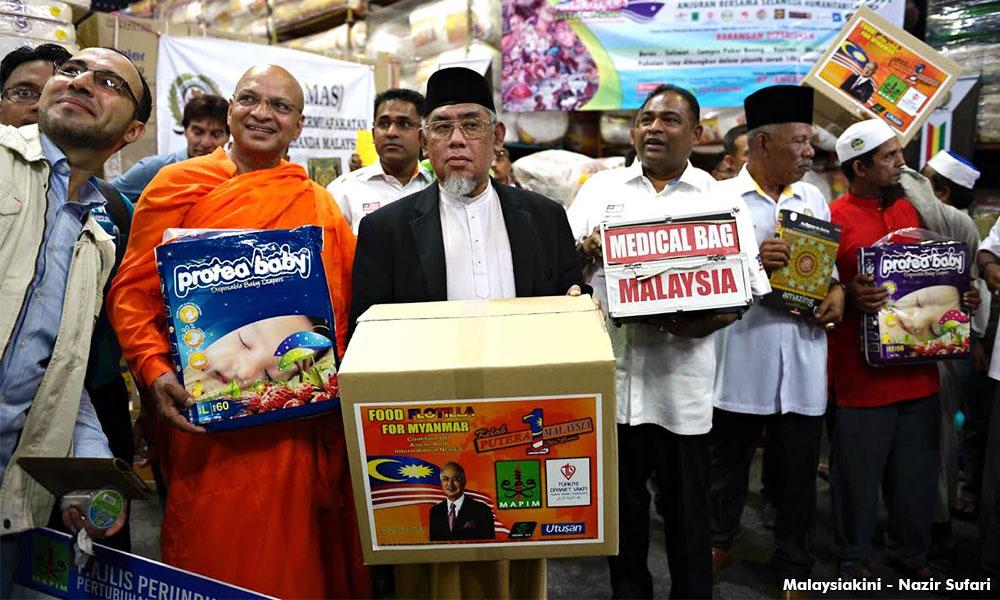

Food Flotilla mission for Myanmar postponed to Jan 31
The Food Flotilla mission for Myanmar organised by Kelab Putra 1 Malaysia and Majlis Perundingan Pertubuhan Islam Malaysia (MAPIM), in collaboration with foreign NGOs from Turkey, Holland, UK and Bangladesh, is to be delayed until Jan 31 as there had yet to be permission from the Myanmar government.
The coalition applied for permission to enter Myanmar through its embassy in Kuala Lumpur on Dec 12 last year but had yet to receive a reply.
Chairman of Kelab Putra 1 Malaysia Abdul Azeez Abdul Rahim said that the mission would be delayed because they wanted to respect Myanmar’s law and regulations.
The Food Flotilla mission for Myanmar organised by Kelab Putra 1 Malaysia and Majlis Perundingan Pertubuhan Islam Malaysia (MAPIM), in collaboration with foreign NGOs from Turkey, Holland, UK and Bangladesh, is to be delayed until Jan 31 as there had yet to be permission from the Myanmar government.
The coalition applied for permission to enter Myanmar through its embassy in Kuala Lumpur on Dec 12 last year but had yet to receive a reply.
Chairman of Kelab Putra 1 Malaysia Abdul Azeez Abdul Rahim said that the mission would be delayed because they wanted to respect Myanmar’s law and regulations.
“We want Myanmar to know that we are not going there for war but to provide humanitarian aid to the Rohingya refugees,” said Azeez.
However, he said that the coalition would still continue with the mission if they still did not receive a reply from the Myanmar government before Jan 31.
In an effort to convince the Myanmar government, Azeez said that the coalition had experience in providing humanitarian aid to other countries.
“We have provided humanitarian aid to the Philippines in 2012 when they were affected by the typhoon,” he said.
Azeez, in trying to change the Myanmar government’s mindset, also emphasised that the coalition would provide aid to the refugees regardless of their religious background.
“We will also help refugees who are Buddhists but we will distribute the provisions in half for respective groups of refugees.
“We have even provided help to the people in Philippines whereby most of them are Christians,” said Azeez.
In the event of failing to receive permission from the Myanmar government to enter the country, Azeez said that the flotilla would be decked at Bangladesh and the provisions would be provided to the refugees there.
The flotilla that will depart from Port Klang by Jan 31, will be carrying 1,000 tonnes of provisions including rice, mattresses, cooking oil, sugar, rice cookers, sanitary products, Al-Quran and Muslim prayer mats.
Azeez said that there would be 250 people participating in the mission, including 30 specialist doctors who were able to perform minor surgeries during the mission in Myanmar.


