



Hari Moyang and the Mah Meri of Pulau Carey
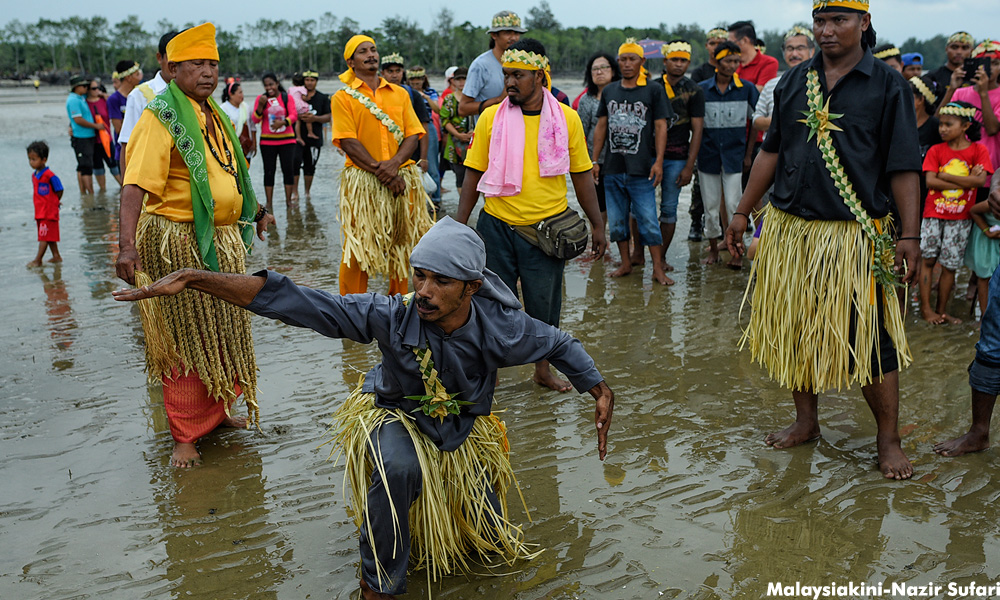
FEATURE Hari Moyang, a celebration by the Mah Meri tribe of their ancestral spirits, has been a well-preserved tradition despite the rapid development around Carey Island, their ancestral home.
Amid the expansion of the wider Klang Valley, the Mah Meri people have opened their doors to outsiders to join them in their celebration.
Today, Hari Moyang is not only known among many Malaysians but also international tourists.
 The date of Hari Moyang can vary, as it first requires a village chief to communicate with the moyang (ancestral spirit).
There are five Mah Meri villages around Pulau Carey and the village of Sungai Judah recently celebrated their Hari Moyang on Feb 1.
“This year, we’re celebrating the birthday of Moyang Getah (rubber spirit), along with other moyangs.
“I tell the moyang what festivities we have planned for Hari Moyang and the moyang tell me when it will be for this year,” said Daimon Pron, the village’s fifth generation tok batin.
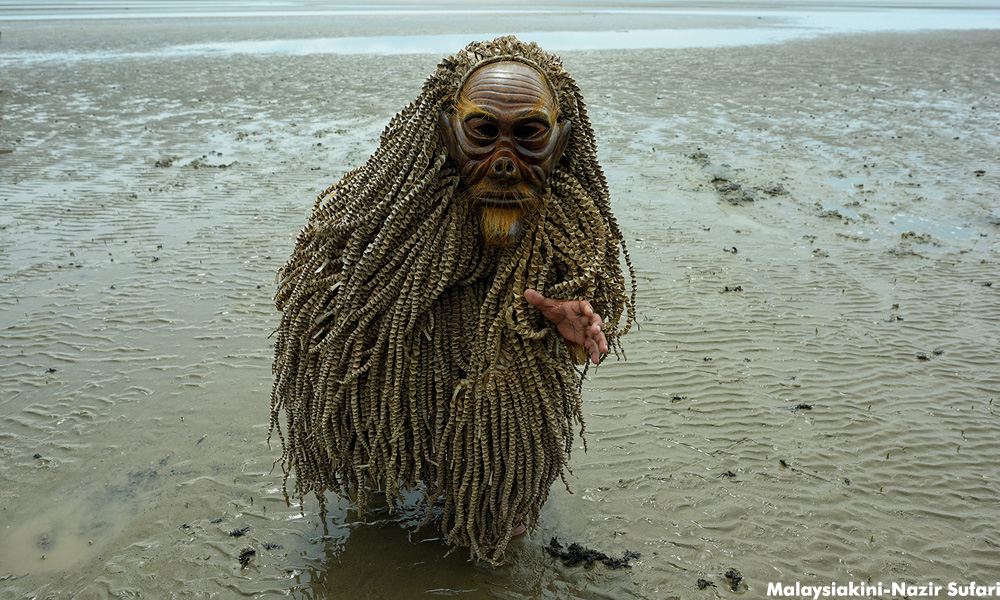
The Sungai Judah village’s beach-side ritual is also called Puja Pantai, which not only seeks to honor the spirits but also heal the sea.
Moyang are spirits that watch over the Mah Meri villages, and each of the five villages have their own Hari Moyang to honor the different ancestral spirits.
The people of Sungai Judah village can trace back their ancestry to the seafaring nomads before they came to settle on what is today known as Carey Island, thus the natural affinity to the sea.
FEATURE Hari Moyang, a celebration by the Mah Meri tribe of their ancestral spirits, has been a well-preserved tradition despite the rapid development around Carey Island, their ancestral home.
Amid the expansion of the wider Klang Valley, the Mah Meri people have opened their doors to outsiders to join them in their celebration.
Today, Hari Moyang is not only known among many Malaysians but also international tourists.
 The date of Hari Moyang can vary, as it first requires a village chief to communicate with the moyang (ancestral spirit).
There are five Mah Meri villages around Pulau Carey and the village of Sungai Judah recently celebrated their Hari Moyang on Feb 1.
“This year, we’re celebrating the birthday of Moyang Getah (rubber spirit), along with other moyangs.
“I tell the moyang what festivities we have planned for Hari Moyang and the moyang tell me when it will be for this year,” said Daimon Pron, the village’s fifth generation tok batin.
The Sungai Judah village’s beach-side ritual is also called Puja Pantai, which not only seeks to honor the spirits but also heal the sea.
Moyang are spirits that watch over the Mah Meri villages, and each of the five villages have their own Hari Moyang to honor the different ancestral spirits.
The people of Sungai Judah village can trace back their ancestry to the seafaring nomads before they came to settle on what is today known as Carey Island, thus the natural affinity to the sea.
On Hari Moyang Puja Pantai, the Mah Meri folk will gather at the house of the ancestral spirits in the village for prayers.
Once an exclusive ritual, tourists and other members of the public are allowed to observe.
Daiman said the opening up was done with the permission of the ancestral spirits.
“The moyang did not allow tourists to take photographs in the past as it would be disruptive, but now the moyang allow it with consideration," he said.
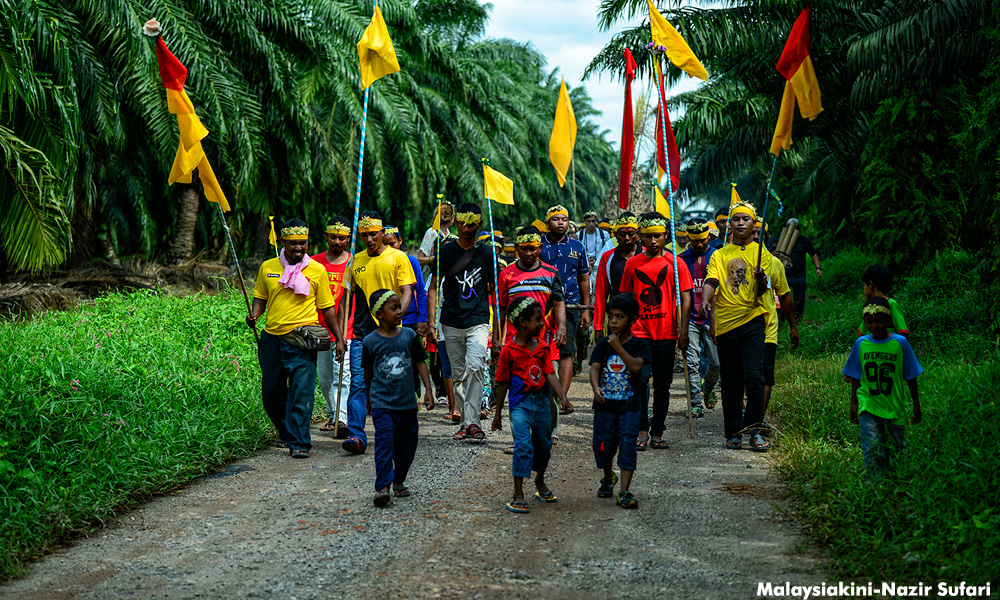
After the prayers, the villagers will then make a 5km journey on foot to Pantai Bangkong, where their altar, built on stilts, is partially submerged in the sea.
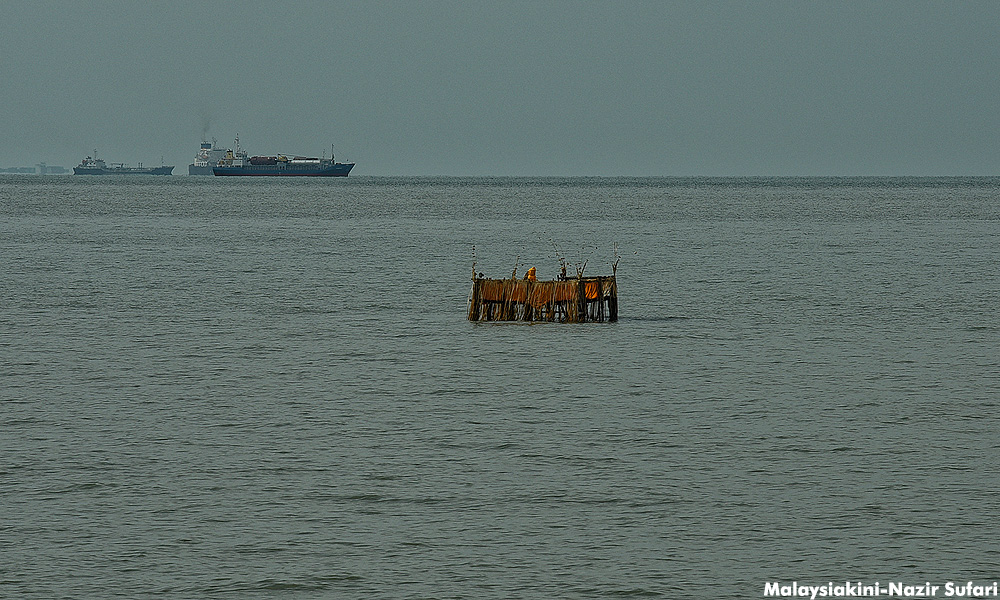 Arriving during low tide in the afternoon, the water would have retreated, allowing access to the initially submerged altar.
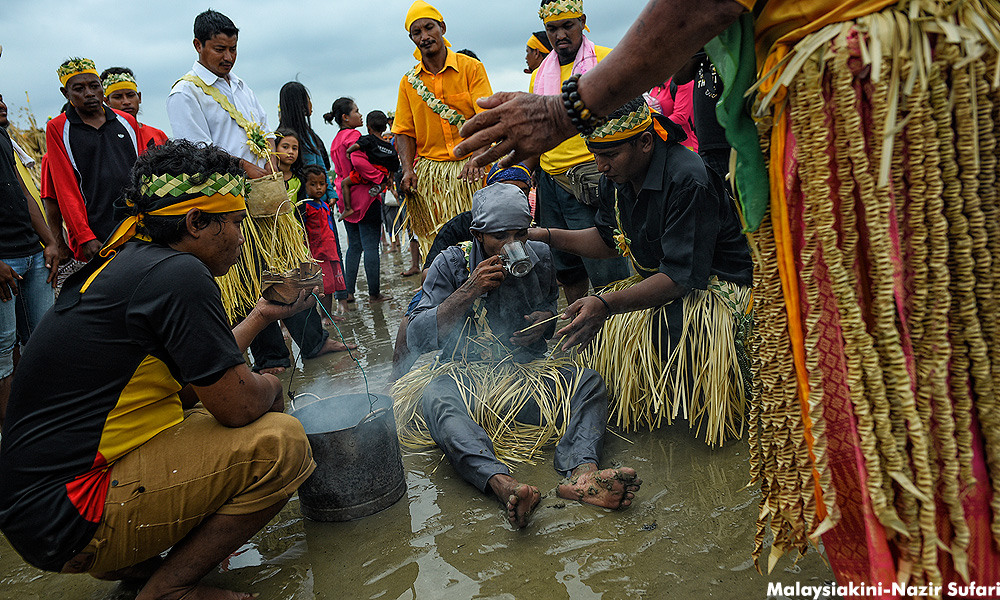
Representatives from the village will sit in a nearby hut, where they will first have their feet washed and then inhale tobacco, allowing them to go into a trance.
The representatives, while in a trance, will then make their way to the altar, followed by the village folk. There, will they chant and pray.
Tourists invited to join in
Likewise, outsiders are allowed to observe the ritual which goes on for around an hour.
At the end of the ritual, the village children, in their traditional gear, will begin dancing in a circle, and tourists are invited to join in.
 Daiman said this ritual had been held at the beach for generations and his family had observed it for five generations.
He said Hari Moyang had been a tourist attraction since the 1980s, but have become increasingly popular in recent years.
The community have self-organised under the Mah Meri Cultural Village, and this has helped facilitate the influx of tourists, offering them a cultural experience.
Japanese physics lecturer Saito Tatsuya, is one such tourist who found his way to Pulau Carey for Hari Moyang.
“I heard about this festival because someone sent me a text message (about it) and I was interested in learning about their culture,” he said.
 “I know some Orang Asli people in Cameron Highlands and the Mah Meri people here. I like the Orang Asli people."
The Mah Meri tribe is one of the Orang Asli groups that is most accepting of outsiders and were more than happy to accommodate them.
Asked if they were bothered by the tourists, several Mah Meri folk said they were happy to share they traditions with anyone willing to visit them.
The Mah Meri tribe has welcomed with open arms friendly visitors for many years but they may soon need to prepare for a different kind of engagement as a proposed RM200 billion port city threatens their way of life.


Are you sure you want to delete this comment?
This action cannot be undone.