



End of 17-year suffering for Ladang Bangi folk
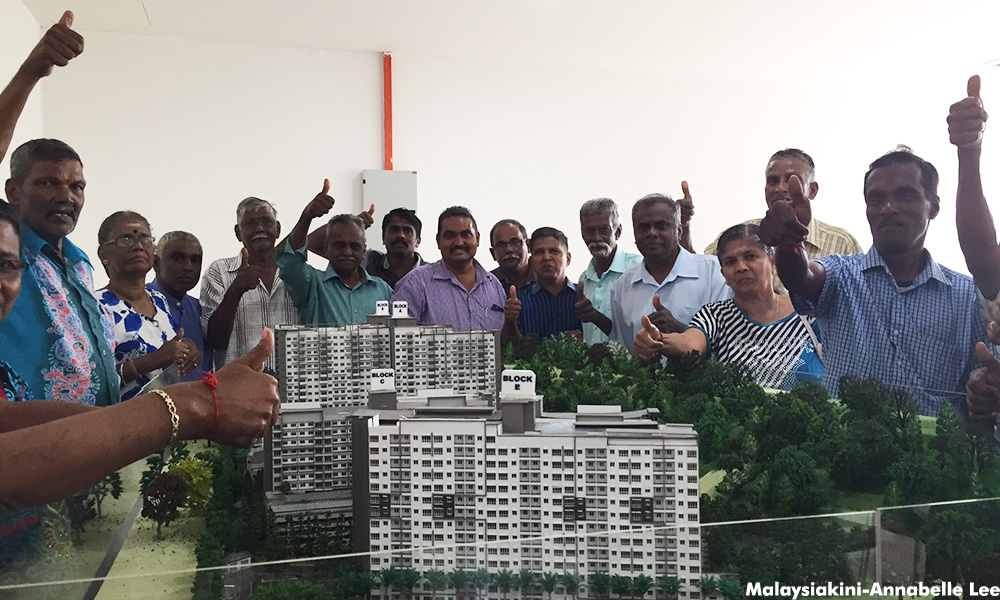
After 17 years of struggle involving "gangsters", broken promises and multiple trips to court, 24 families from the Ladang Bangi estate today finally signed the Sales and Purchase Agreements (SPA) for their new houses.
"We get a free house! Just now we went to look at it, it is beautiful," said the estate's Ex-Workers Committee chairman C Krishnan at the SPA signing ceremony in Kajang today.
Developer Trans Loyal Development Sdn Bhd will provide each family with a 870 sq ft apartment unit, complete with cabinet and air conditioning units, for no cost, and pay a rental compensation of RM625 for any house they move in, until the units are completed in 2020.
The developer has also promised to provide land nearby their new place to build a temple.
In return, the families will have to vacate the houses they are currently in by Dec 13 this year, said Trans Loyal general manager Chia Yan Song today, adding that the rental money will be disbursed beginning January next year.
After 17 years of struggle involving "gangsters", broken promises and multiple trips to court, 24 families from the Ladang Bangi estate today finally signed the Sales and Purchase Agreements (SPA) for their new houses.
"We get a free house! Just now we went to look at it, it is beautiful," said the estate's Ex-Workers Committee chairman C Krishnan at the SPA signing ceremony in Kajang today.
Developer Trans Loyal Development Sdn Bhd will provide each family with a 870 sq ft apartment unit, complete with cabinet and air conditioning units, for no cost, and pay a rental compensation of RM625 for any house they move in, until the units are completed in 2020.
The developer has also promised to provide land nearby their new place to build a temple.
In return, the families will have to vacate the houses they are currently in by Dec 13 this year, said Trans Loyal general manager Chia Yan Song today, adding that the rental money will be disbursed beginning January next year.
“This is a very good deal. The new units will be 10 minutes away from where they are living now,” said Parti Sosialis Malaysia (PSM) central committee member S Arutchelvan, who helped organise the ceremony today. PSM has been representing the former Bangi estate workers since 2012.
Krishnan has been living in the estate for the last 61 years. He is 62 this year.
He recalled how in May 2000, his fellow workers were laid off by their employer Golden Hope Plantations, which announced it would be switching from rubber to palm oil.
After the workers rejected the proposal, they were given eight weeks o vacate their homes, and since then it had been struggles in one court after another.
Two years after the eviction notice, the families scored a minor victory when they were awarded RM300,000 in compensation by the Labour Court. The estate then switched hands to Sime Darby Berhad, which in 2010, sold it to Trans Loyal.
Trans Loyal labelled the former estate workers as squatters and filed a case in Shah Alam High Court to evict them, and in 2015, the estate workers won their case against the developer in the Court of Appeal, which paved way for negotiations between them and the developer's lawyers.
In 2012, the families claim "gangsters" were sent to forcefully evict them from the land.
Chia however, said the estate workers brought all their women to protest, and did not allow the developers to enter the land.
“So we had no choice, we asked our guys (to go there). Maybe there were a little rough,” Chia admitted.
According to PSM, Trans Loyal contractors had tried multiple times in 2012 and 2013 to clear the land despite agreeing to negotiate with the former estate workers.
"Once, even the police came and arrested me in Kajang," said Krishnan. His friend Rajan was also arrested in 2013 for protesting against the developers.
Meanwhile, Arutchelvan said it is high time for legislation protecting estate workers.
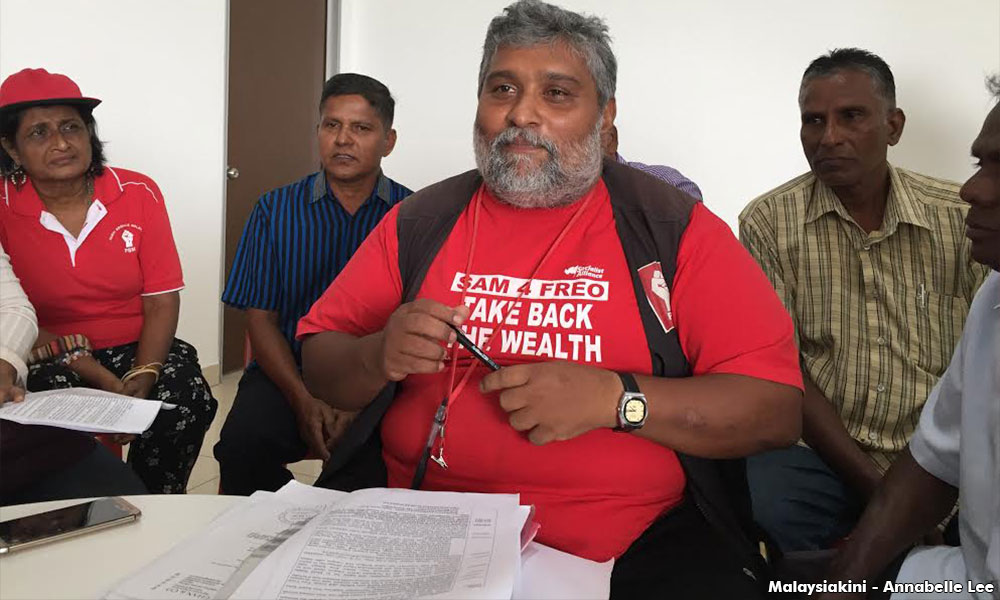 “There should be a law that defends estate workers, not just policies.
“There are many other estates where the workers get evicted, everywhere you see such struggles.
“We need a law so that estate workers won’t have to always fight in court and fight against the police and developers,” he said.
Estate workers in the country have been categorised as poor since the introduction of the New Economic Policy in 1970, despite Malaysia being among the world's largest producers of rubber and palm oil, and the two industries being one of the main contributors to national economy.


