



Stop knee-jerk approach to migrant labour, say NGOs
Groups have urged Putrajaya to work towards a comprehensive national policy on labour migration, slamming previous knee-jerk approaches.
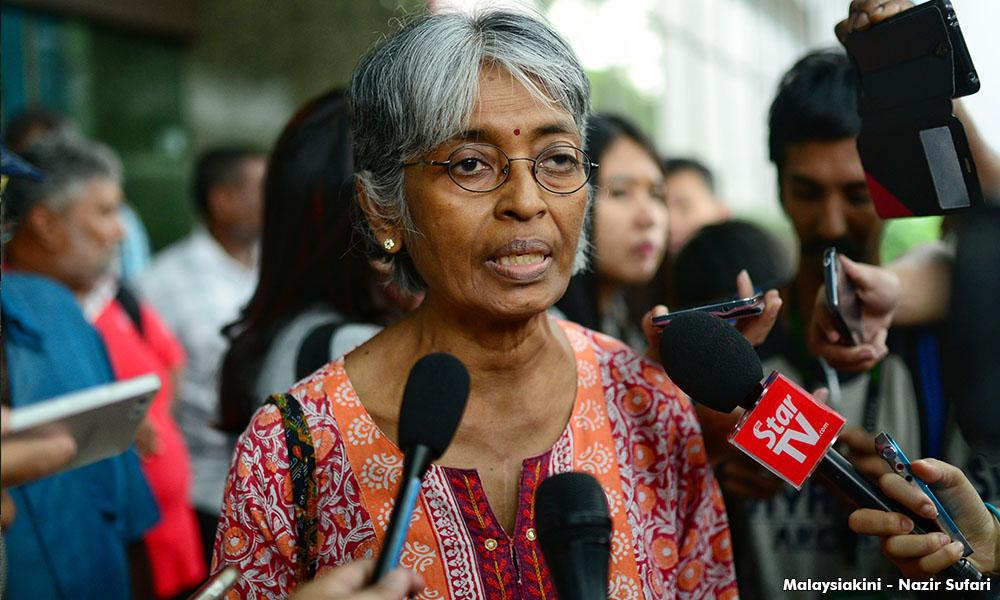
Rani Rasiah, chairperson at the Migrant Workers Right to Redress (MWR2R) coalition highlighted the importance of having a “well thought-out policy”.
“Migrant workers have a big impact on the Malaysian population and on local workers,” she said.
Groups have urged Putrajaya to work towards a comprehensive national policy on labour migration, slamming previous knee-jerk approaches.
Rani Rasiah, the chairperson at the Migrant Workers Right to Redress (MWR2R) coalition, highlighted the importance of having a “well thought-out policy”.
“Migrant workers have a big impact on the Malaysian population and on local workers,” she said.
Through a series of roundtable discussions held last year with ministries, embassies, migrant worker groups, unions, research centres and the Malaysian Employers Federation (MEF), MWR2R has identified seven key areas in need of reform.
They are recruitment, employment in Malaysia, undocumented workers, women migrant workers, arrest and detention, health and social security, and housing.
All findings and recommendations were then compiled into a report, launched yesterday at the Kuala Lumpur and Selangor Chinese Assembly Hall (KLSCAH). The recommendations called for new laws to be drafted, existing laws to be properly enforced and for clear policies in line with the 11th Malaysia Plan.
“As it says in the 11th Malaysia Plan, the Home Ministry should be given the sole responsibility of being in charge (of managing migrant labour),” said Filipino Workers Union Sentro coordinator Luela Mirafuentes, who contributed to the report.
She lamented how multiple ministries are currently involved in managing migrant labour, causing the overlapping of roles as a result of poor coordination.
An example of this was when the Human Resources Ministry announced in February last year its decision to bring in 1.5 million Bangladeshi workers. A barrage of criticism ensued and the day after the announcement, the Home Minister and Deputy Prime Minister Ahmad Zahid Hamidi declared a freeze on all migrant labour intake, including those from Bangladesh.
“These were all hasty decisions - the announcement was withdrawn after public outcry,” said Rani.
A few months later, the ban was lifted and the influx of migrant workers gradually resumed.
Previous policies also include the 6P programme in 2012, 3P programme in 2014 and more recently, the enforcement card rehiring programme that was concluded on June 30.
Comprehensive approach
The one point most roundtable participants conceded on was the need to eliminate the role of private companies, or agents, in the process of recruiting and employing migrant workers.
“They are the root of all abuse and exploitation,” said Rani.
Meanwhile, Committee for Asian Women coordinator Irene Xavier urged for a new law to protect the 300,000 domestic workers in the country.
“Currently, only Malaysian workers are protected under the Employment Act 1955.
“Often with domestic workers, any action only gets taken only after severe abuse has happened. As such, action has to be initiated by the worker or civil society organisations.
“Domestic workers are denied reproductive rights here, plus are exposed to sexual assault and human trafficking,” she said.
Formulating legislation that regulated housing for workers of different sectors was another recommendation put forward in the report.
“Currently, the vast majority of migrants are dependant on their employers or outsourcing agents. The housing provided is substandard, unsafe, overcrowded, poorly ventilated, unsafe etc. There is little monitoring by agencies or local councils.
“We want legislation that will allow for housing that is adjusted to the nature of their jobs of workers - whether they are construction or domestic workers.
“And we want the Passport Act to be properly enforced,” said Tenaganita’s Fajar Santori.
Proper enforcement of the act would allow migrant workers to have ownership over their passports, unlike the situation now when employers or agents often hold on to them, effectively holding workers hostage.
Former Universiti Malaya public health professor Chan Chee Khoon spoke on the need for comprehensive healthcare services for migrant workers, while Penang Stop Human Trafficking Campaign chairperson James Lochland detailed how workers live in constant fear of arrest and detention.
Six million in country
The migrant worker boom first began in the 1980s when then prime minister Dr Mahathir Mohamad started investing in the heavy manufacturing industry and the building of mega-projects.
Today, there are almost six million migrant workers in the country.
Documented or otherwise, they make up 30 percent of the entire workforce, with the largest numbers coming from Indonesia, Bangladesh, Nepal, Myanmar, and India.
MWR2R comprises Tenaganita, Malaysian Trade Union Congress (MTUC), Parti Sosialis Malaysia, Persatuan Sahabat Wanita Selangor (PSWS), Penang Stop Human Trafficking Campaign and the North-South Initiative (NSI).
Next, they will take up the report up to the Human Resource Ministry, embassies and the Parliamentary Labour Caucus once Parliament resumes next week.


Report this comment
Are you sure you want to delete this comment?
This action cannot be undone.