




Q&A: Impatient Umno leaders responsible for money politics
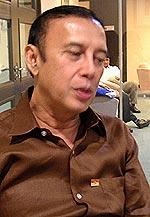
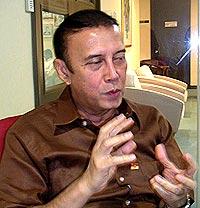
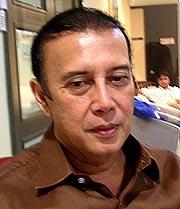
In this second part of the interview with former Malacca chief minister Rahim Tamby Chik, he talks about Umno and money politics, the Malacca state government, the New Economic Policy, government's accountability and transparency and rising political star Khairy Jamaluddin.
In this second part of the interview with former Malacca chief minister Rahim Tamby Chik, he talks about Umno and money politics, the Malacca state government, the New Economic Policy, government's accountability and transparency and rising political star Khairy Jamaluddin.
Malaysiakini: What are your views on the leadership of Malacca Chief Minister Mohd Ali Rustam?
 Rahim:
(Ex-chief ministers) Mohd Zin (Abdul Ghani) and Abu Zahar (Isnin), Ali Rustam are my brothers. Before he (Mohd Ali) became the chief minister, I appointed him as my special secretary, then he became state assemblyperson and state executive councillor. After I retired, he took over.
Rahim:
(Ex-chief ministers) Mohd Zin (Abdul Ghani) and Abu Zahar (Isnin), Ali Rustam are my brothers. Before he (Mohd Ali) became the chief minister, I appointed him as my special secretary, then he became state assemblyperson and state executive councillor. After I retired, he took over.
I see some kind of continuity there. I started the changes and transformation and they continued. I hope Ali Rustam's successors will also do the same. When I became chief minister, Malacca was the second last after Kelantan in terms of its GDP per capita income, but now Malacca is in fourth or fifth place from the top.
Do you think he is capable in managing the state since there have been a number of allegations against him and the state government for mismanagement?
I also faced the same allegations in the past but unless you have evidence, I wouldn't comment.
I refer to a press conference you held last year about corruption and money politics in Umno, where you also alleged impropriety in the awarding of land in Malacca to Umno leaders.
Yes, I had made those allegations before the party elections. When I raised that, I had hoped somebody would look into them. When I raised the matter, I was talking as a Umno candidate. As a member of Umno, I consider the allegations to be treated as a political matter as was always the case in Umno.
When it comes to a political matter, the jurisdiction is within the party. It must be solved within the party, unless you go to the police station and report it as a criminal case or report to the Anti-Corruption Agency, then the authorities can act. If you make allegations, there are mechanisms within the party to respond to such things, like the case of Kota Melaka division head (Amid Nordin) who was disqualified from the party.
Amid Nordin claimed there were efforts to pull him down.
(Laughs) That's normal in Umno. I don't know, you should ask him. I have never made any allegations or complaints against him. Who had fallen in the party due to money politics was because of the action taken by the disciplinary board. The board could not take action against anyone without evidence.
 What about complaints against other individuals?
No, I have never lodged any complaint against anyone. I give my views, very strong views, but I never made any complaint unless I am required to do so by the party.
Is the disciplinary board playing a good role or has it been given too much power?
Pak Lah, as the party president, has said that Umno has total confidence to the disciplinary board to discharge its duties and responsibilities without any interference. If there is interference, people will question. So whether outside or inside the supreme council, we have agreed that no one should interfere. We must have evidence and witnesses. If you are found guilty, you shouldn't blame anybody except yourself.
So you feel there is no need for reform in the disciplinary board?
We are carrying out the reform now. Last time, appeal is under the same disciplinary committee but now we have formed another tribunal and they are separated. The board of appeal and the disciplinary board are at the same level. Last time the board of appeal was under the disciplinary board.
 Regarding money politics, we didn't hear so many cases in the past when you were the Youth chief. Is this a recent phenomenon?
Society has changed. The income of Malays has increased and it becomes common to pay for votes among leaders. There are also ambitious leaders who are impatient and they use money to climb up quickly.
So it is our duty to ensure that money politics does not emerge to be a culture in Umno so that we could elect leaders who are genuinely capable and committed with a proven track record, not because he has money.
Umno veteran leaders have recently petitioned Umno to return democracy to the party and open all posts for contest, and not only to those with money and power as seems to be the case now.
 We have discussed the
petition
at the supreme council and we opined that those are good advices. What Tun Ghafar (Baba, ex-Umno deputy president who led the veteran leaders) meant is not to impose the quota (in the number of nominations) in future party elections. However should we want to change anything now, it's up to the annual general assembly to decide. It can only be changed if a motion on this is tabled, debated and passed at the annual general assembly. Indeed, Tun (Ghafar) was among the leaders who had proposed for such method (imposing quota) in the past. He also agreed that the president must secure 30 percent of nominations from all divisions to be eligible to contest.
We have discussed the
petition
at the supreme council and we opined that those are good advices. What Tun Ghafar (Baba, ex-Umno deputy president who led the veteran leaders) meant is not to impose the quota (in the number of nominations) in future party elections. However should we want to change anything now, it's up to the annual general assembly to decide. It can only be changed if a motion on this is tabled, debated and passed at the annual general assembly. Indeed, Tun (Ghafar) was among the leaders who had proposed for such method (imposing quota) in the past. He also agreed that the president must secure 30 percent of nominations from all divisions to be eligible to contest.
In your opinion, has democracy in the party eroded with the quota system?
There were suggestions that the 30 percent should be amended. But in my opinion, I think a person who can secure a 30 percent nomination is proven qualified to join the presidential race. This rule was made during Dr Mahathir's (Mohamad) era because there was one individual who was unknown to many people and wanted to contest the presidency too. He did not have the locus standi and it troubled the party. It's like out of the blue a taxi driver also wants to file his nomination paper to vie for the presidency.
With the current system, only those who are powerful and rich can contest.
Generally in the party we measure a person's performance. Although I don't have any (government) post but I won. Same goes to Dr Norraesah (Mohamad, supreme council member) who does not have a post but she won too, but just the two of us (laughs).
Umno has wisdom in electing leaders. Whatever you say about Umno, its leaders are rational when it comes to electing leaders. We also have the power to sustain a leader just like we have the power to bring down a leader.
Does it mean the current one is the best system?
Maybe there will be other proposals in future and we will choose a better system I think Umno is open to that. But if we open all posts for contest just to show we are democratic, I think there will be many weaknesses too.
What about the proposal for supreme council election to be held at the divisional level?
 That was the proposal by Tan Sri Muhyiddin (Yassin, Umno vice-president) but many people felt Umno has not reached that stage yet. If we want to implement this proposal, we need to have about 90,000 or 100,000 voters throughout Malaysia, but currently we only have about 2,500 central delegates. There was another better proposal which is to increase the G7 to G30, meaning instead of electing seven (central delegates at each division), elect 20, 25 or 30, so the number of delegates will raise from 2,500 to between 10,000 and 15,000, not as high as 90,000, this proposal is a better one than Muhyiddin's.
Was there a proposal to implement the G30?
There was. We organised a special forum in Putrajaya recently where five representatives from each states were called to discuss this matter and the party's code of ethics. There were four workshops and I chaired one of the four. All four workshops rejected Muhyiddin's proposal and instead suggested the G30.
Concerning money politics, have sufficient efforts been taken to contain money politics in the party?
So far we are satisfied with the current code of ethics but there were also discussions to impose additional measures to contain political corruption. Maybe in future, political corruption will be regulated at all times unlike now which in only seasonal (during election time). There was a proposal to lengthen the period in order to let the disciplinary board receive complaints even outside the election period. That means there is no time limit, a person suspected of being involved in money politics could be referred to the party at any time.
This is a proposal or just views?
We have discussed at the forum in Putrajaya and this proposal will be brought forward to the Umno management committee chaired by the Deputy Prime Minister (Najib Abdul Razak, Umno deputy president). No decision has been made.
On the New Economic Policy (NEP), why do you think it has failed?
 We must recognise that the Malays have achieved 22 percent in a few sectors. We knew that when we changed the NEP to the National Development Policy with meritocracy, unfortunately, the ownership of Malays of the corporate wealth reduced to 18.5 percent, instead of boosting up the 11 percent to 22 percent during the NEP, we reverted to 18.5 percent, which was a shock to the Malays.
Therefore, during the recent Umno general assembly, Umno Youth proposed the New National Agenda to revive the NEP which made the eradication of poverty its priority. We will implement a meritocracy system among the Malays to distribute the economic opportunities to Malays who are capable, we won't allow cronies, we want justice and fairness to be upheld in the distribution of economic opportunities to the Malays under the meritocracy system, so it will increase the corporate equity of Malays and at the same time do not jeopardise the interests of other races.
What went wrong with the economic situation of the Malays all this while?
There were leakages. Malays given contracts or projects gave (sold) them to the Chinese. If that did not happen, the Malays should have been able to achieve more than 25 percent (of the corporate wealth) today.
If all these leakages had taken place, is it still a wise move to revive the NEP?
I expect it would not be a problem to be implemented because we will distribute the economic opportunities to people who are considered as capable, not those who want a shortcut, given the permit and sell, given the permit and sell it out. We must identify who are the capable Malays.
During the Umno general assembly, there was a delegate who commented that government-linked companies (GLC) such as Telekom have taken away many projects meant for Malay entrepreneurs.
 That is the problem. That's why the issue of the Approved Permits (AP) is a blessing in disguise. If the cabinet can direct the International Trade and Industry Ministry to release the list of APs to the public, then all ministries, state governments, local governments and GLCs should also follow suit in the award of contracts.
As an Umno supreme council member, I would like to see transparency practiced at all ministries and government departments Other than information concerning defence and national security, I see no reason why information of contract awards should be kept secret. There is nothing to hide.
A minister should be able to make a decision and let the public know, that is accountability. You make decision, you must be able to justify why you make the decision. State governments and chief ministers too cannot make decisions as they like. What have been approved, what have been given and to whom and why must be stated. Same goes to all GLCs, Proton, Telekom, Malaysia Airlines, Tenaga Nasional Berhad etc. Only then will Pak Lah's promotion of transparency and accountability in his administration be meaningful.
Do you think GLCs which are open to the participation of non-bumiputeras and foreigners will be detrimental to Malay entrepreneurs?
Its role has to be reviewed. If all the contracts (of the GLCs) given to non-bumiputeras are not made known to the public, we would not know whether these GLCs are also responsible for the failure of the NEP.
Lastly, what are your views regarding Khairy Jamaluddin?
 I have read his speech at the Umno general assembly, seen his debate with Chua Jui Meng (MCA vice-president) on the NEP, he has his opinion on what should be done and he is an intellectual.
As the Umno Youth deputy chief, he is in a good position to present his views to the people on what he thinks is right. Whether others agree with him or not is a separate matter. If people say he is too young and has moved up in politics too fast - I was also in the same boat. I became chief minister at 32, MP and parliamentary secretary at 28, deputy minister at 30.
In politics, there is no age yardstick. When you are fated to rise, you will rise, when you are fated to go down, you ask 1,000 people to hold you, you will also fall. For some reason, he is fated to rise, you get 1,000 people to pull him down, he will still rise.
Part One: Q&A: Treat me as an asset, not a threat, says Rahim


Are you sure you want to delete this comment?
This action cannot be undone.