


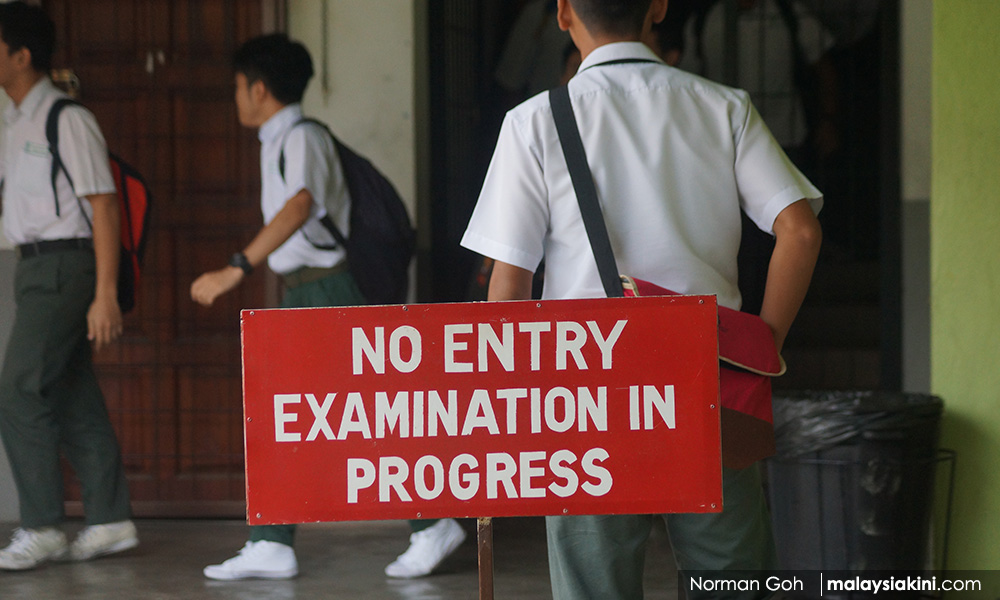

Reintroducing the English medium into our schools
COMMENT | Ever since the National Language Act 1967 made Bahasa Malaysia the main medium of instruction in national schools instead of English, we have seen the never-ending flip-flopping of language medium policy in our schools.
This has included the teaching of Maths and Science in English and now, we are told that the independent survey shows that many Johoreans and even the Johor sultan favours the return of English-medium schools. At the same time, we see the announcement of a new token of Chinese and Tamil schools being built as vote-catchers for the coming general election.
Despite the persistent infatuation with English-medium schools, especially by the Malaysian middle class, we cannot ignore the mother tongue lobby made up of Malay, Chinese and Tamil schools, which have existed in our country since colonial times.
There will always be Malaysians who speak their mother tongue in their homes, who prefer to have their children educated first in their mother tongue.
However, with the encouragement of trilingualism, there is also a growing trend of non-Chinese parents sending their children (100,000 at the last count) to Chinese-medium schools.
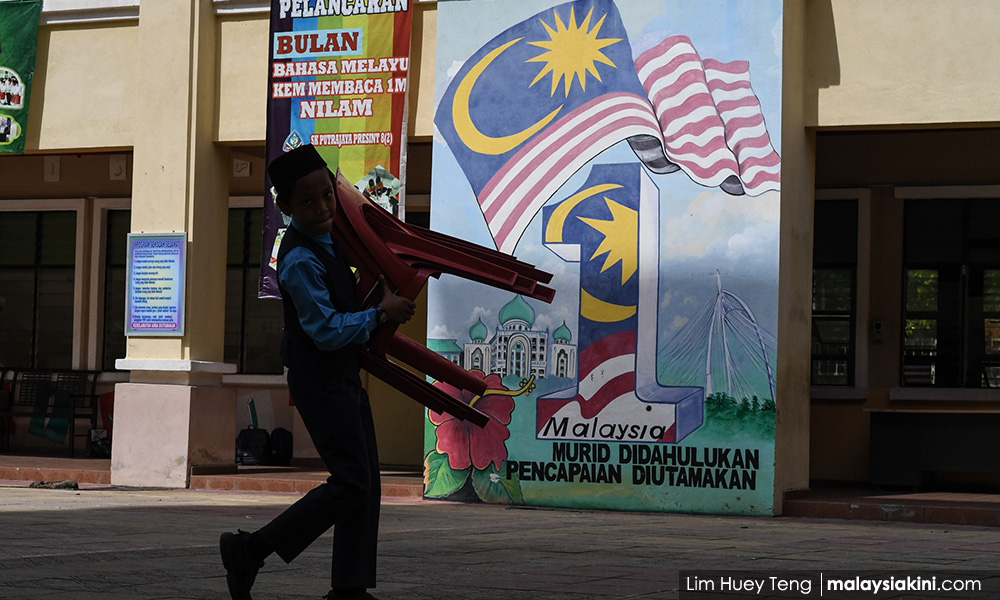
Let’s face it. As long as there is no new consensus based on a “happy medium” that all communities can accept in a new education policy, our country will continue to ramble along like a tumbleweed carried whichever way the political winds blow. A tumbleweed gathers no moss that is needed to build our Brave New Malaysia.
What we need is a great big melting pot
The lesson to be learnt from the acrimonious controversies of the last 55 years is that any attempt to assimilate these mother tongue schools is bound to fail because the Chinese and Tamil communities will defend their schools tooth and nail.
So, spare the nation the biggest crisis it will experience and send us all reeling backwards if the government tries to take away mother tongue schools from the Chinese and Indian communities.
Thankfully, the government has, time and again, pledged to preserve our mother tongue schools even if, up to now, they have not assisted their normal expansion.
The arguments against the existence of Chinese and Tamil schools are always the same - namely that they do not promote national integration. This is sheer hypocrisy as we do not hear the same strident condemnation of the ‘Bumis Only’ policy at UiTM and other Mara institutions, even though these education institutions are paid for by all Malaysian taxpayers.
So when we consider there are 100,000 non-Chinese in Chinese-medium schools and there are 100 percent ‘bumiputeras’ at UiTM, which of these are the “great big melting pot” that the “national integrationists” talking about?...
COMMENT | Ever since the National Language Act 1967 made Bahasa Malaysia the main medium of instruction in national schools instead of English, we have seen the never-ending flip-flopping of language medium policy in our schools.
This has included the teaching of Maths and Science in English and now, we are told that the independent survey shows that many Johoreans and even the Johor sultan favours the return of English-medium schools. At the same time, we see the announcement of a new token of Chinese and Tamil schools being built as vote-catchers for the coming general election.
Despite the persistent infatuation with English-medium schools, especially by the Malaysian middle class, we cannot ignore the mother tongue lobby made up of Malay, Chinese and Tamil schools, which have existed in our country since colonial times.
There will always be Malaysians who speak their mother tongue in their homes, who prefer to have their children educated first in their mother tongue.
However, with the encouragement of trilingualism, there is also a growing trend of non-Chinese parents sending their children (100,000 at the last count) to Chinese-medium schools.
Let’s face it. As long as there is no new consensus based on a “happy medium” that all communities can accept in a new education policy, our country will continue to ramble along like a tumbleweed carried whichever way the political winds blow. A tumbleweed gathers no moss that is needed to build our Brave New Malaysia.
What we need is a great big melting pot
The lesson to be learnt from the acrimonious controversies of the last 55 years is that any attempt to assimilate these mother tongue schools is bound to fail because the Chinese and Tamil communities will defend their schools tooth and nail.
So, spare the nation the biggest crisis it will experience and send us all reeling backwards if the government tries to take away mother tongue schools from the Chinese and Indian communities.
Thankfully, the government has, time and again, pledged to preserve our mother tongue schools even if, up to now, they have not assisted their normal expansion.
The arguments against the existence of Chinese and Tamil schools are always the same - namely that they do not promote national integration. This is sheer hypocrisy as we do not hear the same strident condemnation of the ‘Bumis Only’ policy at UiTM and other Mara institutions, even though these education institutions are paid for by all Malaysian taxpayers.
So when we consider there are 100,000 non-Chinese in Chinese-medium schools and there are 100 percent ‘bumiputeras’ at UiTM, which of these are the “great big melting pot” that the “national integrationists” talking about?
Be proud of our mother tongue education system
So as to ensure an education system that is respectful, enriching and inclusive of all the different stakeholders in this important issue, policymakers need to stop flip-flopping and instead focus on a robust blueprint for the well-being of our nation.
Such a blueprint based on the “happy medium” by respecting the mother tongue of all Malaysians offers a way forward for our nation.
First, as Malaysians, we can be proud that we have mother tongue education systems in our country that have been nurtured since pre-British colonial times.
The first Chinese school in the peninsula was established in 1819, nearly 200 years ago. The Tamil schools have also had nearly 150 years’ history. It is not true that the British colonial power built different schools to keep the Malayan people apart. All mother tongue schools, including Malay schools, were neglected during British colonialism. It was the far-sighted pioneers in the respective communities during those early days who built the schools in order to ensure their children received their respective mother tongue education.
Thus, our various ethnic communities should be congratulated for nurturing their mother tongue education all these years, despite colonial neglect. During the pre-Independence days, there was mutual encouragement among the Malay, Chinese and Tamil education groups.
It was Chinese education leader Lim Lian Geok that encouraged the Malay language lobby to develop Malay language education beyond the primary level during the pre-Independence days.
After Independence, we had 1,350 Chinese primary schools, 78 Chinese secondary schools and more than 800 Tamil primary schools in the national education system. The ‘Government English Schools’ were, of course, the crème de la crème and the recognised ‘Establishment’ schools.
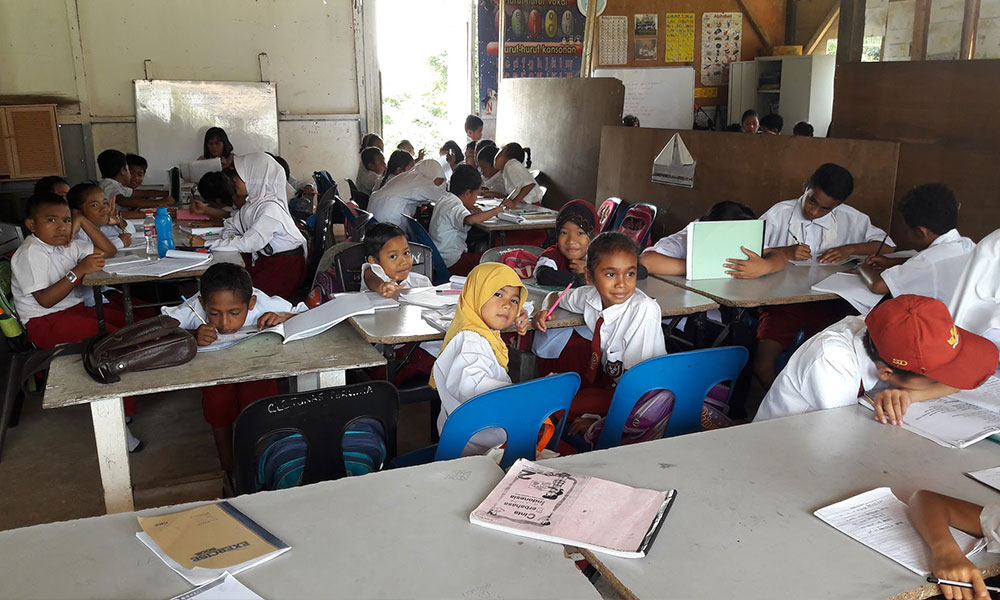
Today, there are only around 1,300 Chinese primary schools, 60 Independent Chinese secondary schools, and 550 Tamil primary schools, even though our population has doubled since Independence.
With the inclusion of non-Chinese students in Chinese schools at both primary and secondary levels, the issue of overcrowding arises.
Malaysians whose mother tongue is English
There are of course Malaysians whose mother tongue at home is English. We know many Malaysians – Malays, Chinese, Indians and Eurasians – whose mother tongue is the English language. They speak English at home and for all intents and purposes, consider English to be their mother tongue.
I do not see any problem with providing them with English-medium schools if they want English-medium schools. Why can’t parents across the country have English-medium schools for their children if English is their mother tongue and that is what they want?
Providing English-medium education would be the simplest thing for our Education Ministry to do since we have had so many years’ experience learning in English since the colonial times. Also, English is an international language with models of excellence.
Spare us the hypocritical excuses against this proposal when we see the ever-growing numbers of private international schools using the English medium, to which our local elites are sending their kids.
Let us not decry double standards when we know the Mara institutions use the English language as their teaching medium.
Decentralise education management
Third tier government is crucial to this reform. Once we have got a democratically elected local council, we can decentralise education - schools would then be built according to the needs of the communities.
If a community requires a Chinese school in Kajang or Kuantan, the local council will build them based on that need. If another community asks for an English-medium school in Petaling Jaya or Johor Baru, the council allocates a budget for these too.
The same goes for the other communities in other councils throughout the country which ask for Malay or Tamil schools. Thus, education will no longer be politicised and be made into a racial issue.
Shared state-of-the-art facilities to promote integration
To encourage national integration, education precincts can be earmarked for new Malay-medium, Chinese-medium, Tamil-medium and English-medium schools. These precincts would have parks and sports fields, theatres, ICT centres, libraries, gymnasiums, and other excellent facilities which are to be shared by students from all the schools in the precinct.
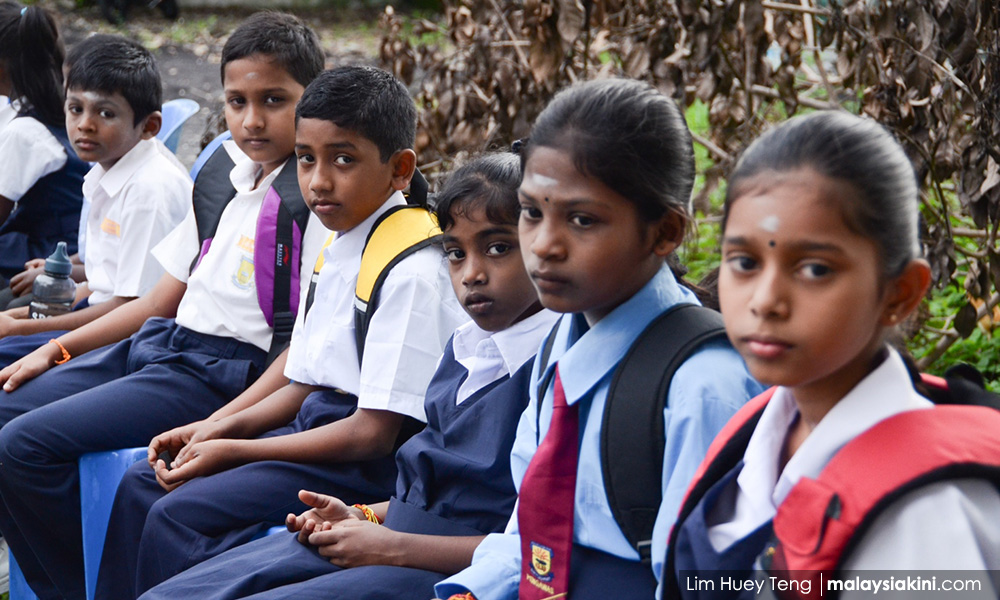
Besides allowing for opportunities to integrate, it will ensure greater equality among schools in terms of quality, facilities and financial allocations. Chinese and Tamil schools will, therefore, have no reason to complain of discrimination when they begin to receive proportionate government assistance. Efforts can also be made to ensure that existing schools have similar shared facilities and opportunities.
Thus, not only will students from all the various streams have the opportunity to mix and mingle, they can take part in joint cultural performances, quiz, elocution and debating competitions, societies and sports meets. This will not only promote integration but also enhance quality and standards of all schools.
Totally different concept from Vision Schools
This democratic concept is qualitatively different from the government’s ‘Vision School’ concept because the various schools in the Education Precinct are run in the way they have traditionally been run, ie, autonomously.
They may share facilities with the other schools in the precinct but they still maintain their autonomy with their respective boards of governors. The only difference is that the schools are completely catered for by the government, including financial allocation. This goes for the secondary schools as well and all secondary school students can enjoy the same free education.
I believe this “Mother Tongue Premise” is the “happy medium” and best compromise for the whole nation.
KUA KIA SOONG is the director of the Malaysian Human Rights Organisation, SUARAM.
The views expressed here are those of the author/contributor and do not necessarily represent the views of Malaysiakini.


Are you sure you want to delete this comment?
This action cannot be undone.