



How 1MDB funds did (or didn’t) end up in Switzerland
KINIGUIDE | Over the past few years, there have been contradictory claims regarding the 104 million Swiss francs (RM403 million) that are now parked with the Swiss Federal Treasury.
Swiss authorities claim that the money was illegal proceeds from 1MDB-linked transactions that passed through its financial system.
The Swiss government intends to absorb the funds since there were no claimants and a bid by a group of Swiss parliamentarians to urge their government to return at least part of the funds to the Malaysian people was voted down in the Swiss National Council.
Nevertheless, efforts are underway by Malaysian NGOs and a group of Swiss lawmakers to put the matter back in the Swiss Parliament.
1MDB and the Finance Ministry that owns it, meanwhile, have said they would not claim the money because it does not belong to them in the first place. Both said there has been no misappropriation at 1MDB, and all monies are accounted for.
In this instalment of KiniGuide, we look into how the money got there, and what the various authorities have to say about it...
KINIGUIDE | Over the past few years, there have been contradictory claims regarding the 104 million Swiss francs (RM403 million) that are now parked with the Swiss Federal Treasury.
Swiss authorities claim that the money was illegal proceeds from 1MDB-linked transactions that passed through its financial system.
The Swiss government intends to absorb the funds since there were no claimants and a bid by a group of Swiss parliamentarians to urge their government to return at least part of the funds to the Malaysian people was voted down in the Swiss National Council.
Nevertheless, efforts are underway by Malaysian NGOs and a group of Swiss lawmakers to put the matter back in the Swiss Parliament.
1MDB and the Finance Ministry that owns it, meanwhile, have said they would not claim the money because it does not belong to them in the first place. Both said there has been no misappropriation at 1MDB, and all monies are accounted for.
In this instalment of KiniGuide, we look into how the money got there, and what the various authorities have to say about it.
Where did the money come from?
The 104 million Swiss francs are fines levied on three different banks in Switzerland, representing the disgorgement of illegal profits they obtained for facilitating 1MDB-related transactions without the necessary due diligence for such a transaction.
The bulk of this comes from BSI Bank. On May 24, 2016, the Swiss Financial Market Supervisory Authority (Finma) announced that it had ordered BSI to turn over 95 million Swiss francs from illegally-generated profits.
Next came Falcon Private Bank. On Oct 11, 2016, apart from other penalties, it was similarly ordered by Finma to disgorge 2.5 million Swiss francs of illegally-generated profits.
And finally came Coutts & Co Ltd. On Feb 2 last year, Finma ordered it to disgorge 6.5 million Swiss francs of illegally-generated profits.
The total profits surrendered by these three banks came to 104 million Swiss francs. It was reported that the BSI Bank and Falcon Bank cases are still under appeal in the Swiss Federal Administrative Court.
Banks all around the world are required to perform due diligence checks on their businesses to deter money laundering and other illicit activities, particularly transactions that are deemed “high risk”, such as due to the involvement of politically-exposed persons (PEPs).
High-risk transactions are supposed to be given a higher degree of scrutiny by banks and this may entail providing the bank with supporting documents to show that the transaction is for a legitimate purpose.
In Switzerland, these rules are enforced by Finma, whereas Bank Negara does the same in Malaysia.
“PEP” is a term used in the finance industry to refer to people who hold a prominent public office (such as a head of state or government, senior civil servants and key party officials) and their friends and associates.
Why was BSI Bank fined?
According to a press release by Finma, BSI had repeatedly failed to put 1MDB-related transactions through an appropriate level of scrutiny over several years, given the involvement of a state investment fund and politically-exposed persons (PEPs).
This lapse was in breach of statutory due diligence requirements for tackling money-laundering and violated principles of adequate risk management, it said.
“In the context of the 1MDB case, the bank failed to adequately monitor relationships with a client group with around 100 accounts at the bank. Transactions were executed within the client group and with third parties without the bank adequately clarifying their commercial justification.
“In one case involving a deposit of US$20 million, for example, the bank was happy to accept the client's explanation that the funds involved were a "gift". In another case, an account was credited with more than US$98 million without any effort to clarify its commercial background,” Finma said.
It added that BSI was charging above normal market rates and the bank’s senior management failed to question why a sovereign wealth fund would use a private bank for institutional services and overpay for those services.
It said these and other infractions were made despite warnings from Finma in late 2013 and the bank’s own compliance department.
What was BSI’s involvement with the 1MDB scandal?
Finma said, “In the case of 1MDB, the bank executed numerous large transactions with unclear purpose over a period of several years and, despite clearly suspicious indications, did not clarify the background to these transactions.”
However, it did not elaborate much beyond this.
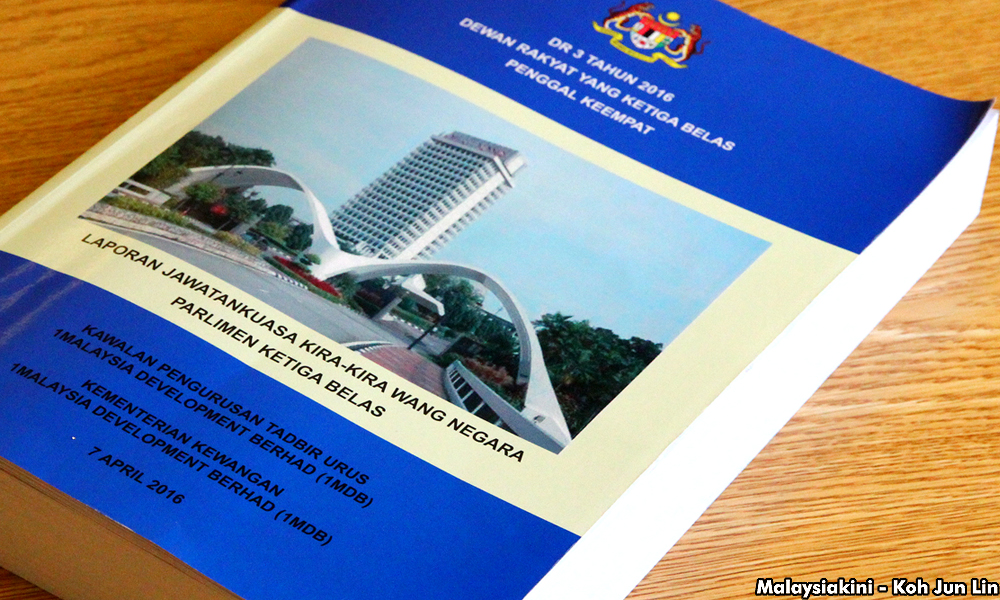
In the Public Accounts Committee (PAC) report tabled in the Dewan Rakyat on 1MDB, PAC said that as of March 31, 2014, 1MDB had invested US$1.56 billion for portfolio management at BSI’s Lugano branch in Switzerland.
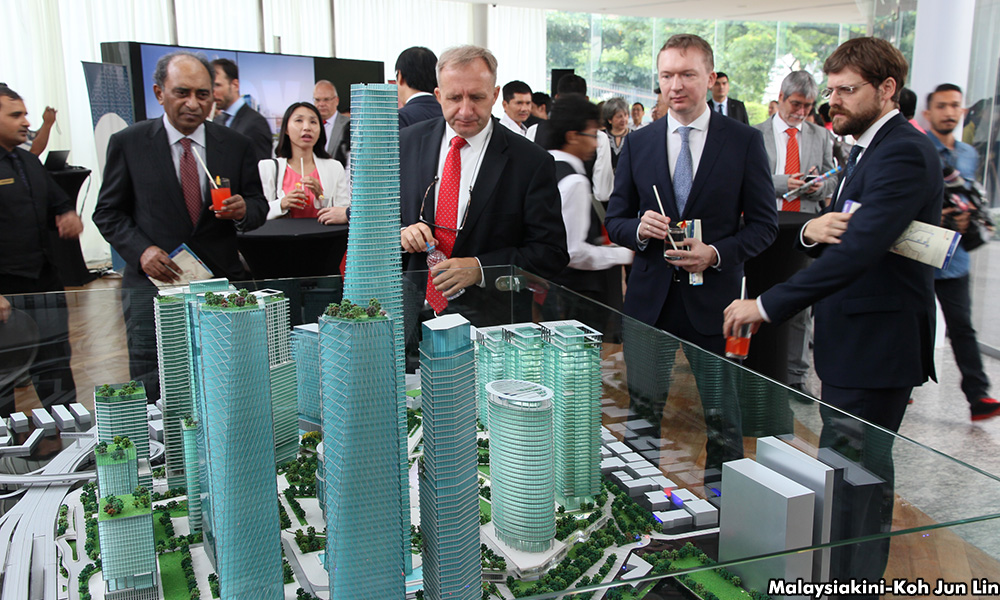
The money is a part of nett proceeds from a US$3 billion bond issuance that was originally meant to raise funds for a joint venture with the Abu Dhabi-based Aabar Investments PJS to invest in the Tun Razak Exchange project (TRX).
“The audit by the National Audit Department found that 1MDB did not inform the Minister of Finance Incorporated (MOF Inc) regarding the change in decision on issuance of the fund which was to be invested in the fund investment up until the investment by (the joint venture) Admic was finalised... ” the report said.
Instead, about US$1.02 billion went to 1MDB and 1MDB Energy, another US$35 million was donated to Yayasan Rakyat 1Malaysia, and US$1.5 million went to the 1MDB subsidiary Brazen Sky Ltd. The remaining US$1.58 billion was invested abroad.
The US Department of Justice’s (DOJ) court filings, provide the most detailed account of the alleged 1MDB money trail to date.
Its account divides the alleged misappropriation of 1MDB into four phases and BSI supposedly played a role in all four. In total, the bank was mentioned by name over 200 times in the filing DOJ submitted in June last year.
The DOJ accused BSI of facilitating money-laundering and mentioned BSI’s involvement in various activities related to the 1MDB scandal, starting from as far back as 2009.
Various players in the 1MDB scandal had purportedly held accounts in BSI, whether through its Singapore branch or its headquarters in Lugano.
These include purported 1MDB subsidiaries 1MDB Global and Brazen Sky Ltd, the British Virgin Islands-based Aabar Investments PJS (Aabar-BVI), tycoon Low Taek Jho, and Low’s company Abu Dhabi Malaysia Kuwait Investment Corporation.
For the record, 1MDB’s former business partner International Petroleum Investment Company (IPIC) had denied that Aabar-BVI is its subsidiary, while 1MDB - which had made payments to Aabar-BVI - had insisted that Aabar-BVI is a genuine IPIC subsidiary.
The DOJ alleges that Aabar-BVI was set up to mimic an IPIC subsidiary by the same name, and was used to divert about US$1.367 billion for the benefit of various entities such as the film production company Red Granite, IPIC chairperson Qubaisi, Aabar CEO Husseiny, Low, and a certain “Malaysian Official 1” (MO1).
What about Falcon Private Bank?
Much like BSI, Finma said Falcon had “seriously breached money laundering regulations by failing to carry out adequate background checks into transactions and business relationships associated with Malaysian sovereign wealth fund 1MDB”.
It said assets totalling about US$3.8 billion linked to 1MDB had passed through accounts at Falcon between 2012 and 2015 but the bank’s management failed to scrutinise these transactions despite raising some red flags.
It said two Falcon’s owners-cum-board members had also initiated a business relationship with 1MDB and other individuals and the bank’s staff thus saw it as “the will of the bank’s owners” to see that these relationships run smoothly.
“Both board members pursued their own illegitimate purposes,” Finma said, without elaborating.
In addition to the 2.5 million Swiss francs fine, Finma banned Falcon from entering business relations with foreign PEPs for three years and threatened to withdraw its banking licence in the event of a future breach.
What was Falcon’s involvement with the 1MDB scandal?
Finma said Falcon had several business relationships with companies within the 1MDB group and helped transact about US$2.5 billion for two of its offshore companies without adequate checks.
It said it also failed to question the commercial background of a US$1.3 billion transaction that was immediately passed from one account to another via the 1MDB account.
Finma’s press release also mentioned that Falcon had a “young Malaysian businessman with links to individuals in Malaysian government circles” among its clients, and said the bank failed to verify how this unnamed individual was about to acquire US$135 million “in an extremely short period of time” among other breaches involving this individual.
Falcon was not mentioned in the PAC report, whether in its report on 1MDB’s corporate governance or the transcript of its proceedings on 1MDB.
The DOJ, meanwhile, claimed Falcon was involved in two out of four phases in the 1MDB scandal. These are dubbed the ‘Aabar-BVI phase’ and the ‘Tanore phase’.
For the Aabar-BVI phase, 1MDB Energy supposedly remitted US$1.367 billion from its Falcon account to Aabar-BVI’s BSI account.
The money came from two separate bond issuances by 1MDB totalling US$3.5 billion, and the payment was purported to be a security deposit for the real Aabar’s parent company IPIC for co-guaranteeing the bonds.
The money was then distributed for the personal benefit of several individuals, including “MO1” who purportedly received US$30 million.
For the Tanore phase, US$1.26 billion was allegedly syphoned out of a 1MDB US$3 billion bond issuance through a certain ‘Tanore Finance Corporation’ bank account in Falcon’s Singapore unit, and another Falcon account held under the name of Granton Property Holdings Limited.
The money was intended for a 1MDB-Aabar joint venture, but again, allegedly went to the personal benefit of certain unrelated individuals instead.
Why was Coutts & Co Ltd fined?
Much like the other two banks, Finma said in its press release that Coutts failed to carry out adequate background checks into business relationships and transactions associated with Malaysian sovereign wealth fund 1MDB.
It said the bank failed to clarify the circumstances surrounding “unusually large, high-risk transactions”, failed to follow up on red flags raised by employees, and failed to report to Swiss authorities despite having substantive information until Spring 2015.
In one example, Finma said Coutts started a business relationship in the summer of 2009 with a “young Malaysian businessman” who claimed that the account would be used to receive US$10 million from his family assets.
“Instead, in the autumn of 2009, approximately US$700 million was transferred to the account from the Malaysian sovereign wealth fund 1MDB. The reasons given for this transaction were inconsistent, and some information was changed retrospectively.
“Moreover, the documents presented in support of the transaction contained obvious mistakes, not least the fact that the identities of the contracting parties were transposed,” the regulator said.
What was Coutts’ involvement with the 1MDB scandal?
Finma said Coutts had business relationships with individuals linked to the 1MDB scandal as far back as 2003 via its Singapore branch and was, therefore, the first Swiss bank to get involved.
“Coutts, through its branch in Singapore, was the first Swiss bank to accept assets from these individuals.
“When the Coutts employees moved to another bank in Singapore in 2009, some of the business relationships were transferred to Coutts Zurich. In total, 1MDB-related assets to the value of US$2.4 billion were transferred through Coutts accounts in Switzerland,” it said.
Apart from what is already mentioned above, Finma said Coutts also “took no action” to clarify the use of US$35 million for visits to casinos and purchases of luxury services such as chartering of yachts and private aircraft.
Meanwhile, the PAC report said that when 1MDB’s board approved a US$1 billion transaction for a joint venture with Petrosaudi International, US$700 million of the amount ended up in a Coutts bank account that is “owned by another company that was not involved in this joint venture project.”
This was listed among many instances where 1MDB’s management acted contrary to its board’s or shareholder’s instructions.
Meanwhile, the DOJ claimed that the US$700 million went to Good Star Limited, which it said belongs to tycoon Jho Low.
For the record, 1MDB claims that Good Star belongs to Petrosaudi while the PAC’s transcripts show that 1MDB only got verification that Petrosaudi owned Good Star six years after the transaction.
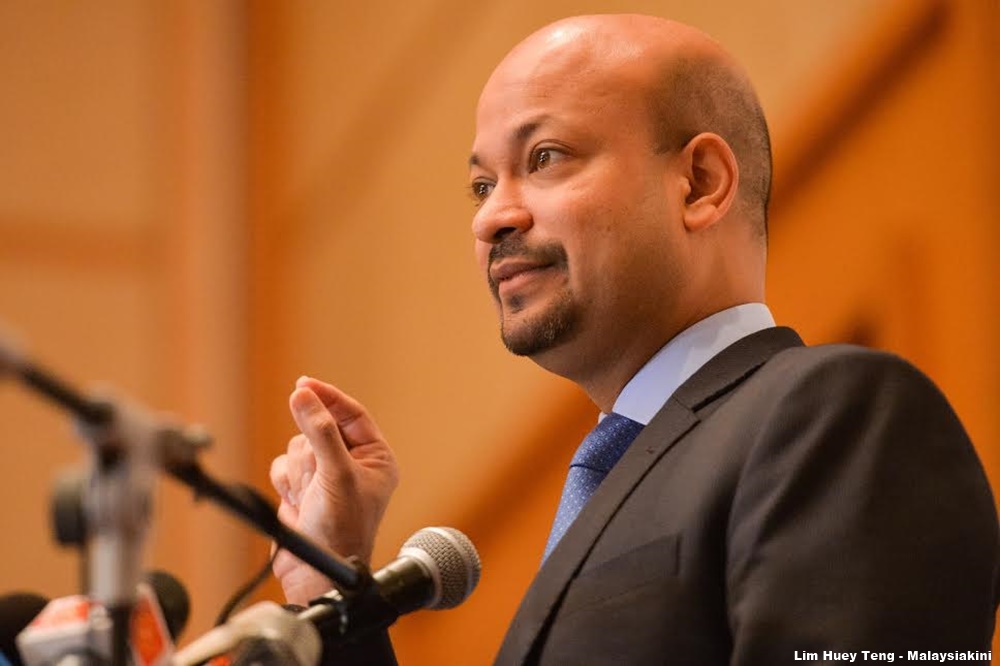
1MDB president Arul Kanda Kandasamy (photo), meanwhile, said the instruction to pay US$700 million to Good Star came from PetroSaudi’s owners through their law firm.
On the other hand, a letter from Bank Negara to the PAC supposedly said Good Star belonged to Low, but this did not make it to the final report allegedly due to PAC chairperson Hasan Arifin’s intervention.
Meanwhile, DOJ also highlighted a number of other transactions involving Coutts just as pass-through transactions involving Dragon Market Limited’s account purportedly controlled by Low.
It received US$518.5 million in transactions from Granton Property Holdings Limited via a Falcon account whereas Granton was among the accounts used for the diversion US$1.26 billion in bonds intended for the development of TRX.
Who can claim the money?
This comes under the Swiss Foreign Illicit Assets Act 2015 (FIAA).
Article 17 of the FIAA stipulates that restitution of seized illicit funds should be made in pursuit of one of two objectives.
The first is to improve the living conditions of those in the country of origin, and the second is to strengthen the rule of law in the country of origin and thus contribute to the fight against impunity.
The Swiss government may deduct expenses to cover the cost of freezing, seizing, and returning the assets, and may decide the amount deducted on a case-by-case basis. However, the amount may not exceed 2.5 percent of the value of the confiscated assets.
This instalment of KiniGuide was compiled by KOH JUN LIN.


