


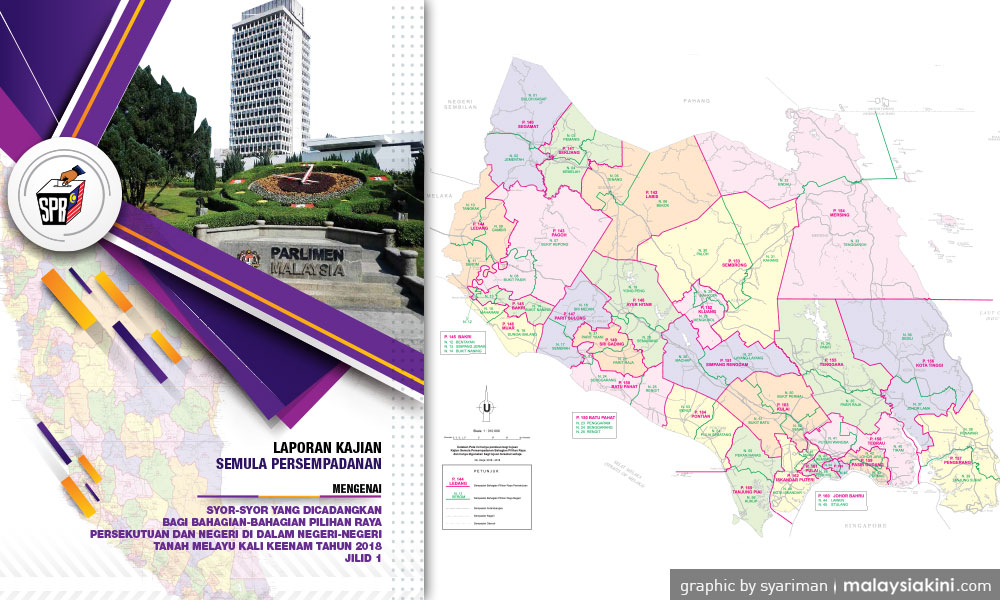

Redelineation would make Johor BN safer in four marginal seats
GE14 | The new electoral boundaries for Johor will likely see BN doing better than in the last general election, assuming voting trends do not change and no anti-establishment Malay tsunami is coming.
According to Malaysiakini's analysis, the new boundaries will likely help BN win with bigger majorities in the parliamentary seats of Muar and Pulai and the state seats of Mahkota and Paloh...
GE14 | The new electoral boundaries for Johor will likely see BN doing better than in the last general election, assuming voting trends do not change and no anti-establishment Malay tsunami is coming.
According to Malaysiakini's analysis, the new boundaries will likely help BN win with bigger majorities in the parliamentary seats of Muar and Pulai and the state seats of Mahkota and Paloh.
Muar, Pulai and Mahkota are seats where the incumbents are from Umno while the Paloh incumbent is from MCA. The four are marginal seats for BN.
Meanwhile, the new boundaries may cost DAP two state seats - Pengkalan Rinting and Pekan Nenas.
Overall, 19 out of the 26 parliamentary constituencies in Johor have had their boundaries changed - Pagoh, Ledang, Bakri, Muar, Parit Sulong, Ayer Hitam, Sri Gading, Simpang Renggam, Kluang, Sembrong, Mersing, Tenggara, Kota Tinggi, Johor Bahru, Pulai, Gelang Patah, Kulai, Pontian and Tanjung Piai.
As for state constituencies, 34 out of 56 will have new borders - Bukit Serampang, Jorak, Gambir, Serom, Bentayan, Sungai Abong, Maharani, Sungai Balang, Semerah, Sri Medan, Parit Yaani, Parit Raja, Semarang, Machap, Layang-Layang, Mengkibol, Mahkota, Paloh, Kahang, Endau, Tenggaroh, Panti, Pasir Raja, Sedili, Johor Lama, Tanjong Puteri, Pengkalan Rinting, Skudai, Nusa Jaya, Bukit Batu, Benut, Pulai Sebatang, Pekan Nenas and Kukup.
Deputy ministers to benefit
Over at Muar, the new boundaries will remove the Bandar Barat polling district - a Chinese-majority opposition stronghold - to the neighbouring Bakri parliamentary constituency.
This will likely benefit incumbent Muar MP and deputy minister Razali Ibrahim (photo), who retained his seat in 2013 with a slim four percent majority.
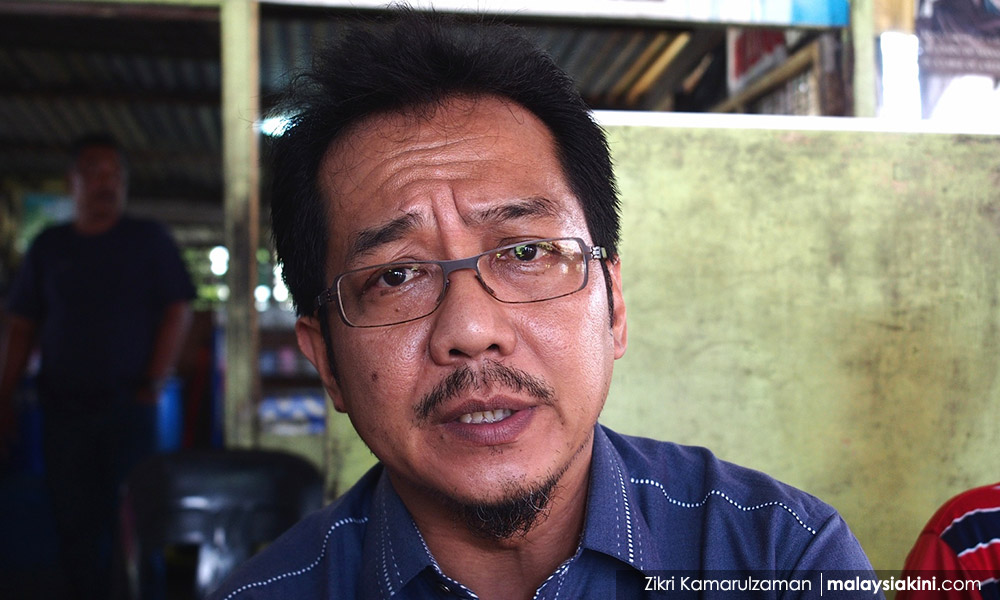
Assuming all things remain equal, Muar, without Bandar Barat, can double Razali's majority vote in GE14 and make it even more difficult for his opponents - who include Bersatu Youth chief Syed Saddiq Syed Abdul Rahman.
Over at Pulai, five polling districts have been moved to two other parliamentary constituencies. Of the five, four have Chinese-majority voters while the Ulu Ayer Molek polling district is a Malay-majority area that was overwhelmingly supportive of the PAS candidate in 2013.

Assuming all things remain equal, Pulai MP and Deputy Home Minister Nur Jazlan Mohamed's (photo) majority can go up by about 57 percent.
Holding two state seats with a greater majority
It is expected that the redelineation will increase state cabinet member Md Jais Sarday’s majority for the Mahkota state seat, where he edged a PAS candidate by just 1,108 votes in 2013.
This was because the Padang Tembak polling district, which has a Malay majority where BN won with just a 135-vote majority, has been moved from the neighbouring Mengkibol constituency.
At the same time, three Chinese-majority polling districts - Kampong Paya Timor, Kampong Paya Barat and Kampong Melayu Timor - which sided with the opposition in 2013, will be crafted out from Mahkota to Mengkibol.
As for Paloh, which MCA won with a 103-vote majority in 2013, the Election Commission (EC) has included the Felda Kahang Barat polling district to the constituency, which BN won the last round with a big majority.
Assuming all things remain equal, MCA should win Paloh with at least a four-figure majority.
DAP may lose two seats
While DAP is widely seen as an unexpected benefactor from the redelineation exercise, the same principle cannot be applied to the Pengkalan Rinting and Pekan Nenas state seats.
In the last election, DAP's Cheo Yee How (photo) and Yeo Tung Seong beat MCA candidates by slim 1,970 votes and 2,669 votes majorities in Pengkalan Rinting and Pekan Nenas respectively.

After redelineation, Pengkalan Rinting will lose five polling districts, namely Ulu Ayer Molek, Kebun Teh, Jaya Mas, Selesa Jaya and Sri Sinding - all part of the Pulai parliamentary seat polling district reshuffle.
DAP gained a 2,341-vote majority in the five polling districts. If the majorities are excluded, DAP may lose to MCA by a majority of 371 votes.
On Pekan Nenas state seat, the EC added Parit Kudus and Tanjong Ayer Hitam polling districts from the Pulai Sebatang state seat. Both Malay-majority polling districts are in favour of BN, giving it a 1,065-vote majority in the last general election.
Meanwhile, EC removed Parit Mesjid and Parit Mesjid Darat polling districts to the Pulai Sebatang state seat while moving another two polling districts - Jalan Rimba Terjun and Kampong Duku - to the Kukup state seat.
Except for the Malay-majority Parit Mesjid Darat polling district, the other three are Chinese-majority. DAP netted a 2,861-vote majority here.
The redelineation may see DAP lose Pekan Nenas by a majority of 1,257 votes.
Amanah sole seat in danger
On the other hand, Parit Yaani, the sole seat held by Johor Amanah, may be in greater danger after the redelineation.
Parit Yaani will lose the Chinese majority Taman Sri Saga polling district to Parit Raja state seat in exchange for Malay majority Parit Jambi polling district from the Semarang state seat.

The opposition won the Taman Sri Saga polling district by a 571-vote majority, while BN gained Parit Jambi by a 175-vote majority.
In the last polls, Johor Amanah chief Aminolhuda Hassan (photo), who was then in PAS, only conquered Parit Yaani with a 1,188-vote majority. With the redelineation, his majority may be reduced to a 445-vote majority, putting Aminolhuda in danger as PAS may join in, making it a three-cornered fight.
Nevertheless, the EC has also suggested changing the name of two parliamentary seats and eight state seats, as below:


Report this comment
Are you sure you want to delete this comment?
This action cannot be undone.