


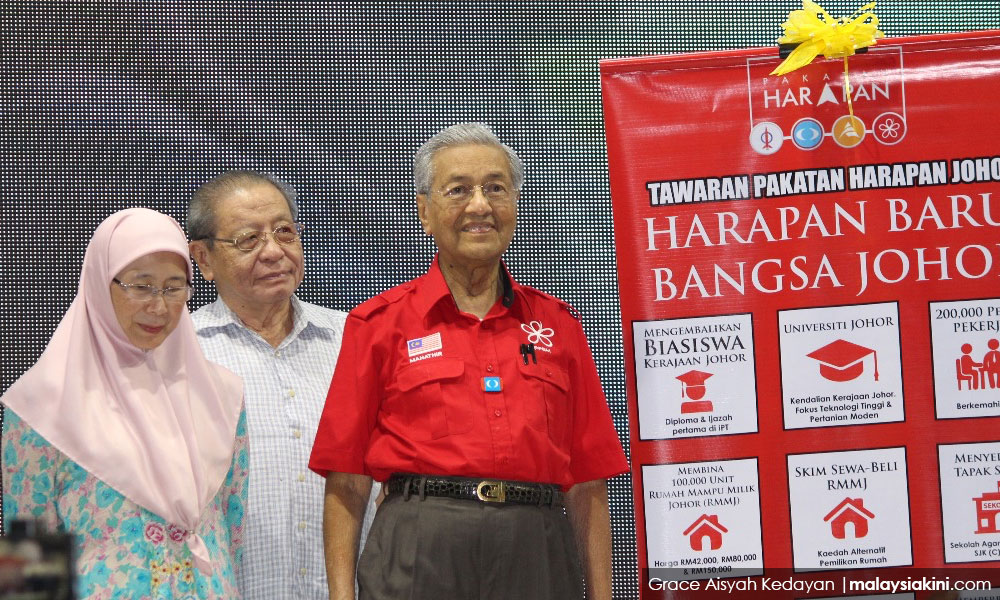

Kit Siang: Once a hegemon, Dr M now a consensus builder
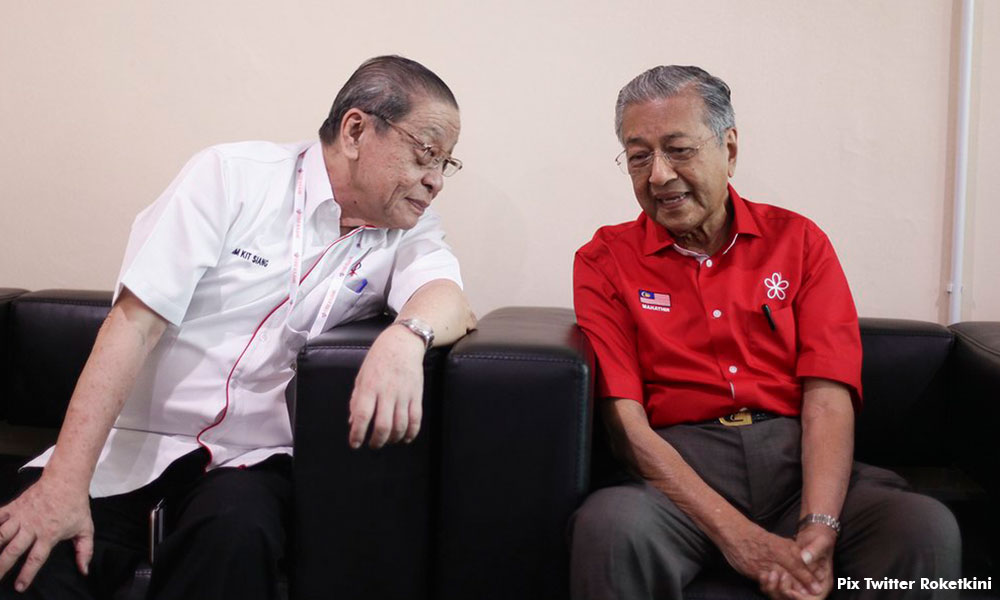
INTERVIEW | As an opposition leader for five decades, Lim Kit Siang has witnessed Dr Mahathir Mohamad’s rise to power and scrutinised the latter’s 22 years as prime minister.
Lim's work as a government watchdog had resulted in him, in his own words, being once a “guests of His Majesty’s government” which is a reference to his incarceration without trial during Operasi Lalang.
INTERVIEW | As an opposition leader for five decades, Lim Kit Siang has witnessed Dr Mahathir Mohamad’s rise to power and scrutinised the latter’s 22 years as prime minister.
Lim's work as a government watchdog had resulted in him, in his own words, once being a “guest of His Majesty’s government”, which is a reference to his incarceration without trial during Operasi Lalang.
Once bitter political foes, the duo started making public appearances together in 2016, after they found common ground in pursuing the 1MDB affair and then-prime minister Najib Abdul Razak’s removal from power.
Later that year, there were officially political allies after Bersatu’s entry into Pakatan Harapan with Mahathir appointed leader of the coalition.
In an interview with Malaysiakini, Lim credited Mahathir as one of the “game changers” for the Malaysian opposition, noting how the nonagenarian was capable of leading the four parties into GE14.
Lim stressed that he does not make decisions together with Mahathir, who chairs the Harapan presidential council.
“But from what I can gather, I think the environment for a hegemon is no longer there. He is very careful and consults the other three parties.
“He is (now engaged in) consensus building. From a hegemon, he has become a consensus builder.
“I think he is (adapting) to a complete change in political environment and political culture. That is very important,” said Lim.
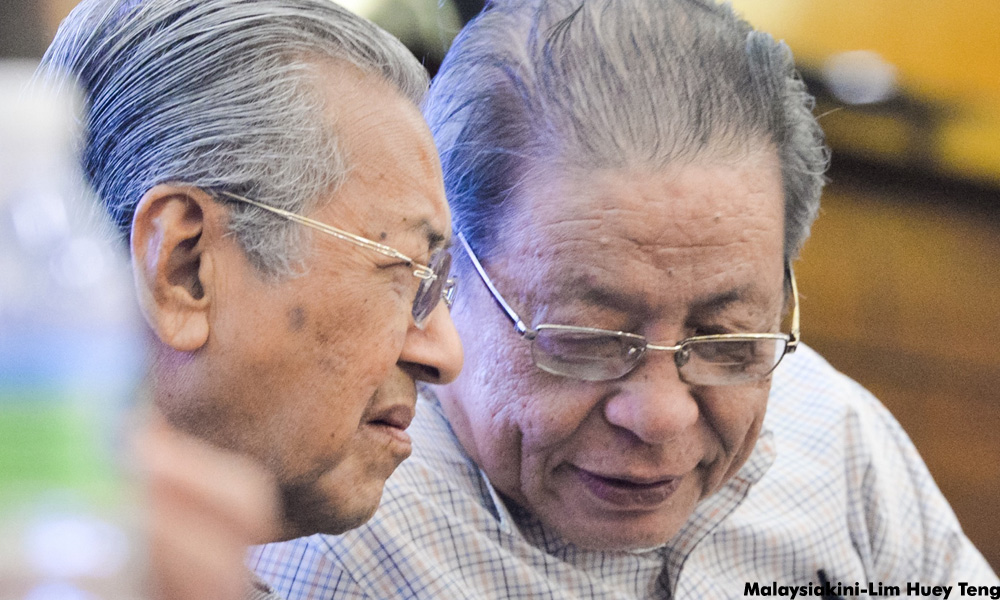
Throughout the 11-day campaign period, Lim and Mahathir never shared the same stage even once, but both were stumping for Harapan with the same coherent message: Malaysia had to be saved from kleptocracy.
This, said Lim, was not by design and Harapan’s success was bigger than their relationship.
“It is the cooperation of four parties in Pakatan Harapan. I don’t know why it has to be seen as Lim Kit Siang and Mahathir. It is not a Lim Kit Siang and Mahathir affair,” said a bemused Lim.
Lim stressed that not only did Mahathir have to adapt to a new environment by working with the opposition, the established opposition parties themselves had to adapt and be more sensitive to each other’s needs.
Excerpts from Malaysiakini’s May 11 interview with Lim, edited and arranged for brevity, are as follows:
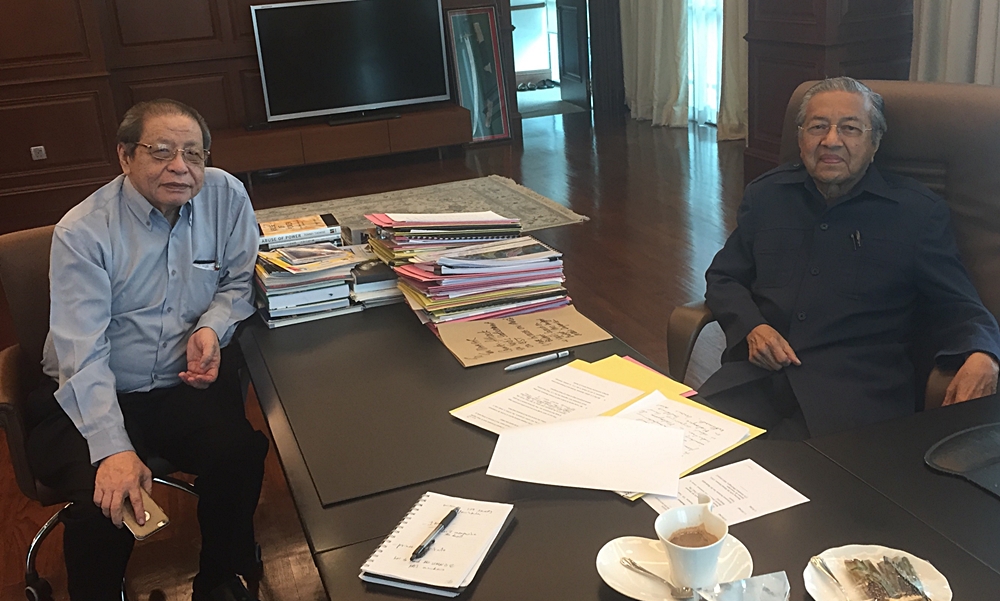
Malaysiakini: What was your working relationship with Mahathir like?
Lim: I think he has - and I am not in the presidential council - but from what I can gather, I think that environment of a hegemon is not there. He is very careful and consults the other three parties. He is a consensus builder.
From a hegemon, he became a consensus builder. I think he has had a complete change in political environment and political culture. That is very important.
Malaysiakini: Did Harapan bring out the best in Mahathir?
Lim: I think it is a learning process, I think we have all to learn to adapt to a new changing environment. That is not only on Mahathir, it goes to all political actors involved.
Malaysiakini: How did you adapt?
Lim: We must adapt, we must be able to get along. It is not only about our views, we must be aware and be more sensitive to all other views.
When we started off, of course, we were more vocal, because we were unaware and because we disregarded these things. As we move, there are other areas that we have to be equally sensitive in, if we are not to be misunderstood.
Malaysiakini: Despite your acrimonious history, both you and Mahathir appear to have run a very coherent campaign. How was this achieved?
Lim: Our focus is on the present and the future, not the past. Of course, our differences in the past are there, it is public record. I went through Operation Lalang. I went to Kamunting. But we were more concerned, despite these differences, on building a common understanding and common bond for the future.
It is not a cooperation between Lim Kit Siang and Mahathir, it is the cooperation of four parties in Pakatan Harapan. I don’t know why it has to be seen as Lim Kit Siang and Mahathir. It is not a Lim Kit Siang and Mahathir affair.
Malaysiakini: Who reached out first for the Citizen’s Declaration?
Lim: The initiative was his, not mine. But previously, (amidst the 1MDB affair), I have been suggesting that we must come together for every Malaysian. Before (the Citizen’s Declaration) you can see my statements suggesting that everybody should come together to save the country.
Malaysiakini: Some would argue that the Citizen’s Declaration was not successful.
Lim: It was part of creating awareness among the people and to help us move towards a new Malaysia. It is an important part of the process. I wouldn't say it is inferior, everybody is inferior. From there you got people (together). It was more focused on Najib.
When I read the whole thing, I thought that the thing we want (as Malaysia) was not only to bring down Najib, but to ensure that there is not a second Najib. There must be constitutional reforms, a major reform, and you can see it is already there in the last two, three parts of the declaration.
Malaysiakini: You mentioned there should not be a second Najib, but now we have a “second Mahathir”.
Malaysiakini: As for Mahathir, as he is now in Pakatan Harapan, it is a new Mahathir. Of course, the question is whether there will be a reversion to Mahathirism, but then that is not what Pakatan Harapan is all about.
Pakatan is not BN, as I said, the culture of political hegemony and environment is very different from the culture of Pakatan, yet it is based on consensus of four parties and the prime minister will decide, nonetheless, but it is based on coalition consensus.
Malaysiakini: Perhaps we can now coin the term Harapan-ism.
Lim: If it happens. We should not pronounce judgments before it happens, isn’t it?
Malaysiakini: You have had electoral battles with many prime ministers. Which was the most formidable one? How do you compare this battle with the ones before?
Lim: I don't think you can really compare one election with another. It involved different circumstances and challenges, and what the then-prime minister could do in that circumstances, especially in the last two elections when there was a possibility you might transform the opposition into a government.
So we can only compare 2013 with 2018. You can’t compare with other elections. Back then, we were as large an opposition as we could be, but we couldn’t even shake the roots. Those were very challenging and difficult times.
Malaysiakini: If compared with your previous opponents, would you consider Najib a gentleman?
Lim: If he were a gentleman, then there wouldn't have been so many political prosecutions, using the institution of the state to harass and intimidate to deal with Pakatan Harapan and civil societies leaders.
Malaysiakini: Wasn’t that the case in the Mahathir-era?
Lim: Same thing. Fair enough. You have that. But there were different situations. Now we have a different situation - an opposition is trying to replace the government.
For that matter, as far as Mahathir is concerned, he did not clamp down on Tengku Razaleigh Hamzah’s challenge (in 1987). He did not stop Semangat 46 from being registered.
Malaysiakini: Did any of these challenges ever feel overwhelming?
Lim: I think when we deal with the prime ministers, you are not just dealing with the person. You are dealing with the laws and institutions that they invoke. It is the laws and institutions they invoke that are formidable.
This is the second part of Malaysiakini’s May 11 interview with Lim Kit Siang.


Report this comment
Are you sure you want to delete this comment?
This action cannot be undone.