


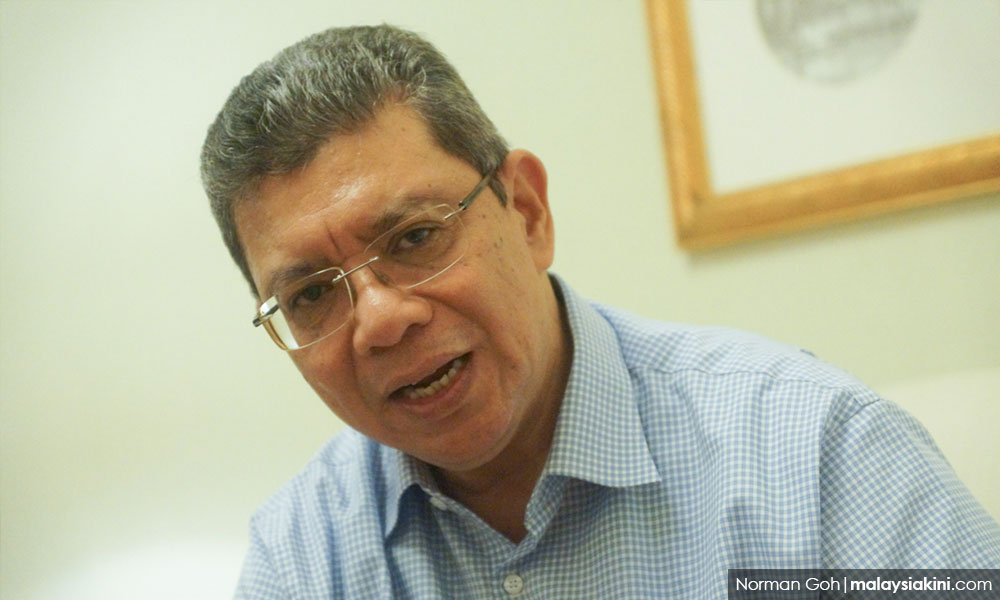

Saifuddin: More mature politics ahead after Harapan's first 100 days
INTERVIEW | After more than 100 days since Pakatan Harapan took over the federal government, Foreign Minister Saifuddin Abdullah is confident that the evolution of a more mature political model is the main element of a “New Malaysia”.
Saifuddin was speaking to Malaysiakini in China during a trip with Prime Minister Dr Mahathir Mohamad last week...
INTERVIEW | After more than 100 days since Pakatan Harapan took over the federal government, Foreign Minister Saifuddin Abdullah is confident that the evolution of a more mature political model is the main element of a “New Malaysia”.
Saifuddin was speaking to Malaysiakini in China during a trip withPrime Minister Dr Mahathir Mohamad last week.
Reflecting on Harapan's achievements in its first 100 days, Saifuddin says he believes the coalition can bring a "more progressive democracy" to the country.
"I believe that we can fulfil the (manifesto) promises and, what is more important, the realisation of a configuration or model of a more matured politics.
"We can achieve a more progressive democracy because the elements can be seen clearly,” he said.
He added that this was not about Harapan’s victory in the 14th general election, but rather, the victory of centrist politics.
“A more centrist approach is good for the people of Malaysia,” he said.
The Indera Mahkota MP mentioned that the leadership has proven that they can form a government in a short timeframe despite facing unprecedented challenges and scandals left by the previous BN administration.
"It's a big mess, and it is unprecedented. We managed to fulfil part of the ten promises in the first hundred days and also some of the other promises in the manifesto."
Despite all that, he said, the most important task is to realise the efforts of the Reformasi agenda.
Saifuddin noted that the administration had begun the process of building the foundations of a “New Malaysia”, which would be more inclusive and progressive.
"It involves a paradigm shift, a change of approach that will bring more beneficial policies and programmes for the people," Saifuddin said.
Long-term changes
This year, the country witnessed its first change of government after Harapan’s historic win in the 14th general election.
To Saifuddin, many Malaysians are still trying to understand such a significant change for the country.
"This is the first time in Malaysia, seeing a change of government at the federal level.
"To some Malaysians, it was something that they can't imagine and because of that, they are still waiting for what has to be done," he added.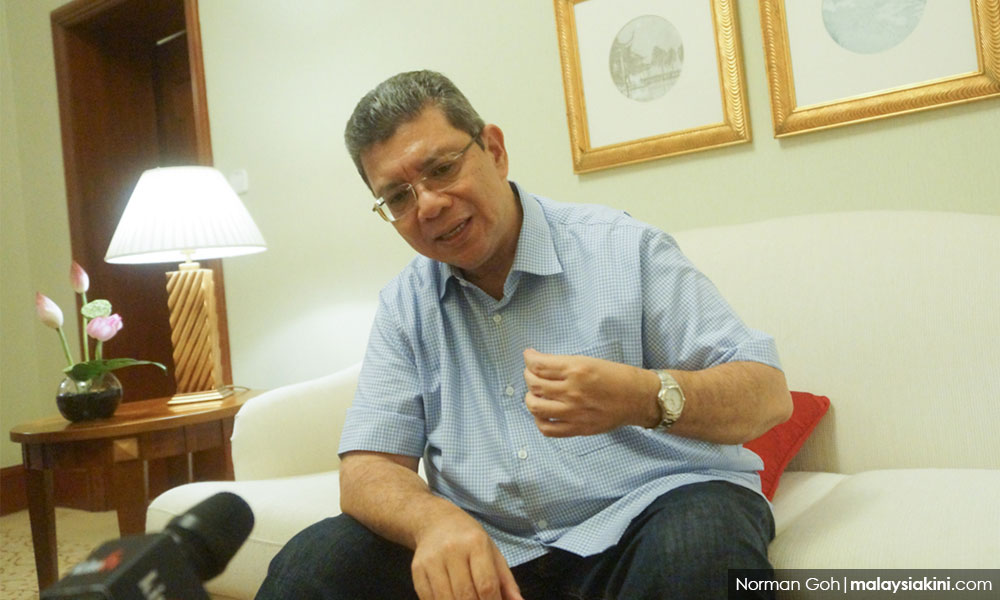
Saifuddin noted that there were some initiatives that were easier for the public to comprehend, such as the removal of National Higher Education Fund Corporation (PTPTN) loan defaulters from a travel blacklist, the repeal of the Goods and Services Tax (GST) and introducing Employees Provident Fund (EPF) contributions for housewives.
However, said Saifuddin, more specific reform agendas such as the appointment of an opposition MP as the chairperson of the parliamentary Public Accounts Committee (PAC) would not bring about immediate results.
That includes Harapan's proposal to establish parliamentary select committees for various issues.
"The same goes with several new approaches such as the consultative council as the new cornerstone for the administration.
"Some ministries have already announced respective consultative councils and Wisma Putra is expected to have one soon. We will be inviting non-governmental stakeholders to be a part of the consultation.
"These (initiatives) will be for the long-term. I'm not surprised at all if some people say that they have not seen any changes yet because these policies will have a long-term effect in our country," Saifuddin explained.
Below is the full interview with Saifuddin:
What is your opinion on Harapan manifesto committee member Rais Hussin telling Harapan leaders to read the manifesto, and do you think that people are actively participating in the democratic process in the ‘New Malaysia’?
There are three things that I've observed on this issue.
Firstly, Harapan's manifesto is among the best we have come up with. The manifesto was created for Harapan to be a government, not for when we are in a situation contemplating to be a government. That is why we were quite rational in unveiling sixty promises and five pledges.
Secondly, it is about how we can interpret the manifesto, and I believe what Rais meant is for us to interpret and execute the manifesto in terms of policies and programs that are beneficial for Malaysians.
The manifesto is a motherhood statement per se, it is seen as a general statement although some parts are quite detailed.
Last but not least, discipline plays a very important role in Harapan at all levels of leadership including cabinet ministers or party leadership.
A week ago, Mahathir spoke at a dinner event with all the ministers, deputy ministers, members of parliament and Harapan officers. Among the issues he spoke about was on discipline.
What about discipline?
It is very vital to have that discipline within the party and in the government, executing our responsibilities well.
We are already the government of the day, so we have to think as a government. That does not mean that once we're in the government, every single thing will be changed. It doesn't work that way.
When we're the government, we have to be tactful with our words especially to the public because every action and word we say will be scrutinised by the people.
What do you think about the mindset of Malaysians after GE14?
It is very interesting this time, and I think this is a very important development of democracy in this country.
Back then, people would go to the ballot boxes to vote and to choose the party to govern the country.
Now, we saw an increased political awareness and the people have stated that they want to be a part of the process. This is the approach of political participation. They want to be a part of the decision-making process.
Therefore, never ever say that we will come back five years later to listen to their opinions about governing the country.
Many people gave criticisms and suggestions online. This was not that apparent previously. To me, these changes give a breath of fresh air.
We are already moving towards a more matured democracy in Malaysia.


