




RMK11 review indicates digital, carbon tax on the horizon
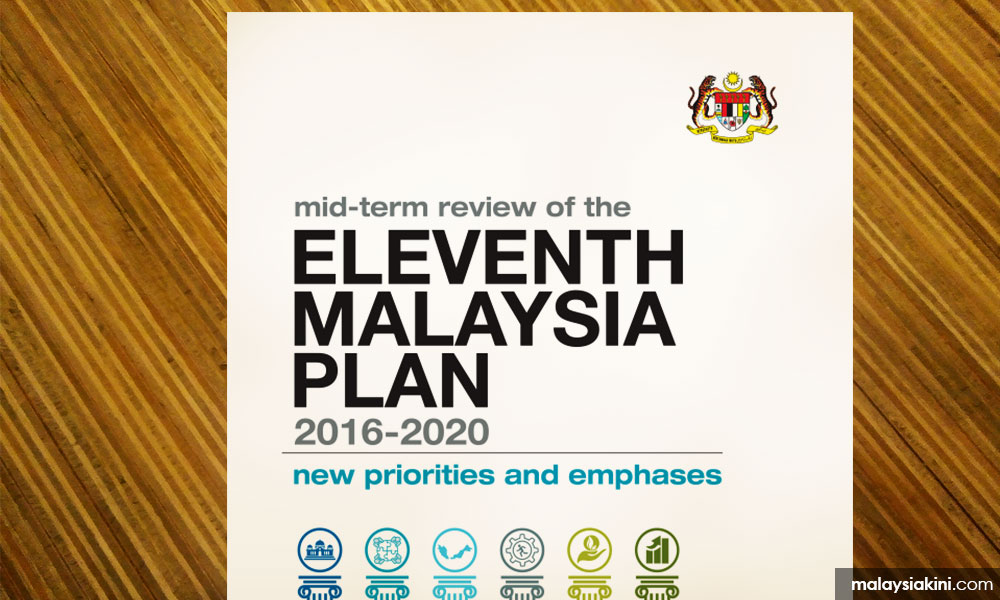
RMK11 | The mid-term review of the 11th Malaysia Plan (RMK11) indicates that a digital tax is on the horizon.
Unlike past reviews, which focused on the country’s performance in the first two years of the five-year plan, the review this time also outlines realigned priorities following the installation of a new government.
The mid-term review, prepared by the Economic Affairs Ministry, notes that the government will receive less revenue from public tax collection...
RMK11 | The mid-term review of the 11th Malaysia Plan (RMK11) indicates that a digital tax is on the horizon.
Unlike past reviews, which focused on the country’s performance in the first two years of the five-year plan, the review this time also outlines realigned priorities following the installation of a new government.
The mid-term review, prepared by the Economic Affairs Ministry, notes that the government will receive less revenue from public tax collection.
This is due to the abolition of the goods and services tax, and the implementation of the less extensive sales and service tax.
"As e-commerce and activities related to the sharing economy are on the rise, the government will explore imposing tax on these online transactions," it reads.
At present, among the most widely-used services in the sharing economy are ride-hailing services, such as Grab.

The review says Putrajaya will also work to diversify its revenue by increasing contributions from indirect taxes and non-tax revenue.
"More initiatives to improve tax compliance will also be undertaken to ensure collection is maximised from both direct and indirect taxes."
Meanwhile, in his speech, Prime Minister Dr Mahathir Mohamad said the government was looking at the implementation of a "carbon tax" as part of its efforts to mitigate climate change.
This is on top of other green initiatives including banning single-use plastics and increasing the use of renewable energy.
Budget preparation reforms
The RMK11 review also outlines planned reforms for the management of the country's finances, including how the budget is prepared.
"The government is committed to adopting greater transparency in public finance reporting by accelerating the full implementation of accrual accounting.
"Obligations such as debt, contingent liabilities and financial leases will also be accounted for when the obligations are undertaken, enabling a more comprehensive management of public finance," it reads.
According to the plan, regular reporting of the country's debt will also be carried out.
"Financial governance will be further improved to ensure institutional checks and balances.
"Systematic, comprehensive and transparent financing governance mechanism and debt management system, as in Indonesia and Thailand, will be established in Malaysia.
"Therefore, the debt position of the nation will be regularly reported to the public, strengthening financial management and credibility of the government."
Necessary purse-tightening
Apart from fiscal challenges, the RMK11 review also highlights global economic uncertainties such as the ongoing trade war.
As such, the review has lowered the country's initial gross domestic product target of five to six percent under the 11th Malaysia Plan to 4.5 to 5.5 percent for the remaining three years.
Furthermore, it said that going forward, the development expenditure ceiling would be lowered from RM260 billion to RM220 billion for the overall five-year period to consolidate the country’s fiscal position.
However, the government hoped the private sector would be able to help alleviate the impact of reduced developmental expenditure.
"This is necessary, taking into account lower government revenue contributed by volatile global crude oil price during the review period and the abolition of GST in 2018."
While the government will focus on improving its fiscal position and addressing debt, the document notes that growth will not be neglected.
"These measures will be balanced with the need to sustain growth and deliver quality public services in ensuring the wellbeing of the rakyat.
"However, fiscal targets will be flexible during the transition period of the new administration to shore up growth.
"The economy may react to these immediate fiscal reforms in the short term, but these reforms are necessary in order to lay down a firmer foundation for more sustainable and inclusive growth," it reads.
The 11th Malaysia Plan is designed to guide the country's socioeconomic development for the period between 2016 and 2020.
RELATED REPORTS
Dr M hopes RMK11 review will turn M'sia from kleptocracy to democracy
RMK11: Gov't to empower minorities alongside bumi agenda
More attention for opposition states under reprioritised 11th M'sia Plan
Highlights of RMK11 midterm review


Are you sure you want to delete this comment?
This action cannot be undone.