



Possibilities in living, and the finality of dying
COMMENT | A friend, years younger than me, died two weeks ago. His Facebook profile, though, is very much alive with videos of his recent family holidays and goodbyes from friends.
As friends pass away, and some come to terms with their devastating cancer prognoses, it makes me pause and reflect on the possibilities in life and the finality of death.
Sooner or later we will confront the reality of our own mortality and walk through the ‘valley of the shadow of death’. It is not death that I fear, though, not as much as the saddening thoughts of loved ones I will leave behind, and the process of dying that raises many existential questions.
What have I really done to help others during my productive years? What will I do or change if I know I have only a few months left to live?
How will I die? What happens after my life’s screen fades to black? None knows a rational answer to the latter, except perhaps through one’s faith in a divine force and a belief in the hereafter.
As I grow older and see the people I love pass on, I wonder about what the Psalmist had said about “the days of our years”, be they in “three score years and ten”, or if “by reason of strength they be four score years” are soon “cut off, and we fly away”.
Yes, with few signs or silent warnings, our lives may be cut short and we fly away. At this time of writing, countless cells in my body are dying. Some are being repaired or replaced by new ones. Some are programmed to self-destruct. Some, by chance, mutate into cancerous tumours.
The physical body breaks down faster than you’d think once you cross the 60-year mark. There’s an awry sense of one’s wellbeing diminishing, our cognitive state slowly declining, regressing to a second childhood to one day relying on others to change, wash and feed us. That’ll be the day I dread...
COMMENT | A friend, years younger than me, died two weeks ago. His Facebook profile, though, is very much alive with videos of his recent family holidays and goodbyes from friends.
As friends pass away, and some come to terms with their devastating cancer prognoses, it makes me pause and reflect on the possibilities in life and the finality of death.
Sooner or later we will confront the reality of our own mortality and walk through the ‘valley of the shadow of death’. It is not death that I fear, though, not as much as the saddening thoughts of loved ones I will leave behind, and the process of dying that raises many existential questions.
What have I really done to help others during my productive years? What will I do or change if I know I have only a few months left to live?
How will I die? What happens after my life’s screen fades to black? None knows a rational answer to the latter, except perhaps through one’s faith in a divine force and a belief in the hereafter.
As I grow older and see the people I love pass on, I wonder about what the Psalmist had said about “the days of our years”, be they in “three score years and ten”, or if “by reason of strength they be four score years” are soon “cut off, and we fly away”.
Yes, with few signs or silent warnings, our lives may be cut short and we fly away. At this time of writing, countless cells in my body are dying. Some are being repaired or replaced by new ones. Some are programmed to self-destruct. Some, by chance, mutate into cancerous tumours.
The physical body breaks down faster than you’d think once you cross the 60-year mark. There’s an awry sense of one’s wellbeing diminishing, our cognitive state slowly declining, regressing to a second childhood to one day relying on others to change, wash and feed us. That’ll be the day I dread.
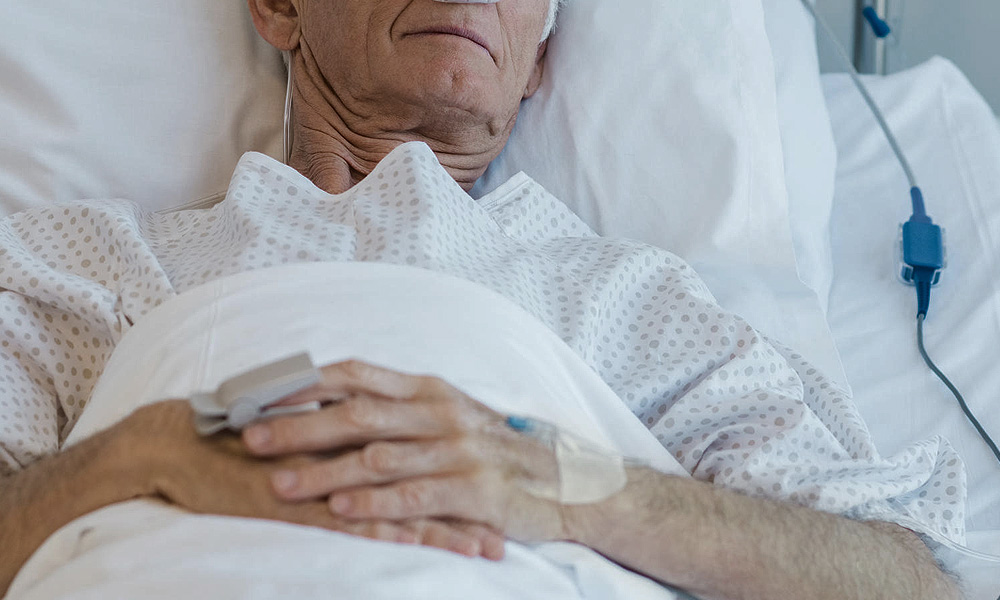
Advanced medical technology may delay our decay, but in the end, we all die. And, if I have a choice when my time comes, I would not want to have myself dying in an intensive care unit, nor in a nursing home.
Death somehow becomes metaphorical as age catches up. From the cradle to the grave, it’s a one-way fare with no check-in luggage. I will cease to be, except for my surreal self which will continue through my limited written work lurking in cyberspace long after I’m dead and gone.
Paradox of life and death
Seeing friends and loved ones being struck down by dreaded cancers, life does take on a poignant turn and meaning. There’s still so much to do, but so little time. Impending death gives our lives a deeper meaning.
That’s the paradox of life and death I feel daily since my brother was diagnosed with cancer and recently decided to terminate his chemotherapy treatment for palliative care, and spend the precious time he has left with loved ones.
As he said in expressing his undying faith in Christ, “I am not afraid of the future now, and I’m not afraid of the outcome with this current health crisis.”
Neither are we, dear brother. I wonder where your thoughts wander in your moments of solitude? I will miss you dearly when your time comes.
I will die too over the next decade or two, or less, going by the average life span statistics. But when death comes, I will not be conscious of it. I know because I have watched my mother dying on her bed three years ago, her organs failing one by one over six days in our family home.
In spite of its shadowy dread, death may not be as frightening as we grow older and frail. Perhaps we’re programmed to accept and adapt to the finality of living.
My Christian faith teaches that my physical death will free me from the sufferings of this life and take on a new form of existence in ‘eternity’. But my hope to live well in the here and now for as long as I can is very real indeed. There’s still much to do.
Ultimately, it’s what I will leave behind for my loved ones that will make my death, when it happens, meaningful. Just as my brother silently wishes for. Here, I am reminded of Julie Yip-Williams from Brooklyn who wrote to her daughters in her blog before she died of colon cancer at age 42:
“You will be deprived of a mother. As your mother, I wish I could protect you from the pain. But also as your mother, I want you to feel the pain, to live it, embrace it, and then learn from it. Be stronger people because of it, for you will know that you carry my strength within you. Be more compassionate people because of it; empathize with those who suffer in their own ways … rejoice in life and all of its beauty because of it; live with special zest and zeal for me.”
ERIC LOO is a senior fellow (journalism) at the School of the Arts, English & Media, Faculty of Law Humanities & Arts, University of Wollongong. He is also the founding editor of Asia Pacific Media Educator.
The views expressed here are those of the author/contributor and do not necessarily represent the views of Malaysiakini.


Report this comment
Are you sure you want to delete this comment?
This action cannot be undone.