




M’sia can be a gateway to aerospace, aviation industry
COMMENT | The aerospace industry is a high-value industry in Malaysia’s diversified economy. Our nation is poised to take a bigger share of the global aviation market for the maintenance, repair and overhaul (MRO) sector with world-class facilities.
Selangor is taking the lead role, with Menteri Besar Amirudin Shari recently expressing that Malaysians are going to witness tremendous growth in the aerospace industry and its ecosystem.
With Subang and KLIA Aeropolis as the two areas for potential growth, the local aviation industry is seen to be experiencing one of its biggest booms ever, surely driving Malaysia’s vision of becoming a global leader in creating airport cities...
COMMENT | The aerospace industry is a high-value industry in Malaysia’s diversified economy. Our nation is poised to take a bigger share of the global aviation market for the maintenance, repair and overhaul (MRO) sector with world-class facilities.
Selangor is taking the lead role, with Menteri Besar Amirudin Shari recently expressing that Malaysians are going to witness tremendous growth in the aerospace industry and its ecosystem.
With Subang and KLIA Aeropolis as the two areas for potential growth, the local aviation industry is seen to be experiencing one of its biggest booms ever, surely driving Malaysia’s vision of becoming a global leader in creating airport cities.
MRO activities have been strongly developed, and Malaysia has become a leading centre in Asia for aircraft maintenance work.
Malaysia has the ecosystem to drive growth with its skills, talent and business-friendly policies. This is in line with its efforts to emerge as a hub, a bustling aviation centre, and a manufacturing powerhouse in the aerospace industry.
Currently, Selangor is also in talks with international aviation firms to relocate several of their operations to Selangor, including around Subang Airport and KLIA Aeropolis.
Selangor has a matured aerospace industry, talent, infrastructure, and connectivity, which can establish Selangor as the aerospace and aviation gateway to Asian countries.
KLIA Aeropolis, a 100-square-kilometre development, brings together three clusters: air cargo and logistics; aerospace and aviation services; and meeting and convention facilities.
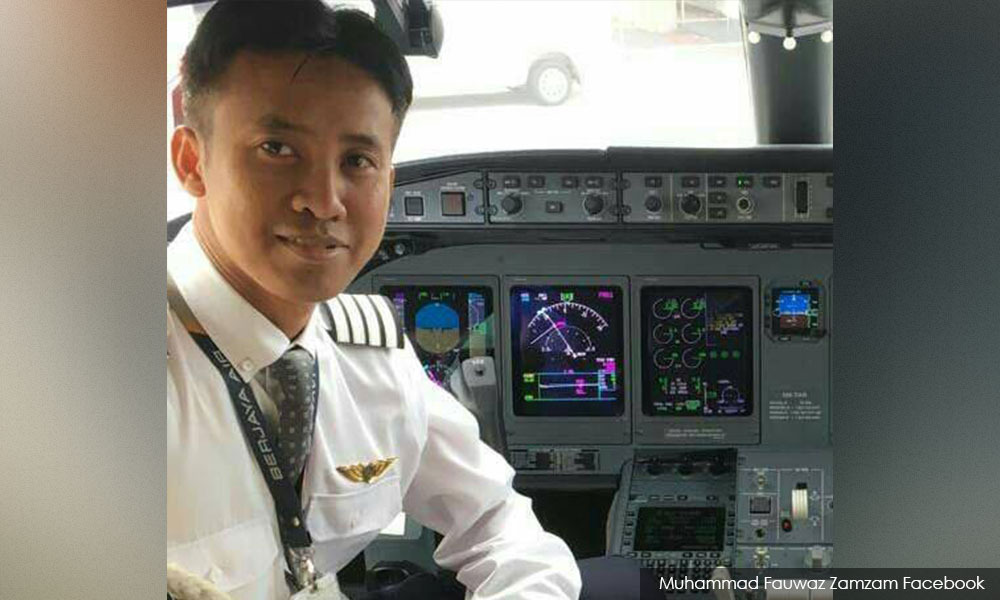
Apart from pilots and cabin crew, the demand for those who work on the ground has increased tremendously, including that for licensed aircraft maintenance engineers and technicians.
The Malaysian Aerospace Industry Blueprint 2030 is a strategic plan for Malaysia to become a world-class player. It has set a vision for Malaysia to be the top aerospace nation in Southeast Asia and become an integral part of the global market by the year 2030, with targeted annual revenue of RM55.2 billion and more than 32,000 high-income jobs to be created.
Surely, we need highly skilled technicians and engineers to meet the demand as we stand on the brink of the Fourth Industrial Revolution.
But there are challenges in creating aircraft maintenance facilities. MROs are not just a covered working space; they involve working across organisational silos which could include planning, engineering, the supply chain, properties, procurement, and technology.
Developing skilled workers
Malaysia is in need of highly skilled human resources in various industries as one of the key drivers of the economy for our nation to become a high-income nation, especially in the aeronautics industry.
In line with the spirit of this, several training institutes have been established to support the growth and development of an effective workforce for the said industry sector.
Aircraft maintenance is an international programme regulated by the Civil Aviation Authority of Malaysia (CAAM). A Form Five school leaver can pursue a basic licence with CAAM to qualify as a professional to serve and maintain aircraft.
On completion of the above, the trainee has to get a Category B1 licence and two years’ working experience.
The licence is offered by CAAM through accredited or approved training centres. With this basic licence and other types of licences along the way, an aircraft engineer can easily earn a high salary within 10 years.
The above programme provides opportunities for the young to undertake structured workplace learning, apprenticeships, hands-on training and full-time employment.
Trainees will master turbine aeroplane aerodynamics and aviation legislation with a more hands-on approach.
But how are the government incentives and funding mechanism for aerospace and aeronautical engineering training students?
In 2012, Boeing forecast that the Asia-Pacific region would need an additional 243,500 aircraft technicians and engineers by 2030 with salaries reaching the five-figure range.
The Malaysian workforce in the aerospace industry and manufacturing as well as MRO is marketable worldwide. Many technical personnel and aircraft engineers are serving global companies abroad.
Our challenges are to further develop technical capabilities, competencies and flexible funding mechanisms for trainees.
M VIVEK served as an aide to several former MIC deputy ministers.
The views expressed here are those of the author/contributor and do not necessarily represent the views of Malaysiakini.


Are you sure you want to delete this comment?
This action cannot be undone.