



Branded 'criminals' back home, S'wak activists seek solidarity in Penang
Sarawak indigenous activists, who are fighting their land being encroached upon by big plantation companies, are seeking support for their plight outside their home state.
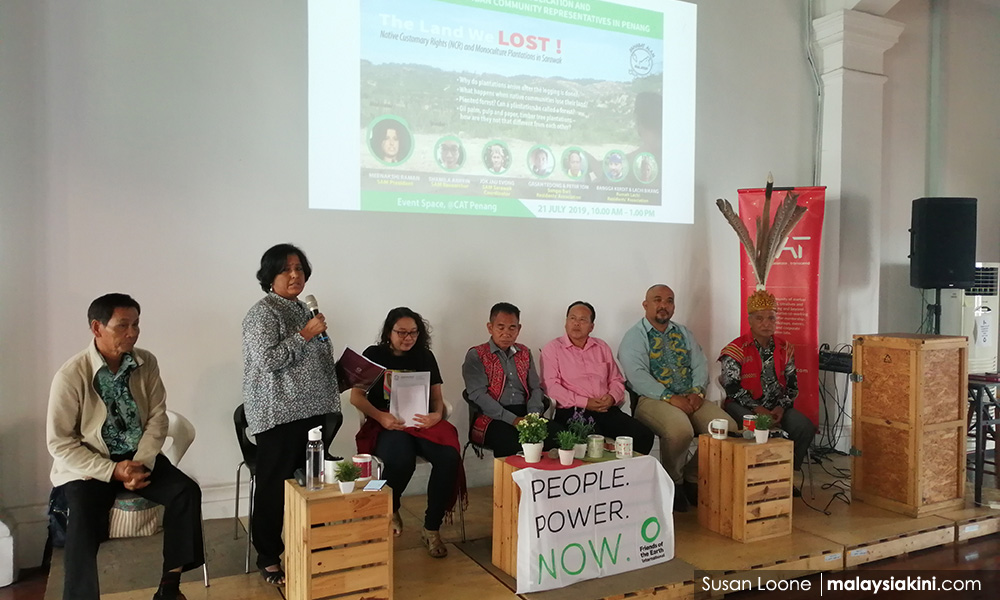
At a public forum in Penang yesterday, the activists shared stories of the loss of their native customary land...
Sarawak indigenous activists, who are fighting their land being encroached upon by big plantation companies, are seeking support for their plight outside their home state.
At a public forum in Penang yesterday, the activists shared stories of the loss of their native customary land.
They lamented the lure of benefits and cash in kind, which has split up families and caused conflict within longhouses, a pitiful outcome of their so-called development.
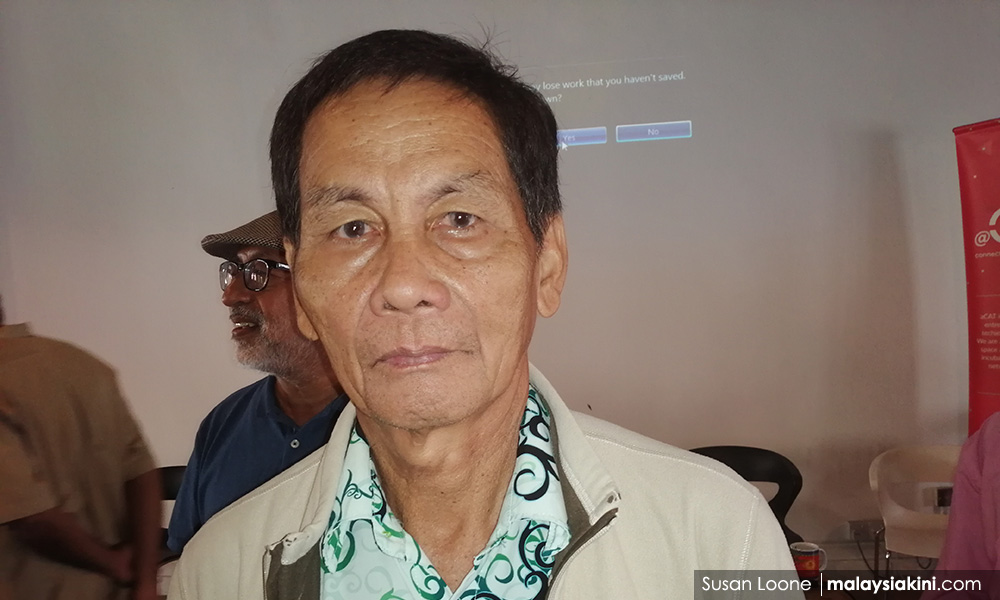
Jok Jau Evong, the coordinator for the Sarawak chapter of Sahabat Alam Malaysia (SAM), said Penangnites – being attuned to the environmental violations happening around them – would understand their plight.
"I was a farmer on my own land. We used to protest against logging activities, but now it is the opening of land by big companies," he said.
"We have been helping the community by handling their complaints about the loss of their native land, but I feel it is very challenging. Although we constantly raise our issues with authorities, unfortunately, our problems have never been solved.
"The more we wait the harder life is, logging used to involve trees only, now land is taken as well."
Jok Jau, the co-founder of the Uma Bawang Residents Association in Sungai Keluan, Baram, said that there are many communities that support the plantations, and receive allowances from the government.
Efforts are being made to unite the villagers, but it is a daunting task, as many are located in hard to access areas, he added.
"So far, we have united four residents associations. Now, in 'New Malaysia', we come here to seek solidarity and support for our cause," he said.
"We are not anti-development, but we would like to manage our own resources. and be the ones to decide what kind of development is best for our people.
"Is that too much to ask?"
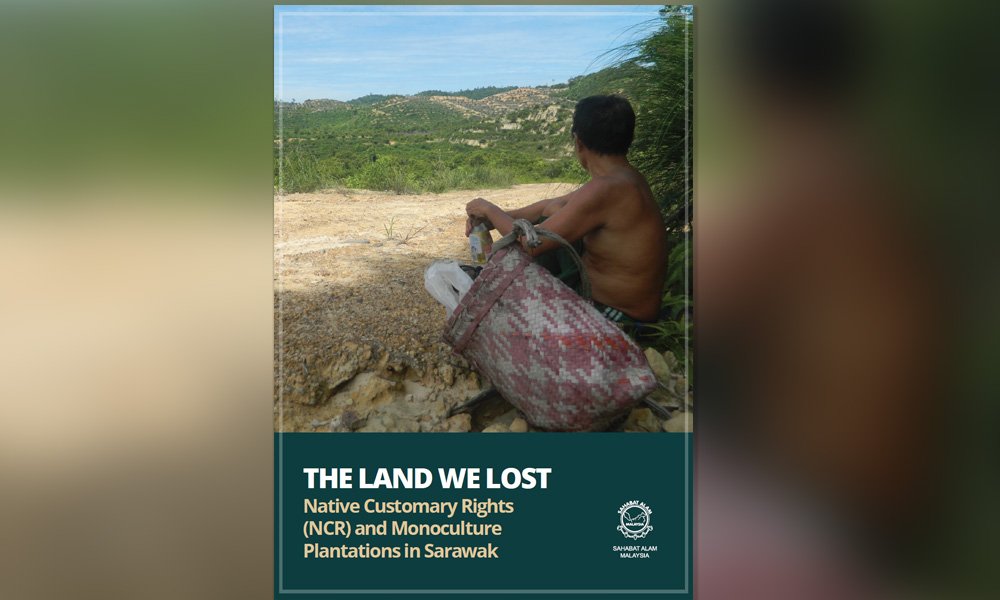
Jok Jau was speaking at the launch of SAM's The Land We Lost: Native Customary Rights and Large Monocultures in Sarawak.
The report provides a critical analysis of how large monoculture plantations are responsible for large-scale deforestation in Sarawak and violations of native customary rights since the 1990s.
It contains two case studies on the Iban communities of Sungai Sebatuk in Batu Niah and Sungai Buri in Bakong, both in the Miri division, and is available to download from the SAM website.
As SAM president Meenakshi Raman pointed out during the launch, Primary Industries Minister Teresa Kok is very supportive of palm oil plantations, as the export revenue is important for the economy and sustains the livelihood of more than half a million oil palm smallholders.
'They started taking our land'
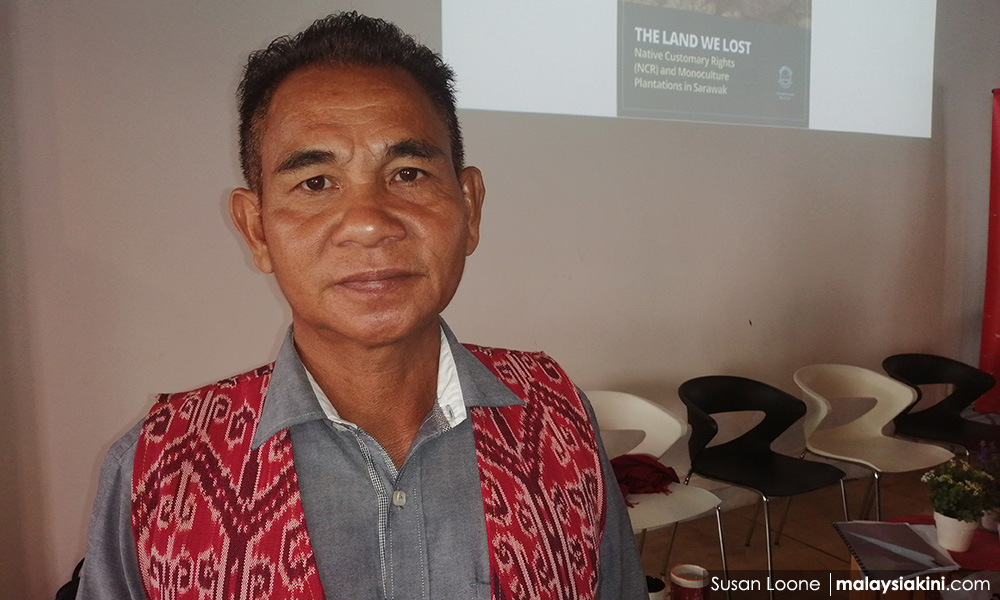
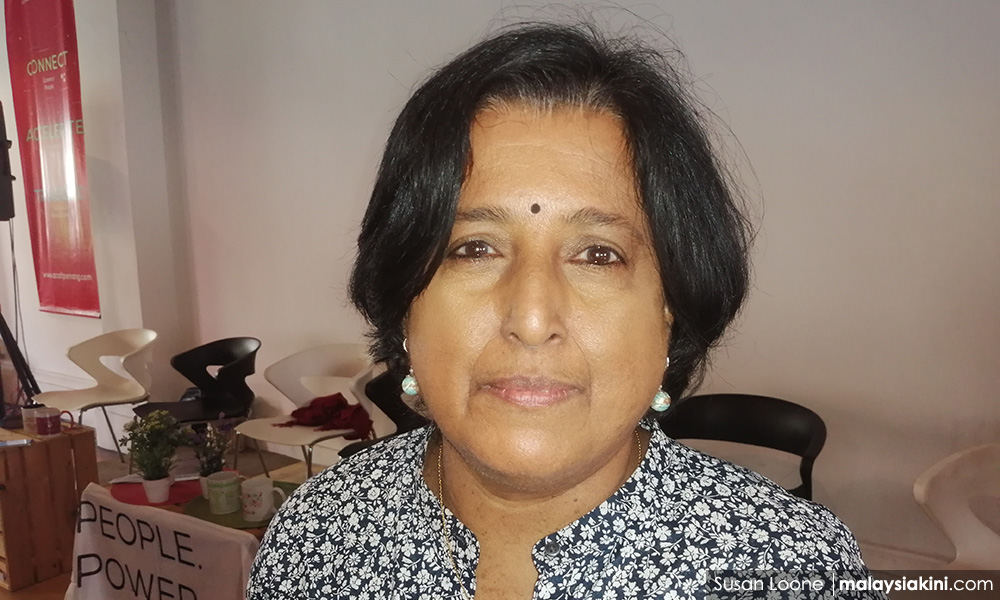
Meanwhile, Gasah Tedong (photo) from the Sungai Buri Residents Association, said their native lands have been violated by large companies since 2000.
However, they were unconcerned at the time since logging activities did not encroach on their land.
"But then, they started taking our land. They come silently, and the government does not tell us about it.
"Our farms and food crops are cleared when the plantations came in. We tried to stop it, we wrote to the government, but it fell on deaf ears.
"Whenever we meet government officials, we are forced to comply, to obey and not fight plantations," he stressed.
Gasah said natives do not have any written or verbal agreement with these companies, and are forced to sell their land for little in return.
"We are forced to sell a one hectare of plot for just RM500, but they forget that native land, since the British occupation, cannot be sold to outsiders."
Gasah also expressed sadness that there are natives who are willing to part with their land with the blessings of authorities.
He added that they have taken their case to court, but are now seen as anti-government.
"How can we win against the rulers? This labelling as pro-government or anti-government causes divisions in our own families," he said.
Life in the longhouse
For former headmaster Peter Tom, life in the longhouses of Sungai Buri poses much hardship – such as the lack of access to clean water and food, as the environment around them is being decimated.
Peter said the livelihood of natives has been squeezed, as they depended mostly on the forests for food and trade.
"More than this, we also lost our heritage, our historical sites, like the ancient graves of our past heroes.
"But saddest of all is the quarrels and conflicts which disunites natives from the same longhouses," he said.
"We cannot agree with some, as they decide to sell their native lands for a measly sum, all with the promise of getting clean water, roads, machines, or houses.
"They sell their land just for some food hampers and alcohol during festivals, they are just happy when given pork to feast on.
"For those who are fighting the plantations, we do not accept this, as we consider it a gratification – using the word 'bribe' would be too harsh."
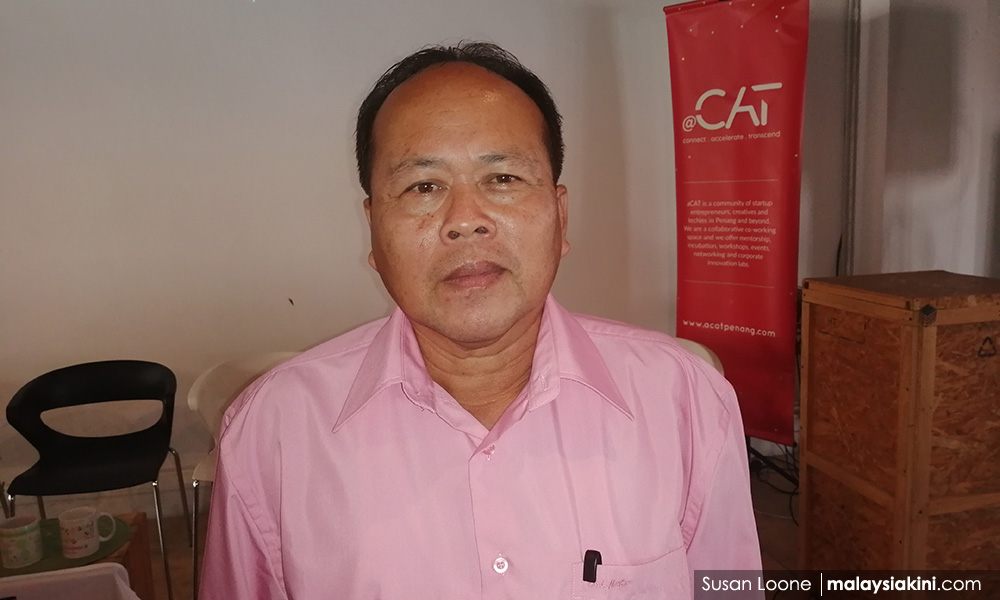
Batu Niah residents association chairperson Laci Bikang (photo) has lived on his native land since 1945, as his ancestors did.
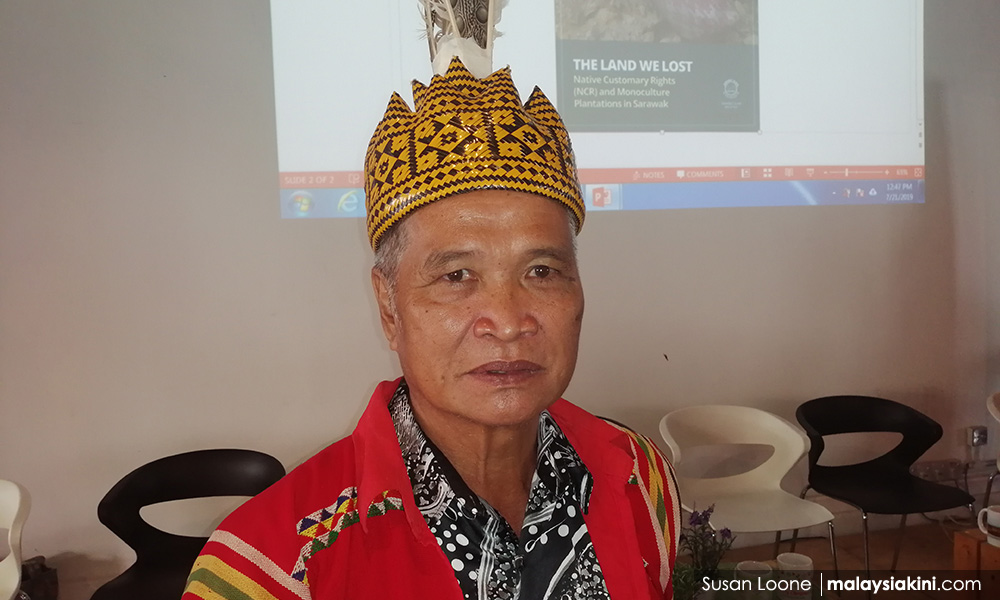
Laci complained that natives were never consulted before plantation companies encroached on their land.
"One day they just turn up with their giant machines and destroy our food crops, fruit, cocoa and rubber trees.
"In a day we can lose not only our food, but our livelihood resources," he added.
Laci's son Bangga Kerdit said the arrival of plantation companies on their native land resulted in their rivers and lakes being shut to them as well.
In response, they set up a blockade to stop these companies but they – including women, children and senior citizens – were often arrested by the police for their actions.
"But we continued to organise our blockades, we have to do it ourselves as many of our friends in the village, even our penghulu are weak due to money.
"They are tricked into siding with the companies when given TV sets and other household items," he said.
"Later, we decided to take whatever produce from the plantations to sell as they have taken all we have from our lands.
"Gangsters and police were then brought in to deal with us, but we are not criminals, we are just taking what belongs to us.
"We were told that we steal, but I say we are taking from our own land, so if you are not satisfied, then pluck all your trees, take all your palm oil and go back to where you come from."


Are you sure you want to delete this comment?
This action cannot be undone.