



A colossal waste to give Apec 2019 a miss
COMMENT| Amidst the shocking announcement of Chile’s decision to withdraw from hosting the Asia-Pacific Economic Cooperation (Apec) Leaders’ Week in November, Malaysia looks set in its preparation as the host country for the Apec meeting next year.
It is the first time that a host country has ever decided to suspend an Apec summit and especially about two weeks before the event is to be held.
COMMENT| Amidst the shocking announcement of Chile’s decision to withdraw from hosting the Asia-Pacific Economic Cooperation (Apec) leaders’ week in November, Malaysia looks set in its preparation as the host country for the Apec meeting next year.
It is the first time that a host country has ever decided to suspend an Apec summit and especially about two weeks before the event is to be held.
However, it is an understandable decision – the mayhem besetting the country has forced Chilean President, Sebastian Pinera to do so.
He is fighting for his political survival and had to make the painful decision in order to focus on restoring law and order and pushing through a new social plan.
“As president to all Chileans I must always put the problems and interests of Chileans, their needs, their desires and their hopes, first,” he said in a brief statement at the La Moneda presidential palace in Santiago.
True indeed, for unless he is able to take care of the security of his people and country, there is no guarantee that he can ensure the security of the leaders of the inter-governmental forum from 21 countries that promotes free trade throughout the Asia-Pacific region, who would all be in Chile.
Chile announced on Wednesday that it would no longer host the Apec Summit after civil unrest over income inequality descended into violence as security forces were deployed to quell the demonstrations.

It was reported that riots, arson and protests over inequality in Chile last month have left at least 18 dead, 7,000 arrested and Chilean businesses hit with losses of around US$1.4 billion.
All eyes were earlier set on the Apec summit in Santiago, scheduled to take place on Nov 16-17, because of the anticipated talk about the historic trade deal between US and China taking place there.
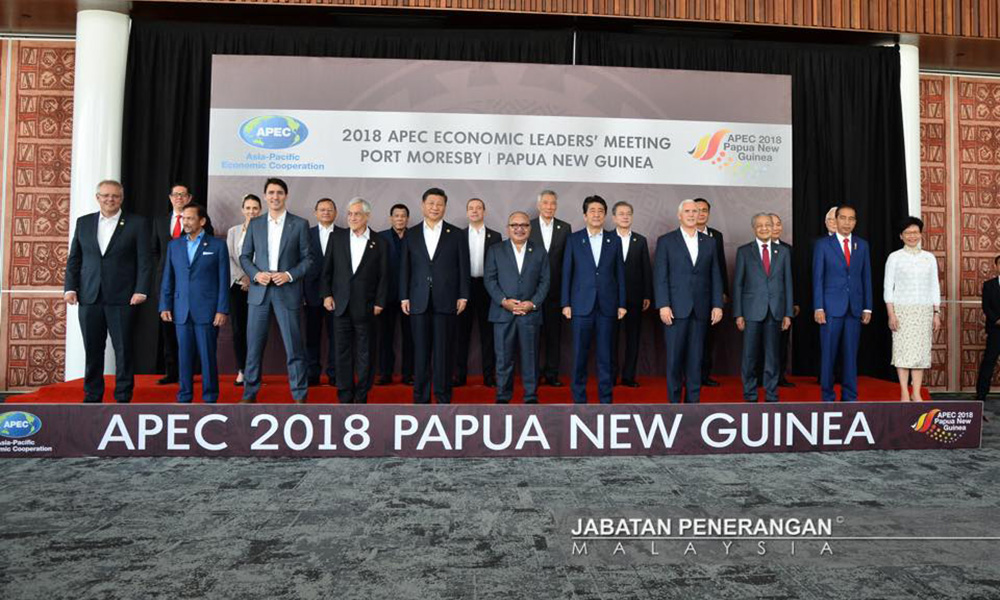
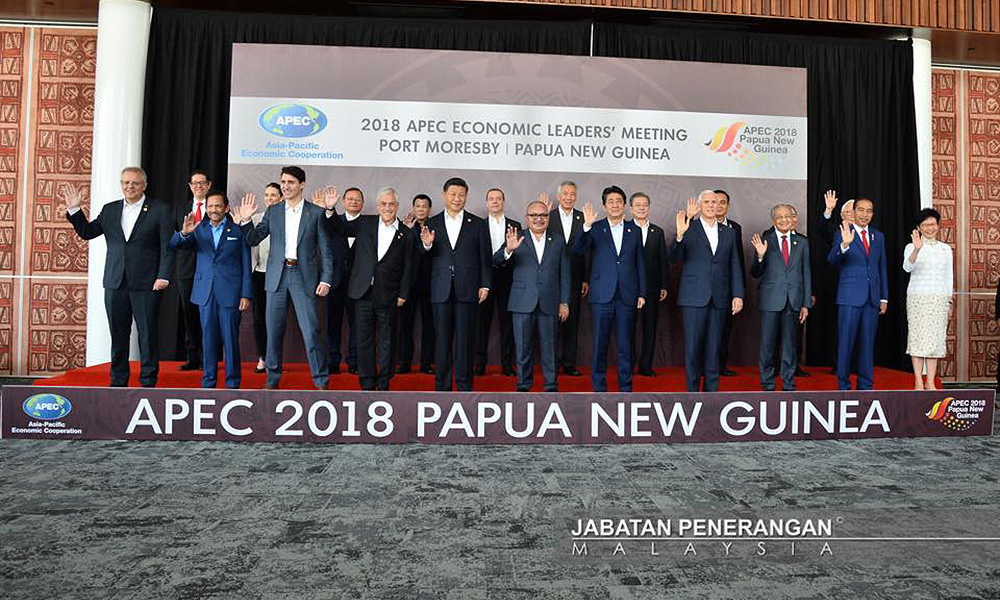
US President Donald Trump and his China counterpart, Xi Jinping (both below), are expected to sign this historic trade deal on the sidelines of the summit and the cancellation has now fuelled expectations that their two countries’ tariff war will now extend.
But the US seems very determined that the signing of this historic trade deal can still be done somewhere else.
"As of now, it appears Apec will not occur in Chile, and it's our understanding the organization does not currently have a secondary site prepared. We're awaiting potential information regarding another location," Hogan Gidley, White House principal deputy press secretary, said in a statement.
But of course, having the event at an Apec forum is better because the trade spat between the two countries is still affecting the lives of billions of people of the 21 Apec member countries.

The failure not to ink the historic deal is not an option as it is in the hands of the two economic superpowers of the world to prevent a catastrophic global economic crisis.
Other than this, the cancelled Apec summit is also very important for its priorities.
This includes boosting the integration of financial markets through the digital economy, financial inclusion, financial management of disaster risks, regional connectivity, women's role in economic growth and other financial cooperation matters that would be crucial for the Fourth Industrial Revolution (4IR).
For example, the 4IR has seen the rapid growth of the Internet of Things (IoT) with the concomitant new risks and vulnerabilities that come along with it, together with the leadership opportunities for the private sector on a global scale.
According to International Data Corporation (IDC), a global provider of market intelligence for IT, worldwide spending on IoT is forecast to reach US$745 billion in 2019, an increase of 15.4% over the $646 billion spent in 2018.
IDC also expects worldwide IoT spending will maintain a double-digit annual growth rate throughout the 2017-2022 forecast period and surpass the US$1 trillion mark in 2022, with an estimated 20 billion connected devices in operation by 2020.
As IoT creates new, innovative opportunities for businesses worldwide, it also introduces new types of cybersecurity risks that will begin to evolve and grow.
To continue the secure, innovative growth of the global IoT sector, the business community must find a sustainable solution that takes into account all connected IoT devices, the applications they run, and the networks they use to transmit information.

In this regard, important guidance on IoT security has also been created by Apec, which has positioned itself to be a global leader on the development of IoT frameworks, standards and norms.
Historically, Apec has a strong track record for creating standards within the digital economy, including developing the Framework for Securing the Digital Economy and the Apec Internet and Digital Economy Roadmap.
Meanwhile, the Apec Committee on Trade and Investment (CTI) has started a multi-year initiative to address cybersecurity standards in the Apec region.
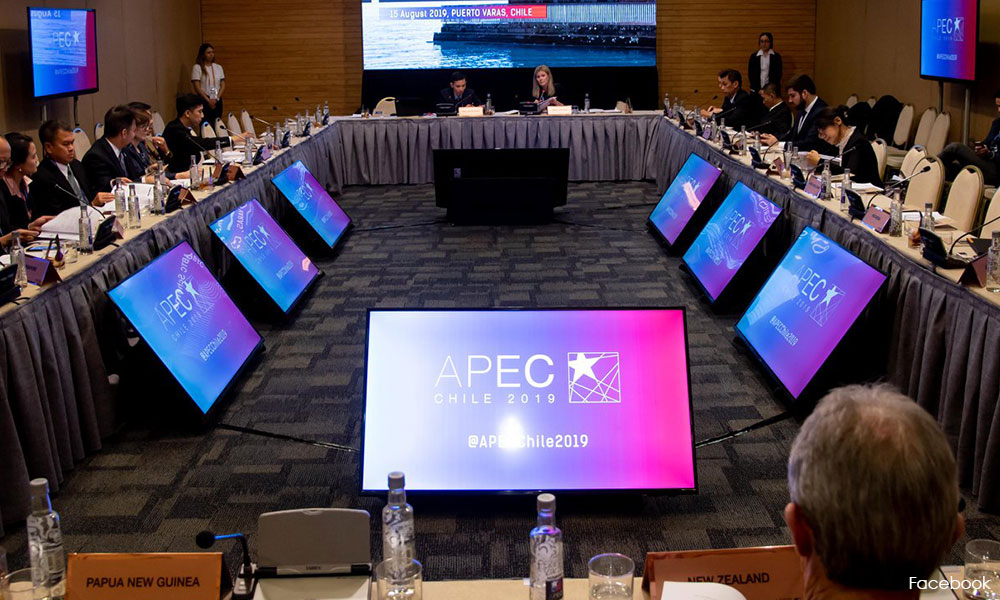
The first Apec cybersecurity standards workshop was held in Puerto Varas, Chile during the 3rd Senior Officials’ Meeting in August.
It is hoped that a follow-through on this would take place in the Apec Summit in Santiago, but what a pity it had to be cancelled.
But all is not lost as Apec Malaysia 2020 is expected to continue driving momentum on cybersecurity issues focused exclusively on IoT standards.
This would provide an excellent opportunity to get governments, industry and academia to collaboratively address IoT challenges and solutions in one of the most dynamic, high-growth regions in the world.
It is still not clear whether Apec 2019 will still be held, albeit in another country.
Time is of the essence as 2019 comes to a close but so much is at stake that it will be such a waste for all these priorities to remain in abeyance while waiting for Malaysia to hold Apec 2020 late next year.
As an afterthought, wouldn’t it be a good for Malaysia to rescue the situation by replacing Chile as the host for Apec 2019.
Malaysia’s track record in holding an international conference is excellent. After all, Malaysia had organised Apec 1998 before. Moreover, the priorities delineated for Apec 2019 are all, to some extent, found in Budget 2020.
Perhaps as a reward for rescuing the situation, Malaysia should also be allowed to organise Apec 2020 as scheduled.

Then, being host for Apec 2019 would be sort of a curtain-raiser – a profitable one to boot – for the Visit Malaysia Year 2020 (VMY2020) while being host for Apec 2020 is sort of like a natural ending for the VMY2020.
And to top it all, is Malaysia having the rare distinction of organising three Apec summits – the first one in 1998.
Of course, running against time to hold such an important event at such a short notice is a valid reason for not hosting it.
But maybe the Apec Secretariat can be flexible enough about it by postponing the Apec 2019 to early December in view of the solid track record that Malaysia has in organising important international event.
What do you think?
Jamari Mohtar is Director, Media & Communications at EMIR Research, a think tank focused on data-driven policy research, centred around principles of Engagement, Moderation, Innovation and Rigour.
The views expressed here are those of the author/contributor and do not necessarily represent the views of Malaysiakini.




Are you sure you want to delete this comment?
This action cannot be undone.