


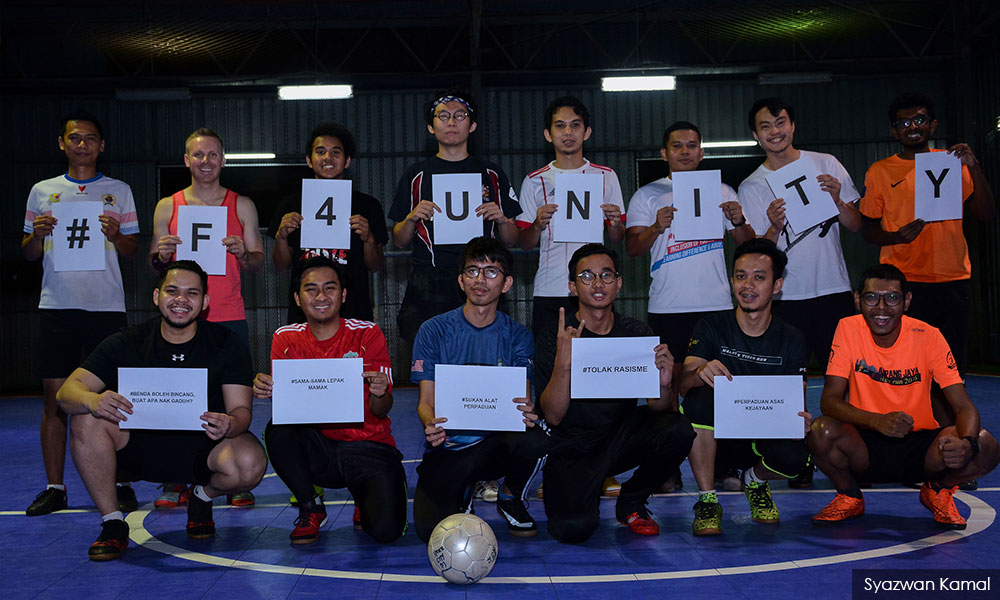

Duo launches 'Futsal for unity' in face of online toxicity
Most facing the deluge of racism on social media in Malaysian cybersphere may choose to just turn off but for duo Rahman Imuda and Aaron Denison Deivasagayam, it was an opportunity for something better.
Tired of the toxicity online, the friends decided to start a programme to overcome these racial tensions through a much-loved sporting activity in Malaysia - futsal.
On Feb 1, they launched "Futsal Untuk Perpaduan" (Futsal For Unity) at Sport City Futsal in Petaling Jaya, where participants play futsal with players of different ethnicities, who they may not have been able to meet in their present social circle.
Rahman, 26, said he had this idea as far back as 2017, but he never had the courage to do it...
Most facing the deluge of racism on social media in Malaysian cybersphere may choose to just turn off but for duo Rahman Imuda and Aaron Denison Deivasagayam, it was an opportunity for something better.
Tired of the toxicity online, the friends decided to start a programme to overcome these racial tensions through a much-loved sporting activity in Malaysia - futsal.
On Feb 1, they launched "Futsal Untuk Perpaduan" (Futsal For Unity) at Sport City Futsal in Petaling Jaya, where participants play futsal with players of different ethnicities, who they may not have been able to meet in their present social circle.
Rahman, 26, said he had this idea as far back as 2017, but he never had the courage to do it.
It was only after encouragement from one of the shareholders of his company that he began to take steps to make this idea a reality.
He then posted his idea on Facebook and caught Aaron’s interest.
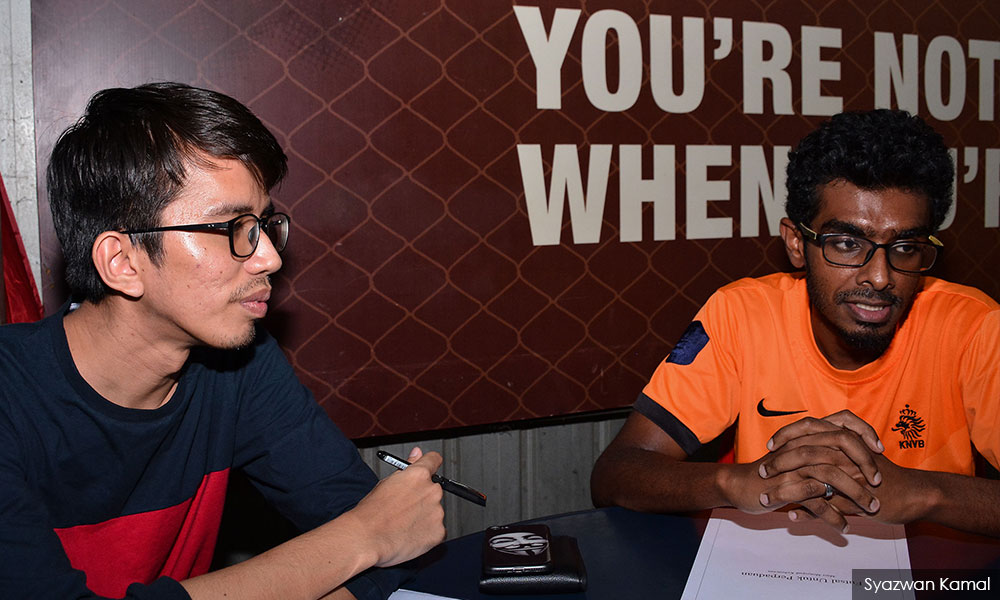
At the time, Aaron, 28, was detaching himself from social media because of all the comments on race and religion on the platforms.
“When you read the comments, it was so toxic,” he said.
Stumbling upon Rahman’s Facebook post gave him hope.
“I thought this is actually a good thing amid all these things that are happening. It’s something that would unite us, sort of bringing everyone together to a mutual platform where we can just play futsal and have fun,” Aaron said.
Ethnic mix a challenge
They began recruiting for 20 players from mid-January through Facebook and Twitter.
The process was not without challenge, and they were still recruiting the players up to the day before the game. The duo said that the biggest hurdle was to find players outside their social circles.
“I’ve had a lot of friends who wanted to play, but I was looking for people who don’t know each other because the whole point of this is to meet new people,” Aaron said.
Rahman found a solution by recruiting through an online platform called strangersoccer.my which helps players find teams to play with.
However, there was still a challenge of balancing the ethnic mix, especially when dividing the players into four teams as most players who turned up were Malay.
“(Ethnic) Indian players are very difficult to find. We only have two (ethnic Indian players) now, three (ethnic) Chinese and one Caucasian,” Aaron said.
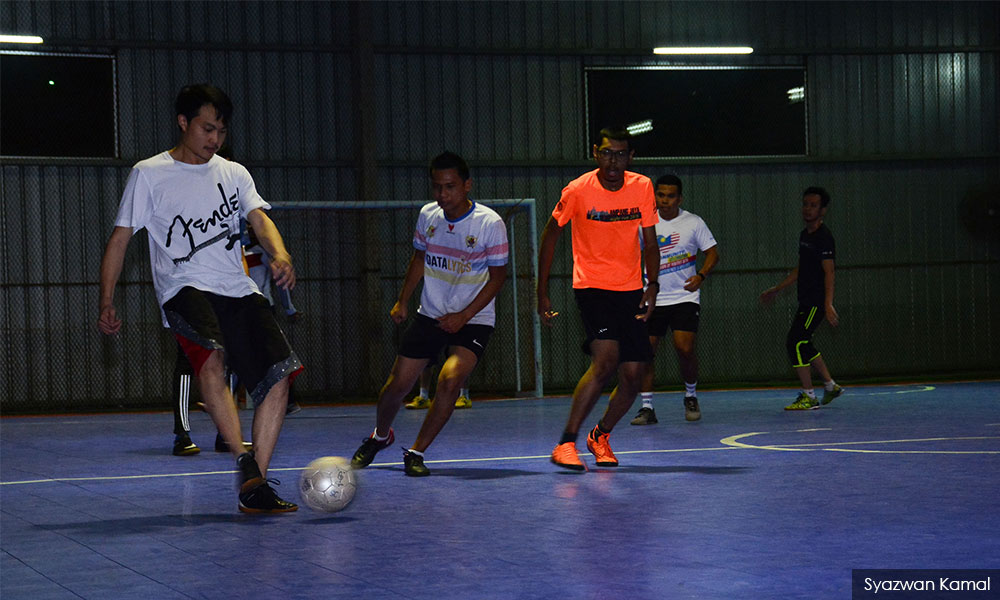
He said most people play futsal within their ethnic communities because that is how their social circles are made up. Most of the participants shared the same sentiment.
As a Chindian, Prakash Navindran, 30, grew up socialising in two segregated groups.
“I would play (sports) with Chinese group and if I play with Indian group, it is all Indians,” Prakash said.
Even so, the players recognise that on the court, race does not matter.
“It’s futsal. As long as you know how to play the game, you will immediately understand where to go.”
“Sports is about communication. It’s something that people lack, and sports gives you that practice,” participant Mohd Syazwan Rahimy Mohd Mokhtar, 35, said.
Aaron and Rahman hope that this initiative will help to open up a space for conversation between people from different backgrounds.
Aaron shared: “The whole idea of this is to get people of different backgrounds to start talking to each other on different issues. Not just about politics.”
“For me, it is sending a message to the people out there, regardless of your race or ideology, we can still play together. Sport is an instrument to bring people together,” Rahman said.
Gender plurality
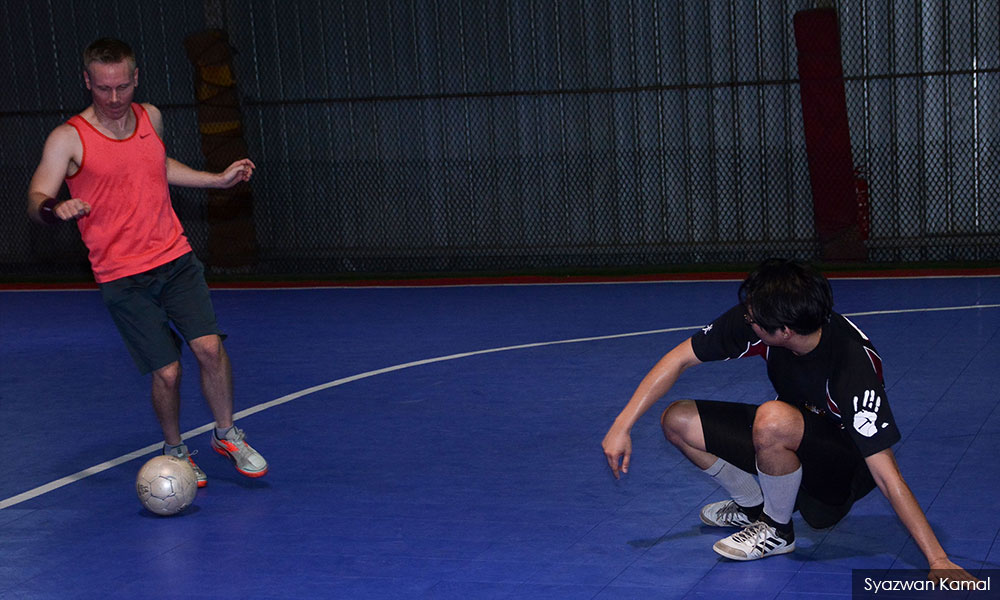
Participant Andrew Tan Wei Aun, 29, who was very inspired by Rahman and Aaron hopes "Futsal for Unity" would evolve to also promote gender plurality.
He also hopes something similar could be organised outside the Klang Valley.
“People from Melaka and Penang reached out to me (to ask) whether this will come to their city,” he said.
For that to happen, Rahman first hopes to recruit committee members into "Futsal Untuk Perpaduan" to help him and Aaron.
In the long run, they look forward to seeing the programme as a leading voice that will encourage initiatives like this among Malaysians.
But for now, they are focusing on attracting more diverse participants in hopes of having a game at least once a month.




Are you sure you want to delete this comment?
This action cannot be undone.