


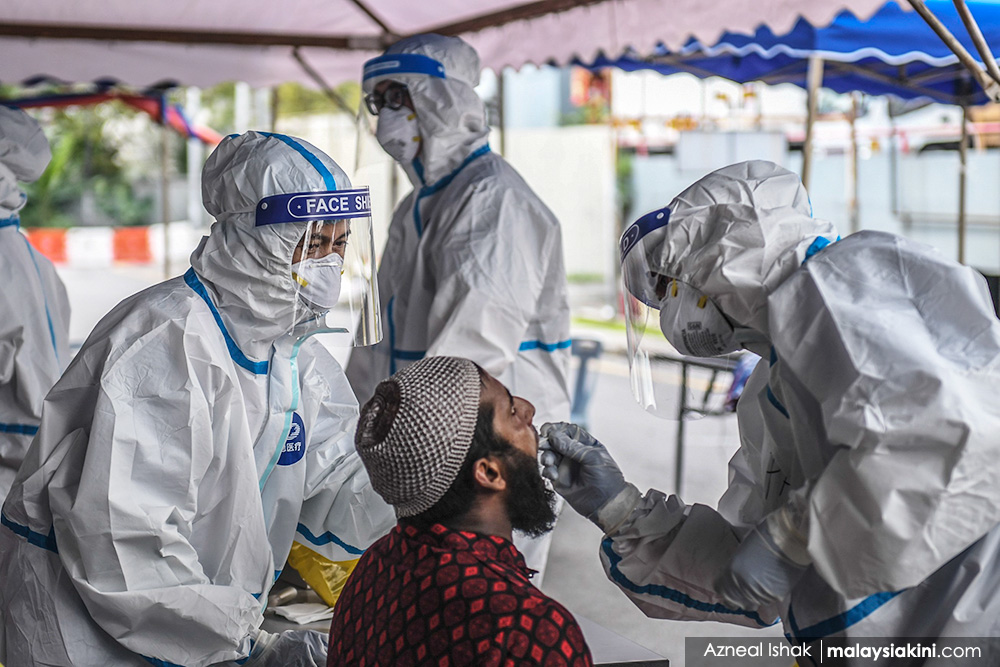

Ministry monitoring serious Covid-19 cases post-recovery for side effects
CORONAVIRUS | The Health Ministry is monitoring patients who have recovered from serious cases of Covid-19 for long-term side effects, which include lung damage and a weakened immune system.
According to the ministry’s director-general Dr Noor Hisham Abdullah, such side effects have been observed in former “category five” cases - patients who have experienced severe inflammation of the lungs and needed to be placed on a ventilator.
CORONAVIRUS | The Health Ministry is monitoring patients who have recovered from serious cases of Covid-19 for long-term side effects, which include lung damage and a weakened immune system.
According to the ministry’s director-general Dr Noor Hisham Abdullah, such side effects have been observed in former “category five” cases - patients who have experienced severe inflammation of the lungs and needed to be placed on a ventilator.
“One complication we have observed is they will recover but their immunity will drop. After three months, the number of immunoglobulins, IgM and IgG, will be reduced and this could affect the individual’s immunity.
“If the individual has low immunity, they could easily get infected by germs. Not just Covid-19 but other germs as well,” he explained during his media briefing today.
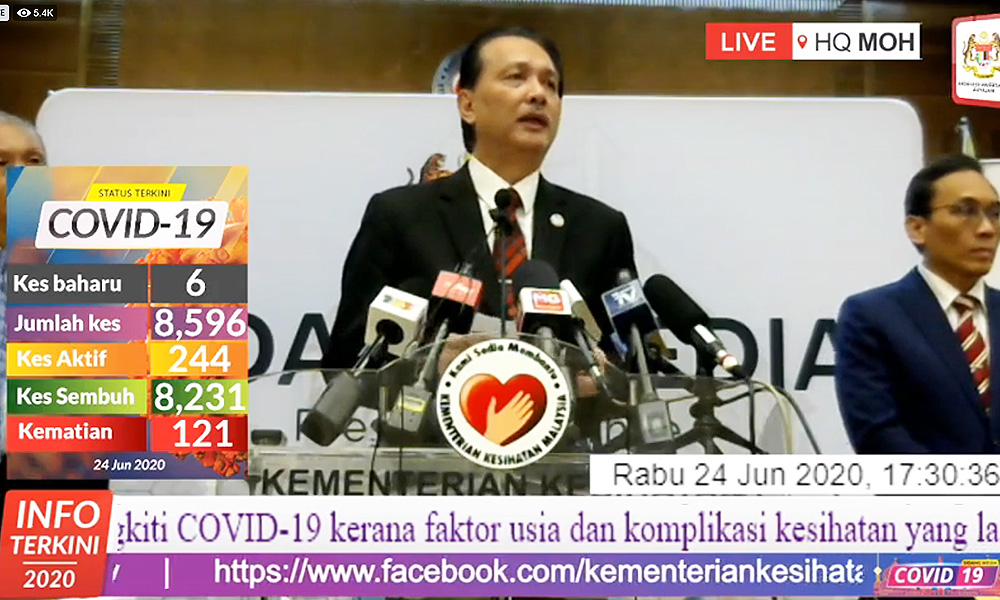
The top official (photo) said that hospitals have been following up with discharged patients, especially those who were previously classified under “category five” and “category four”.
Category four patients are those who experience inflammation of the lungs and need to be given oxygen but not a ventilator.
“Studies from abroad have shown that patients could suffer from lung damage. We are conducting studies at our Respiratory Medical Institute on the long-term effects.
“Which is we look at patients who have been given respiratory assistance and we observe them for any effects over a period of three to six months,” he said.
Category one Covid-19 patients are asymptomatic, category two patients have mild symptoms while category three patients are those who experience mild inflammation of the lungs but do not need respiratory assistance.
Noor Hisham, an endocrine surgeon by training, further explained that Covid-19 typically affected the lungs and caused a “cytokine storm” which often damaged blood vessels.
This, in turn, was capable of slowing down blood flow and causing blood clots.
Such blood clots were especially dangerous if they occurred in the brain or heart, as they could lead to a stroke and heart attack respectively.
Should blood clots occur in the intestines, as they had in “two to three” cases, Noor Hisham said this could lead to ischemic colitis - reduced blood flow to a part of the large intestine that leads to insufficient oxygen to cells in the digestive system.
A blood clot in the kidney, meanwhile, could lead to kidney failure.
Given the possible complications, he said doctors have been treating inflammation of the lungs with drugs like dexamethasone to prevent a patient’s condition from escalating.


Report this comment
Are you sure you want to delete this comment?
This action cannot be undone.