
The school year in 2021 will start on Jan 20, a significantly later date than usual.

Education Minister Radzi Jidin said this is to make up for the 2020 year-end school break being cut short and because of the delay in year-end examinations.

"The 2021 school year has to be delayed because examinations and SPM examinations have also been postponed," he said in the Dewan Rakyat today.

SPM and STPM examinations have been postponed to the first quarter of 2021.

School is set to end in states with a Friday holiday on Dec 17 and on Dec 18 for the rest of the country, after the schooling year being severely affected by the Covid-19 pandemic, forcing schools to close.

The year-end break had been reduced from 42 days in Johor, Kelantan, Terengganu and Kedah, and 41 days in the rest of the country to 14 and 13 days respectively.

Elaborating in the education ministry's windup of the royal debate, Radzi said the 2021 school year could not be announced earlier as procedures needed to be followed before next year's school calendar could be set.

He said the government wants to ensure that students are able to get a minimum understanding of the subjects they are supposed to learn this year by the time the school year ends.

"(We are worried) that if students don't understand what they were supposed to learn last year (2020), then come March (2021), the students may lose their motivation because they feel they have missed out too much (of their education)," he said.

Former education minister Maszlee Malik (IND-Simpang Renggam) lauded the move to start the school year later, saying it made up for the holiday cuts.

The Parents Action Group for Education (Page) was also supportive of the move when contacted.

"We agree that the new academic year cannot begin as before as we cautiously approach the new normal. While there is much to catch up teachers need to be well-rested too to start afresh.

"There is still the overhanging possibility that the pandemic may see another wave if SOPs are not adhered to strictly," they said in a brief response to Malaysiakini.

Schools were shut down in March when the country implemented the movement control order.

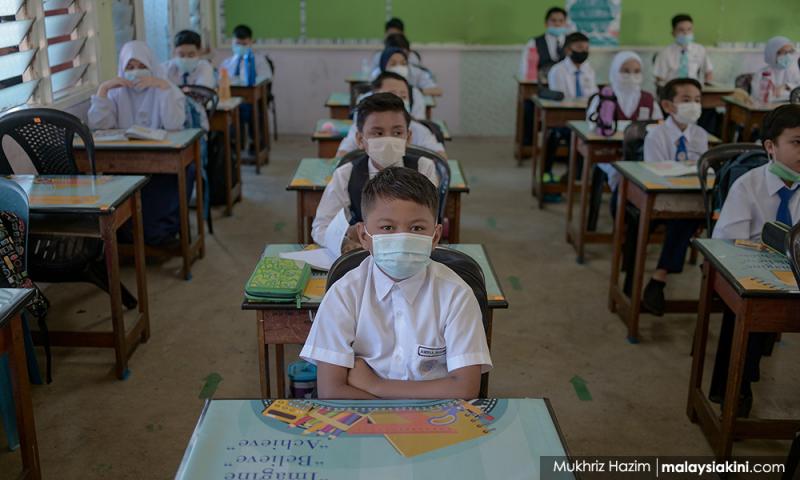
Students were gradually allowed to return to school in July, under strict social distancing measures.

Up until schools re-opened, teachers and students had to resort to e-learning and other methods so that learning can continue at home.

However, Radzi in Parliament today said there were problems with this approach, as 36.9 percent of students did not have any devices suited for e-learning.

He said there were also problems faced by students in getting access to the internet, especially for rural students.

However, there were alternatives for such students, such as dedicated learning TV and radio channels, and even for teachers to drop off learning materials for students via post or drive-through.