



Six-month study links Covid-19 to mental illness, brain disorders
COVID-19 | Covid-19 survivors are more likely to be diagnosed for a range of psychiatric or neurological illnesses in the six months following their diagnosis, according to a study.
This included conditions such as bleeding within the skull; stroke; myoneural junction or muscle disease; mood, anxiety, or psychotic disorders; substance abuse; and insomnia.
Overall, about one-in-eight survivors would be diagnosed for their first psychiatric or neurological illness following their Covid-19 diagnosis...
COVID-19 | Covid-19 survivors are more likely to be diagnosed for a range of psychiatric or neurological illnesses in the six months following their diagnosis, according to a study.
This included conditions such as bleeding within the skull; stroke; myoneural junction or muscle disease; mood, anxiety, or psychotic disorders; substance abuse; and insomnia.
Overall, about one-in-eight survivors would be diagnosed for their first psychiatric or neurological illness following their Covid-19 diagnosis.
When survivors with a pre-existing diagnosis of these conditions are included, the figure is raised to about one-third of survivors.
The risks are generally higher for Covid-19 survivors who had required hospitalisation following their diagnosis, especially if they also experienced delirium or other altered states of consciousness.
Nevertheless, survivors of milder illness also face increased risk.
“Covid-19 survivors had fewer healthcare visits during the six-month period compared to other cohorts.
“Hence their higher incidence of many diagnoses is not simply due to having more diagnostic opportunities,” the authors of the study added.
The paper detailing their findings was posted on MedRxiv on Sunday and has yet to be formally reviewed by other experts, but adds to the growing evidence of Covid-19 long-term toll on its survivors.
The same team of Oxford University researchers had previously published a paper in The Lancet Psychiatry journal in November last year, where they reported that Covid-19 survivors are at greater risk of mental health disorders after three months.
The new paper is a follow-up of the previous study after six months, this time involving a greater number of patients and including a wider range of medical conditions in their analysis.
For the latest study, researchers went through anonymised records of 81 million patients in the US, and turned up 236,379 Covid-19 survivors who are still alive as of Dec 13, 2020 when the analysis was performed.
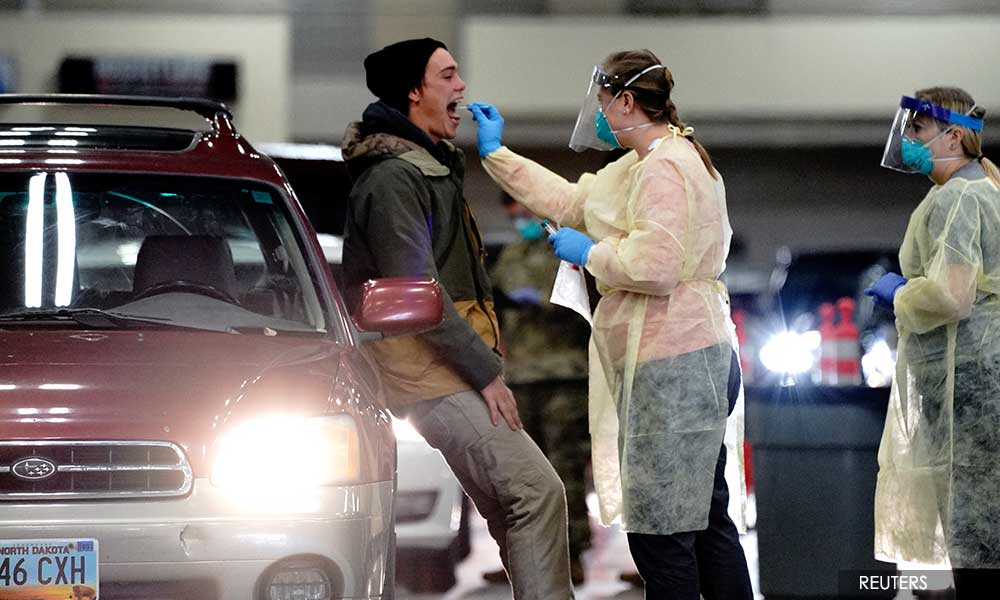
Their six-month health outcomes were compared against two matched groups of patients who had been diagnosed with other ailments instead since the beginning for the Covid-19 pandemic in the US – namely influenza, and all other respiratory diseases.
The matching controls for a variety of factors that could affect health outcomes for Covid-19 survivors, including age, sex, race and ethnicity, and medical history such as obesity, diabetes, nicotine dependency, and so on.
Among others, the researchers found that Covid-19 survivors were about 62 percent more likely to suffer a stroke within six months of diagnosis, compared to those who only had influenza. The figure is 45 percent when compared with other respiratory diseases.
The difference is roughly equivalent to 73 additional cases of stroke for every 10,000 Covid-19 survivors, compared to those who haven’t had Covid-19.
Dementia is about twice as likely for Covid-19 survivors than those who haven’t had the disease, equivalent to 34 additional cases per 10,000 survivors.
Nerve, nerve root, or plexus disorders were 27 to 64 percent more likely among Covid-19 survivors, equivalent to about 89 additional cases per 10,000 survivors.
Mood, anxiety and psychotic disorders were 20 to 46 percent more likely among Covid-19 survivors, equivalent to about 595 additional cases per 10,000 survivors.
When the analysis of mental disorders was limited to only those who haven’t been diagnosed of mental illness before, Covid-19 survivors were found to be 48 to 81 percent more likely to receive their first mental disorder diagnosis in six months after being infected with Covid-19.
This amounted to 338 additional first-diagnosis of a mental disorder for every 10,000 Covid-19 survivors, compared to those who haven’t had Covid-19.
However, despite the large size of the study, it does have several limitations.
The study can only detect associations linking different factors, but is not designed to establish whether there is a causal link.
It also cannot rule out the possibility that a patient may already have an undiagnosed condition before being infected with Covid-19, notwithstanding that stroke is usually detected soon after its onset and cannot be hidden.
There are also limitations in terms of the completeness of the medical records analysed, and the sparse information it contained about the patient’s socio-economic background and lifestyle factors.
Previously, a hospital in Wuhan, China had followed up on its former Covid-19 patients six months after discharge, and it reported its findings in a peer-reviewed journal that 76 percent of them still suffered at least one symptom.
This included 63 percent who reported fatigue or muscle weakness, 26 percent who reported sleep difficulties, and 11 percent who reported smell disorders six months after discharged.
However, the Wuhan study did not have a comparison group and is not designed to establish a causal link.
In addition, it only involved survivors whose illness was severe enough to require hospitalisation and omitted those who had milder manifestations of Covid-19.



Are you sure you want to delete this comment?
This action cannot be undone.