



MOH urged to guide GPs on how to monitor home quarantine patients
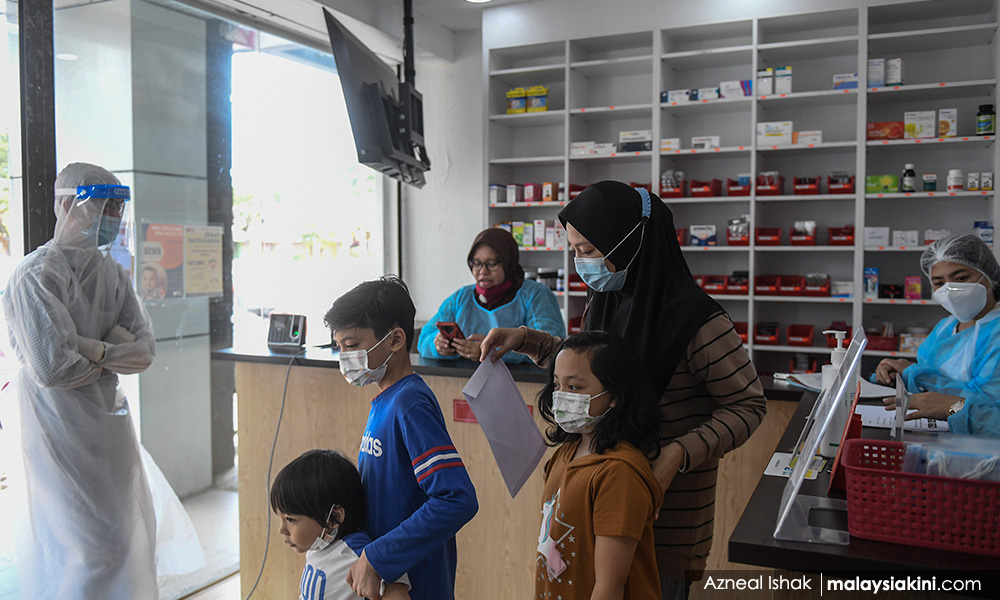
The Health Ministry (MOH) has been urged to guide general practitioners on how to monitor Covid-19 patients who are in quarantine at home.
General practitioner Dr Boo Cheng Hau said his patients who are in home quarantine have sought his help to monitor their condition.However, there is no guidance for GPs on this, nor are the patients equipped with the knowledge or devices to help physicians monitor them remotely, he said...
The Health Ministry (MOH) has been urged to guide general practitioners on how to monitor Covid-19 patients who are in quarantine at home.
General practitioner Dr Boo Cheng Hau said his patients who are in home quarantine have sought his help to monitor their condition.
However, there is no guidance for GPs on this, nor are the patients equipped with the knowledge or devices to help physicians monitor them remotely, he said.
"So far the MOH guidelines are for family members, which cause more confusion, especially to the less learned groups.
"Some patients have been left for days in the house, without even a phone call from any public health officer.
"That is the time general practitioners could play a vital role in helping patients and relieving over-constrained public resources," Boo told Malaysiakini.
The Johor GP, who himself recently recovered from Covid-19, said he was contacted by patients who were anxious about their conditions while waiting for a hospital bed.
"Some called me to seek advice because public health (officials) did not give them clear advice.
"I would try to monitor them until hospital beds are available for them to be admitted and alert both hospitals and public health (officials) when they deteriorate," Boo said.
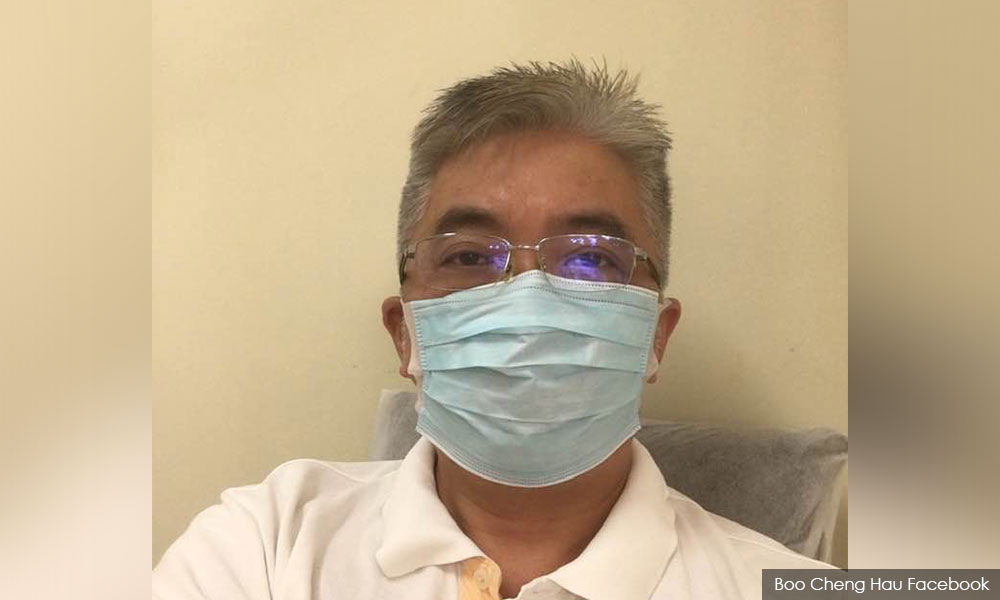
To properly monitor them, the former Skudai assemblyperson said he instructed his patients to purchase equipment, such as electronic blood pressure sets, thermometers, and pulse oximeters, so they can accurately report their condition to him when he calls.
He said this is because simply looking out for pain, cough, or shortness of breath is insufficient to understand the extent of deterioration.
Such equipment can be purchased at pharmacies and cost about RM200 in total.
"MOH guidelines (for patients in home quarantine) do mention oximeter usage but many don't know how to interpret the readings.
"Medical personnel or better-educated family members are needed to carry out the monitoring," he said.
"I did encounter difficulty with some elderly patients who do not know how to use these simple instruments and family members cannot help monitor, as they are isolated from each other," Boo added.
To guide his patients, he has taken to uploading videos on social media (below) to show how the equipment can be used.
The GP said he also has patients who were already discharged, who come to him to monitor their condition.
But similarly, no guideline has been issued on what GPs should look out for among those deemed to have recovered from the coronavirus.
"As a former Covid-19 patient myself, I can share the worries and anxieties of the patients.
"Even after their discharge from hospital, I still follow up with them by checking on their organ functions, including heart, kidneys, liver, and mental health," he said.
To date, none of his patients has reported severe long-term symptoms, but it is still important for GPs to be guided on what to look out for, Boo added.
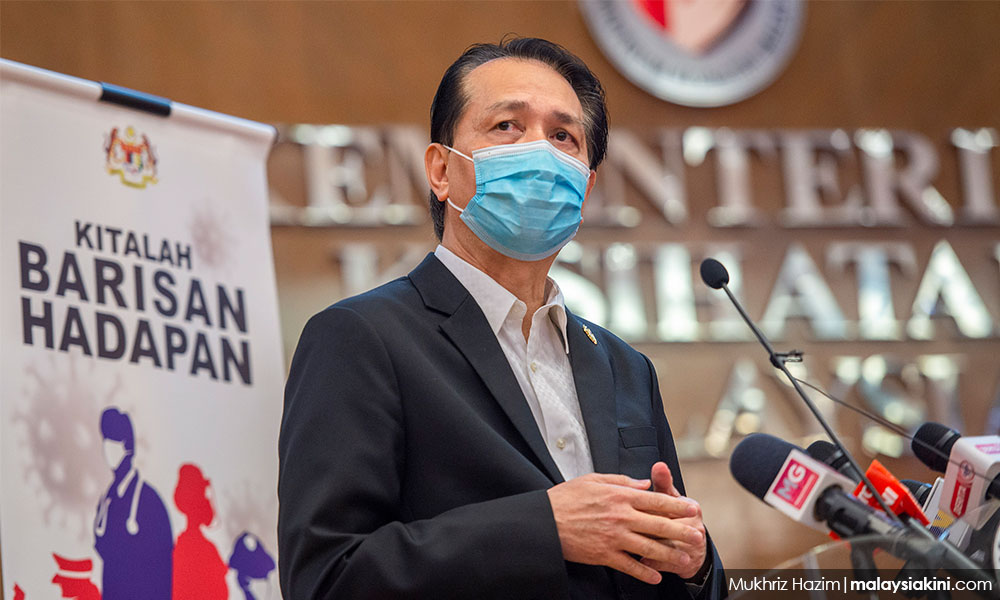
Meanwhile, Health director-general Dr Noor Hisham Abdullah when asked regarding this matter said the Health Ministry will share their guidelines on Covid-19 patient care with the private practitioners soon.
"We have the guideline, but before this, we did not channel it to the private doctors because they were not involved in treating Covid-19 cases.
"But now this guideline is applicable to them," he told a media briefing yesterday.
As of yesterday, 141,446 people in Malaysia have recovered from Covid-19 and have been discharged from either quarantine or hospital care, but it is unclear how many would require long-term care or follow-up treatment.
There are few reports of the longer-term impact of Covid-19 among Malaysian patients, but some have come forward to share how they are still struggling with simple tasks, such as climbing up stairs or speaking for long periods, a month after being discharged.
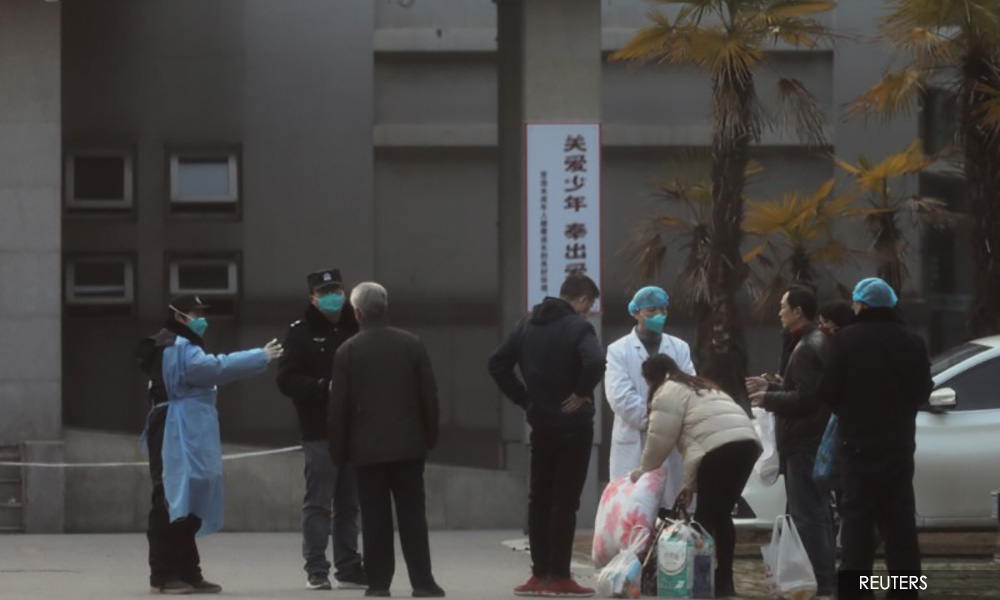
Previously, researchers at the Wuhan Jinyintan Hospital in China followed-up on their Covid-19 survivors six months after their discharge.
Of the 1,733 who participated in the study, 76 percent reported that they still suffer at least one symptom.
They include fatigue or muscle weakness (63 percent), sleep difficulties (26 percent), hair loss (22 percent), and smell disorder (11 percent), among others.
In addition, 13 percent of patients who had no previous kidney problems were found to have reduced kidney function.
The findings were reported in the journal The Lancet on Jan 8.
Although it is one of the most extensive studies on the ‘Long Covid’ phenomenon to date, it only involved patients from one hospital, and only patients severely ill enough to require hospital admission in the first place (i.e. Stage Three and above).
The Health Ministry's study on the long-term impact of Covid-19 is ongoing.


Report this comment
Are you sure you want to delete this comment?
This action cannot be undone.