
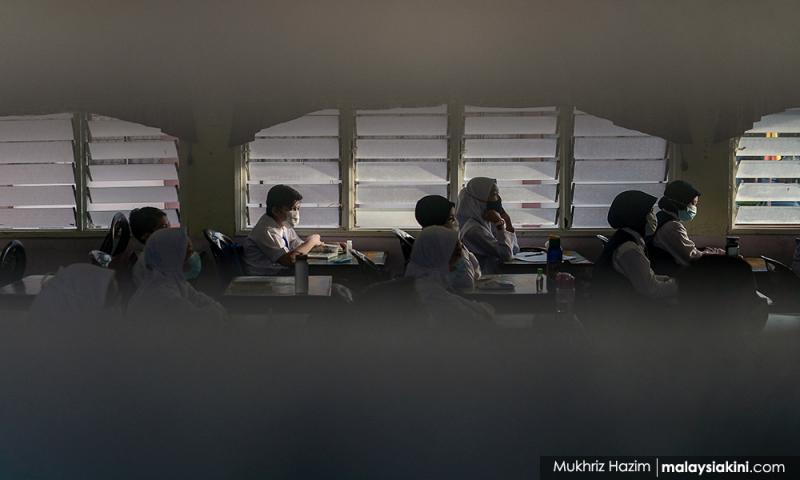
The government is duty-bound as a signatory of the United Nations Convention on the Rights of the Child (UNCRC) to allow stateless children access to education in government schools, said rights group Lawyers for Liberty (LFL).

LFL coordinator Zaid Malek said in a statement that Malaysia, as per article 28 of the UNCRC, recognises the right of children to education on the basis of equal opportunity.

"Hence, despite the reservation to Article 28(1)(a) on making primary education compulsory and available free to all, this does not abrogate the government’s duty to give equal access to education to stateless children," said Zaid.

He said the government must bear in mind its obligation under Article 3 of the UNCRC which states that the best interests of the child, including those who are stateless, must be the primary consideration.

"The importance of education is undeniable, and any consideration of their best interest would of course include the opportunity to receive the necessary education.

"Depriving any child of this right is inhumane, and for stateless children, this is especially dire as without any formal education, they will be further disenfranchised and unable to acquire any semblance of a secure future," Zaid stressed.

He urged the government to honour its obligations under the UNCRC by immediately clarifying its policy to grant equal access to education to stateless children and to ensure its compliance in all states.

He said stateless children must be given a fighting chance to survive, or even thrive, and not be caused any further undue hardship.

Zaid was responding to recent cases where Penang education authorities reportedly demanded stateless children to have a student pass, that can only be obtained with a passport, as a condition for enrolment in government schools.

Former deputy education minister Teo Nie Ching last week said she was informed by NGO Development of Human Resources for Rural Areas of at least six such cases in Penang.

Penang Deputy Chief Minister II P Ramasamy also reportedly said the state government has identified 19 stateless children whose adopted families could not produce their passports as they had no contact with the children’s birth mothers.

This was despite a previous education ministry's directive issued during Pakatan Harapan's tenure that allowed stateless children with no documents to be enrolled in government schools.

Even after being adopted by local families, the child will remain stateless pending approval of any application for Malaysian citizenship.