
The past 12 months have been lived through the lens of the Covid-19 pandemic and a variety of lockdowns.

One side-effect is that it has shed new light on the significance of the many hats, scarves, wigs or other headpieces of choice worn by a woman.

The need to adapt and adopt new norms, while maintaining expected traditional roles, requires “superwoman strengths” and support. Being largely bound by movement restrictions, they turn to the generations of women in their own families, learning from the wisdom of the old and a child’s youthful optimism.

Malaysiakini spoke to members of four families who shared in brief what it means to be a woman in 2021 - from the perspective of a great grandmother, grandmother, mother, daughter, granddaughter, great-granddaughter - and what women’s rights means to them.

Khairun Nisa Zabidi (right) with her mother Juariah Johari and daughter Aria Conrad

A single mother of two young children, Khairun Nisa Zabidi juggles her time and family time in between work in climate diplomacy with the UK government. The 35-year-old Chevening scholar spared a moment to speak with mum, Juariah Johari, 63, and seven-year-old daughter Aria Conrad:

What does it mean to be a woman in 2021?

JUARIAH: If given an equal opportunity similar to a man, I am happy to embrace it. But with the upbringing I obtained from my parents, everything I do is within the Islamic guidelines.

KHAIRUN NISA: Being a woman in 2021 really sheds some light around the distribution of burdens in households, which has become very apparent to me as a single mum who works full time and is solely responsible for caring for my kids. It is very clear that women still carry most of that responsibility.

ARIA: I feel pretty, I feel precious, I feel joy, I feel like I am something to the world, and I am grateful that God brought me here. I feel my soul chose me, chose myself, me chose me! So, I am grateful for all of that. So, I will thank God by praying.

What are women's rights to you?

JUARIAH: Surprisingly, women’s rights are all stated in the Quran as revealed to the Prophet Muhammad. But not all of it is followed by a lot of people, or they interpret the laws to benefit them.

KHAIRUN NISA: Needing to recognise and value that women still carry most of the burden is going to be quite important if we want to have any form of equity and really tap into the power of the feminine energy this year.

That has been translated into some incredible stories we have seen in leadership when countries led by women are doing so much better in the pandemic than those led by men.

I find that really interesting because the ability of women to really step into their power is an opportunity for the world to benefit from feminine power.

I think rebalancing the playing field will really benefit not only women but also the community and society as a whole.

That is what women’s rights mean to me.

ARIA: I like being a girl. Well, only some parts I don’t like...The BIRTH part! Not me being birthed, but me birthing someone else...My mum said it is hard to take care of kids, but I have to have two kids… so that one kid can play with the other kid. But sometimes the older kid will bully the younger kid.

That’s what my brother does to me. When my mum is not around, when we’re at my grandparents’ house, he bullies me a lot. But I can stand up to him, and whenever I do that, I will sing my brave song.

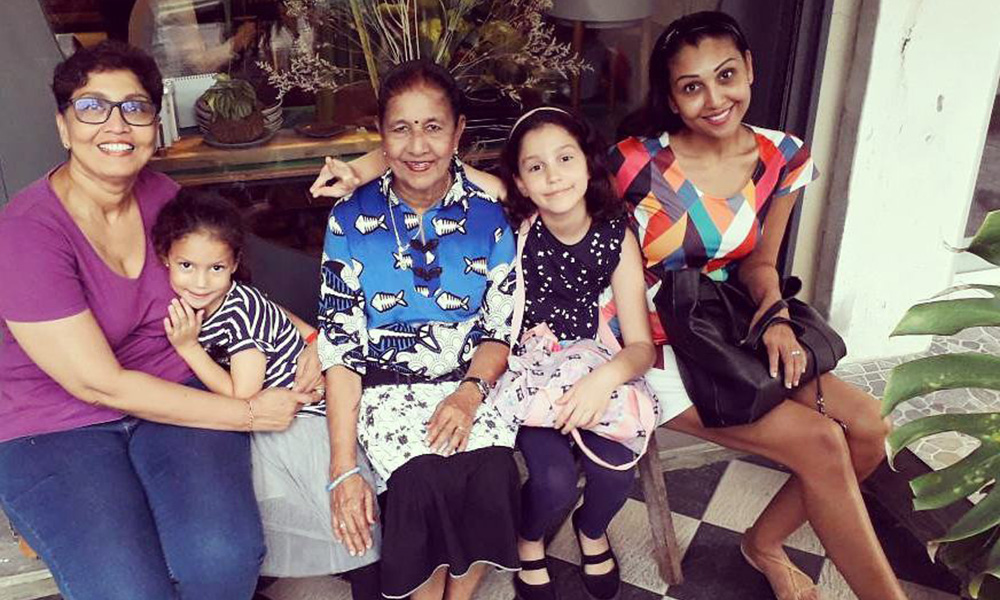
Gayatri Unsworth (right) with mother Rajeswari Thanapalasingam (left) and grandmother Jayakumari Ramasamy

Academician Gayatri Unsworth, 40, recently returned to campus as the head of a faculty after spending months working from home with her “nerds” - daughters Jasmin, 11, and Chelsea, 8 - husband James Robert Unsworth, and their dogs.

During the pandemic, the interstate travel restriction kept the beach enthusiast apart from her mother, 61-year-old corporate trainer Rajeswari Thanapalasingam, and grandmother, 81-year-old Jayakumari Ramasamy.

What does it mean to be a woman in 2021?

JAYAKUMARI: To be a woman in 2021 means that we now live in a time where we have to come forward in life and learn new ways and new things.

RAJESWARI: I am in my early sixties. I have four roles - a daughter, a mother, a wife, a grandmother. For me, just being alive in this era is a gift.

It’s a period where women can be courageous and bold and transcend many traditional boundaries. But despite how we have progressed by leaps and bounds in every aspect of life, we still remain true to our traditional roles as mothers and carers.

There are many times that I wished I had been born a couple of decades later. Technology astounds me. It is a whole world of creativity at the tips of one’s fingers.

A woman in technology is what I aspire to be. And 2021 does give women many such opportunities. It’s not too late, but age does have its limitations.

GAYATRI: To me, being a woman in 2021 means endless possibilities and a world filled with options. We live in an exciting time, where not only do we possess empowered thoughts and voices but also the ability to wield them.

Being a woman in 2021, to me, means that we have the ability to tackle just about anything and everything that comes our way and that we live in a time where society is better equipped and educated to support us women in these pursuits.

Having said that, the unfortunate reality is that for many women around the world, such notions could not be further from their lived experiences. The patriarchal glass ceiling, whilst cracked in some places, is very much still a solid entity in others.

JASMIN: In 2021, being a woman or a girl means empowerment, equality and strength. What I mean by this is that girls are encouraged to be empowered, to have the strength and to fight for equality.

Personally, when I grow up, I want to be an engineer for Nasa (US National Aeronautics and Space Administration) and have a career in aerospace. I feel like this ambition is a real possibility for me in 2021, but it wouldn’t have been an easy dream for girls to have a few decades ago.

CHELSEA: It means that you understand the past difficulties and learn from those lessons and be independent and not have to ask others for as much assistance. It means that you can face any challenges that come your way.

What are women's rights to you?

JAYAKUMARI: To me, women's rights mean that women are independent and have a voice to speak and be heard. That she can decide as to what is right and what is wrong, all by herself. Women's rights also mean that women have the freedom and the right to make their lives happy and filled with positivity.

RAJESWARI: Women's rights to me are not about equality. I strongly advocate that women should have more rights, simply because we are the heart of the family, holding on to our traditional roles to nurture and care and yet performing the modern-day roles of being a worker bee, a hunter and a provider.

We should have the right to decide our work hours, the right to decide how many children we wish to have, the right to leave an abusive and dysfunctional marriage, the right to protection, the right to have our voices heard, the right to promotions and the right to equitable and fair compensation.

GAYATRI: Women’s rights, to me, means the right not only to speak freely but also the right to be heard respectfully and taken seriously. The right to demand fair and equitable treatment from others and wider society as a whole.

It means the right to fearlessly pursue dreams and ambitions and be supported in those pursuits by systems and processes that have been designed to aid in the quest for those goals.

Women’s rights also mean full and unconditional access to the liberties and freedoms that are often only afforded to men.

Most importantly, to me, women’s rights mean the right to be seen, heard, and thought of as an individual with a unique set of skills, traits, and life experiences, rather than being viewed through the circumscribed and socially constructed lens of gender.

JASMIN: Women’s rights for me means that women and men should be treated equally, paid equally and that women are able to apply for and get the same career options as men. It also means that women or girls should not be discriminated against simply because of their gender.

CHELSEA: It means you have to be treated well. But to be treated well, you have to treat others in the way you wish to be treated.

It means that girls should be able to do whatever boys do. Girls should be able to pick their own jobs, and they should be able to go to school and ask the questions they want to ask.

Zalinda Zainon (in grey tudung) and her mother Hasnah Abdullah and daughter Shakira Ridzuan

The eldest daughter of a veteran editor, the late Zainon Ahmad, 53-year-old Zalinda Zainon is a mother to six children, and she is also a grandmother.

Among her many roles include a full-time career as vice-president of a local tech company that focuses on artificial intelligence innovations while sneaking moments to enjoy her Star Wars collection.

She spent some time talking to her mother, 73-year-old Hasnah Abdullah and youngest daughter, 16-year-old Shakira Ridzuan, on what it means to be a woman and their thoughts on women’s rights.

What does it mean to be a woman in 2021?

HASNAH: Being a woman in 2021 is a really interesting experience. I was lucky I did not have parents who expected their daughters to be wives and mothers, tasked with raising good, moral citizens and keeping comfortable homes. However, most women didn't have careers when I was growing up. Women were mostly teachers, nurses or seamstresses.

Being an old woman in the modern age... I think that, for me, means standing up for the values that I hold and trying to make sure that my daughters can live their lives in the way they choose to.

My late husband and I gave them their early start to make sure they have a good start in life. We want our daughters and granddaughters to be capable, strong and valuable even in the face of the world that doesn’t seem to think so. A woman of 2021 is brave, smart and ambitious.

ZALINDA: Part of being a woman means standing up for the values that I hold and trying to make sure that all of the women, even and maybe even those who may not intersect with my life, are able to live their lives in the way they choose to.

Being a woman in 2021 means having self-respect and confidence to shut down anything you feel is wrong and stand up for something you think is right. You don’t have to feel like you need to prove your worth to anybody anymore. You don’t have to agree to something you don’t want to do.

Women today are more powerful than they have ever been. Today, a woman is not only an embodiment of grace and compassion but also that of confidence and resilience.

Being a woman in 2021 gives me the opportunity to look up to and get inspired by so many wonderful women doing great things around the world, proving that if you give a woman an opportunity, she is unstoppable.

SHAKIRA: To be a woman in 2021 is to be yourself! Take responsibility for your life, and do what makes you happy. At the end of the day, if you don’t follow your dreams and passion, you will surely regret it. Once you love yourself, you become unstoppable and then happiness is what follows.

I have been blessed with a mother who has been raised by a father who allows her to do anything she wants with her life. As a result, I grew up able to speak my mind, do things I like to do, and just enjoy the moment.

Being a teenager in 2021 means I have choices in every decision I come across and to have the understanding that all of my experiences that have led me to this point are credited to the various people that I came across with.

Being a teenager today also means having the choice to be bold and speak up not only for yourself but passing your voice to others as well.

What are women’s rights to you?

HASNAH: Women’s rights to me is the right for women to have a peaceful environment, equal rights and opportunities.

ZALINDA: Women’s rights to me have always been about equality. I believe equality in our workplace is essential. Technology plays a major part in societal norms and changes the path of the future of the next generations.

We need to embrace the change we see today and happening tomorrow. An equal world is an enabled world. We should remember that women need to be enabled to be equal, and one way of achieving that is to network and support one another.

Everyone needs to raise their voice, thoughts and not be afraid to challenge the status quo. Otherwise, the new world will not be right for you.

SHAKIRA: Women’s right to me is about a safer and more equal environment for women and girls. While Malaysia is a rather developed country, there is still a lot of room to improve on gender equality issues.

I think women in Malaysia are still too often prevented from breaking the glass ceiling, receiving lower pay, and fewer career and business development opportunities. The government can do better to help with this.

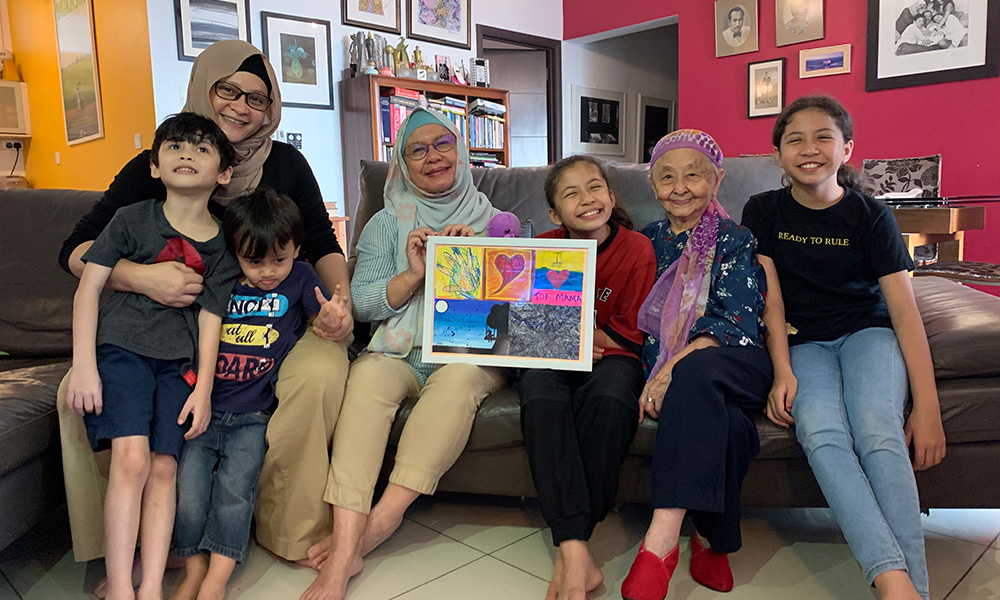
Sharifah Aleya (left) with her mother Fatimah Abu Bakar, grandmother Rohani Abdullah and her children

Television and radio personality Sharifah Aleya Al-Yahya, 35, had her fair share of the limelight, growing up as the eldest of four ‘Sharifah sisters’ alongside their mother, former journalist and actress Fatimah Abu Bakar.

These days, Leya, as she is often known, dedicates much of her time caring for her own four children - twin daughters 11-year-olds Aza Ameena and Asha Ameena, as well as sons, six-year Ali Abdullah, and three-year-old Ayaan Abdullah.

Leya, who credits her father, Syed Zainal Rashid Al-Yahya, as being the “biggest feminist” in their family, said she was also closest to her grandmother, 86-year-old Rohani Abdullah @ Tan Mooi Gee, during the ‘lockdown’ days.

She finds out what they have to say about what it means to be a woman and their thoughts on women’s rights:

What does it mean to be a woman in 2021?

ROHANI: You have to be stronger. In the past, you only had one responsibility. Looking after the family. Now you have to work outside and then come home and work some more.

FATIMAH: She definitely has to be more resilient, a multi-tasker, multi-talented and stoic. In short, a superhuman because so much is stacked on her, and so much is demanded of her.

ALEYA: For me, there are great bits, and there are really horrible bits. I suppose it goes back to balance.

We have a lot to be grateful for right now. We are finally being listened to, taken seriously, but at the same time, there are equal numbers of people who would rather turn a deaf ear and still prefer us to stay at home, be at home...so its a balance that I’m finding within myself as well.

You just want to be better for yourself and for the other women in your life.

AZA AMEENA: I think it is special.

ASHA AMEENA: It is a gift. A girl is special.

What are women’s rights to you?

ROHANI: Women have to have rights so they won’t be bullied, especially by their husbands.

FATIMAH: The right to be heard, respected, appreciated, protected and recognised as an equal.

ALEYA: I don’t know if you want to call it traditional or not, but I always, whenever I am being questioned, go back to the Quran, the Hadiths regarding women.

And you will be surprised, despite all whatever anyone has to say, the rights of women within Islam are actually quite amazing. It is not just our right as a woman, but our rights as a wife, as a mother, you know what I mean? We are put up on a pedestal.

AZA AMEENA: It means really meaningful. Because usually in history, men are against women, women were bullied. And now, women’s rights are really meaningful, and it is right for me.

ASHA AMEENA: Women’s rights are really important, especially in history. Girls cannot do anything.

Malaysiakini is running a series of articles from March 8-10 in celebration of International Women’s Day 2021. Read more here.