


Undi18 judicial review adjourned to May 6
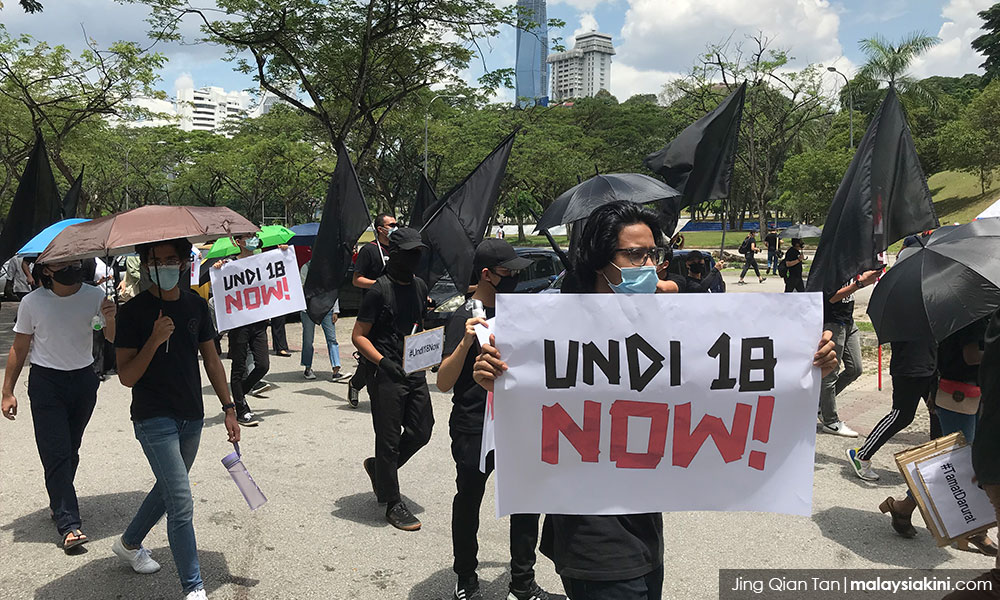
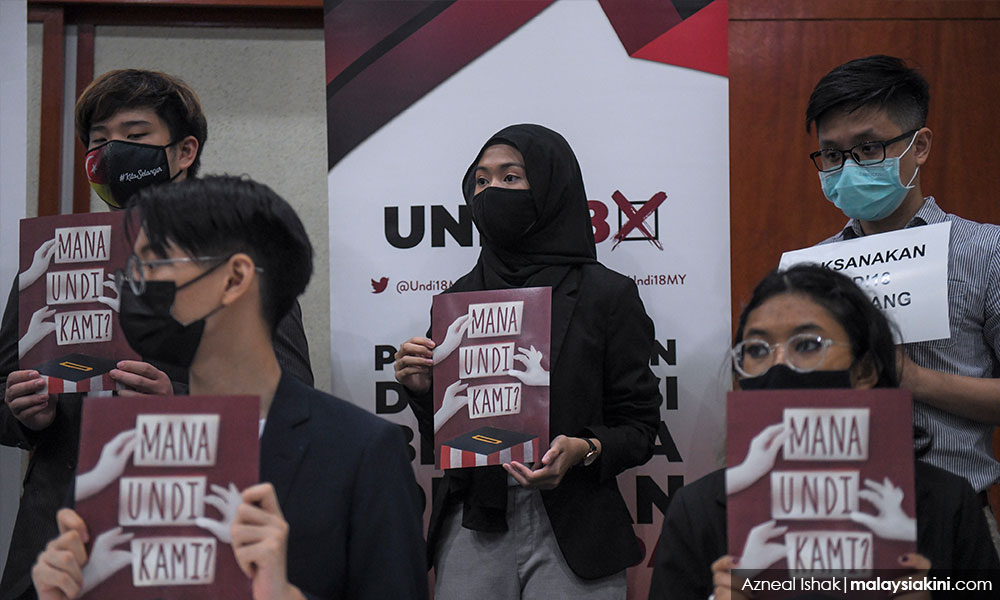
The hearing of a judicial review leave application by the Young Voters Association (Undi18) at the Kuala Lumpur High Court today was adjourned to May 6 after the Attorney-General's Chambers (AGC) raised some preliminary objections.
The court adjourned the hearing in order for Undi18 to respond to the AGC's objections to the applications against the prime minister, government, and the Election Commission.
According to a statement by Undi18, the AGC said in its objections that Undi18's application “is against the spirit of the constitutional amendment...
The hearing of a judicial review leave application by the Young Voters Association (Undi18) at the Kuala Lumpur High Court today was adjourned to May 6 after the Attorney-General's Chambers (AGC) raised preliminary objections.
The court adjourned the hearing in order for Undi18 to respond to the AGC's objections to the application against the prime minister, government and the Election Commission.
According to an Undi18 statement, the AGC said in its objections that Undi18's application “is against the spirit of the constitutional amendment whereby all necessary laws and regulations need to be amended before the automatic voter registration (AVR) can be enforced".
"Undi18 asserts that the AGC’s stance is counterintuitive and ought not be used to delay the implementation of lowering the voting age.
"Undi18 maintains that the implementation of the amendment to Article 119(1)(a) of the Federal Constitution ought to be done first.
"The Undi18 Bill covers the amendments to Article 119 of the Federal Constitution as set out in the Constitution (Amendment) Act 2019," the group said.
Section 3(a) of the Constitution (Amendment) Act 2019 seeks to lower the voting age from 21 to 18, whereas Section 3(b) enables AVR.
Undi18 asserted that there is no hurdle to implement Section 3(a), and youths aged 18 to 20 can register using the existing system without the need for AVR.
"Undi18 holds firm to our belief that youths between the ages of 18 and 20 are owed their constitutional right to vote.
"We hope that this court compels the government to enforce Section 3(a) of the Constitutional (Amendment) Act 2019 on or before July 2021," the group added.
According to Bernama, senior federal counsel Shamsul Bolhassan, representing the AGC, told reporters that they filed a preliminary objection on the grounds that the application brought by the 18 youths was frivolous, vexatious and premature at this stage because no action has been taken relating to the matter.
Another senior federal council, Azizan Md Arshad, said the necessary law and regulations need to be amended before the AVR can be enforced.
"This is because, with the Constitutional amendment, there is no longer any application as AVR kicks in. It is the argument of the applicants that the enforcement and implementation of Section 3(a) and Section 3(b) of the Constitution (Amendment) Act 2019 can be done separately.
"However, we will submit that the enforcement and implementation to the Constitutional amendments cannot be done in isolation and has to be done together.
"The enforcement and application of AVR is the reverse effect of application for registration by the qualified person," he added.



Report this comment
Are you sure you want to delete this comment?
This action cannot be undone.