


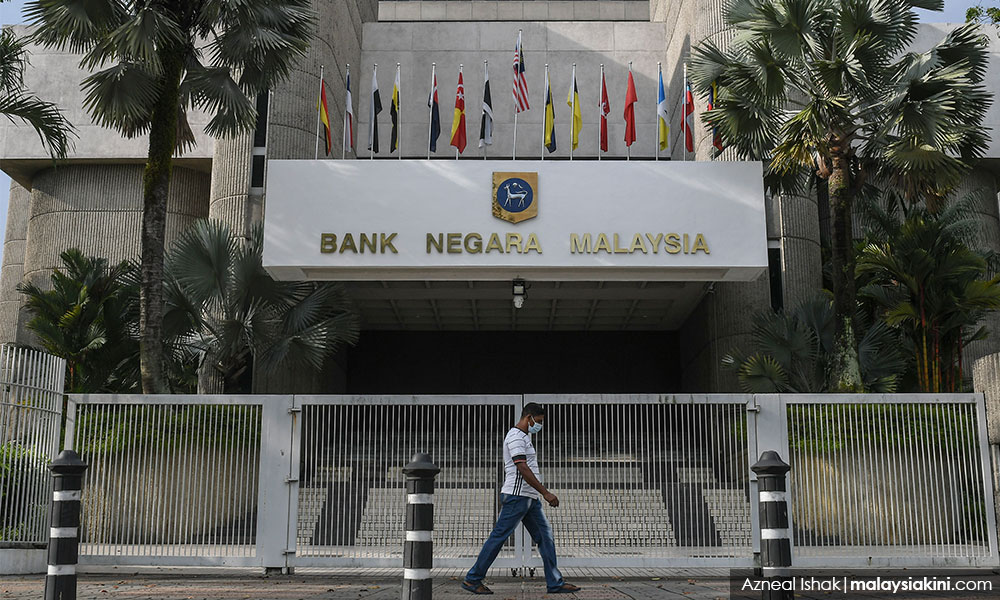

Ample liquidity in local banking system in March 2021 - BNM
The local banking system has ample liquidity in March 2021 amid stable funding conditions, Bank Negara Malaysia (BNM) said.
The central bank said Malaysia’s banking system continued to maintain healthy liquidity buffers, with the liquidity coverage ratio remaining strong last month at 145.1 percent versus 147.1 percent in February 2021.
“Banks’ funding profile also remained stable amid sustained strong growth in retail deposits,” it said...
The local banking system has ample liquidity in March 2021 amid stable funding conditions, Bank Negara Malaysia (BNM) said.
The central bank said Malaysia’s banking system continued to maintain healthy liquidity buffers, with the liquidity coverage ratio remaining strong last month at 145.1 percent versus 147.1 percent in February 2021.
“Banks’ funding profile also remained stable amid sustained strong growth in retail deposits,” it said in its Monthly Highlights report for March 2021 released today.
BNM assured that sound risk management practices by banks would support asset quality in the period ahead.
“Overall gross and net impaired loans ratios were broadly sustained at 1.6 percent and one percent, respectively.
“Banks continued to set aside additional provisions against potential credit losses, which currently stand at 1.8 percent of total banking system loans,” it said.
In terms of net financing for the month under review, BNM said it expanded at 4.5 percent in March, reflecting the increase in outstanding corporate bond growth, which stood at 5.9 percent versus 4.5 percent in February, as well as outstanding loan growth of 3.9 percent against 3.7 percent in the previous month.
On outstanding household loan growth, the central bank said it increased to 5.7 percent last month from 5.1 percent in February, while higher loan disbursements were recorded for the purchase of cars and residential properties.
For businesses, it said the outstanding loans grew at 1.1 percent in March versus one percent in the previous month.
“During the month, higher loan disbursements and repayments were observed across most sectors and purposes,” it said.
According to the central bank, domestic financial markets were affected mainly by external developments in March, particularly the rise in long-term US Treasury yields, which reached its highest level for the year at the end of the month amid higher growth and inflation expectations in the US.
Consequently, it said, the US dollar also strengthened, which led to a broad-based weakening of other advanced and emerging market currencies against the greenback.
“During the month, the ringgit depreciated by 2.6 percent against the US dollar, while the 10-year Malaysian Government Securities yield increased by 18.3 basis points.
“The benchmark FTSE Bursa Malaysia KLCI declined marginally by 0.3 percent, as bond yields surged and investor sentiments were affected by lingering uncertainties surrounding the path of the pandemic globally, and expectations for a faster US monetary policy tightening,” it said.
- Bernama



Report this comment
Are you sure you want to delete this comment?
This action cannot be undone.