



10,000 Covid-19 deaths: How it compares to other top killers in M'sia
COVID-19 | Malaysia passed the grim milestone of over 10,000 Covid-19 deaths yesterday, and there will be many more to come.
While official statistics on all causes of death in Malaysia during the pandemic years are still being compiled, the disease has definitely earned a place among the leading causes of death in the country.
The latest report from the Department of Statistics (DOSM) on causes of death...
COVID-19 | Malaysia passed the grim milestone of over 10,000 Covid-19 deaths yesterday, and there will be many more to come.
While official statistics on all causes of death in Malaysia during the pandemic years are still being compiled, the disease has definitely earned a place among the leading causes of death in the country.
The latest report from the Department of Statistics (DOSM) on causes of death in the country covers the year 2019. During that year, it states 173,746 deaths have been recorded of which the cause of 109,164 (62.8 percent) had been certified by a medical professional.
Based on these figures, the top causes of death in 2019 are ischaemic heart diseases (16,325 deaths; 15.0 percent), pneumonia (13,356 cases; 12.2 percent), cerebrovascular diseases (8,691 deaths; 8.0 percent), traffic accidents (4,198 deaths; 3.8 percent), and malignant neoplasms of the trachea, bronchus and lung (2,602 deaths, 2.4 percent).
For comparison, there had been 10,019 confirmed Covid-19 deaths logged so far during the pandemic.
Of these, 9,547 were reported this year, while another 474 were reported last year. Year on year, there were 9,896 deaths reported from Aug 5 last year to Aug 5 this year.
In other words, Covid-19 deaths in the country exceed all but the top two leading causes of death in 2019 and more than double the number of deaths caused by traffic accidents.
Unlike many items on the DOSM’s list of leading causes of death, however, Covid-19 deaths are now vaccine-preventable.
For the record, of the 64,582 deaths (37.2 percent) in 2019 that were not medically certified, most were reported as deaths due to “old age” (sakit tua).

Since Malaysia recorded its first Covid-19 death on March 17 last year, it has taken 338 days for the death toll to reach 1,000 on Feb 17 this year.
The last 1,000 deaths to bring the death toll past 10,000 took only six days.
This reflects the accelerating pace of the pandemic, as each infection leads to more infections, and some ultimately succumb to the disease.
The emergence of deadlier variants - first Beta then Delta - had also played a role by reversing some of the gains made last year through improved therapeutics for severely ill patients.
Malaysia’s cumulative death toll equates to 307 deaths per million inhabitants. Taking a step back, Malaysia’s problems may not seem so bad on the world stage.
Globally, the Covid-19 death toll amounts to 547 deaths per million, according to the website Our World in Data as of Aug 5, and many countries have done far worse than Malaysia.
The countries that suffered the most Covid-19 deaths compared to its population are Peru, with 5,965 deaths per million, followed by Hungary (3,109 per million) and Bosnia and Herzegovina (2,953 deaths per million).
However, many of these deaths had occurred in previous waves of outbreaks that have since subsided.
When focusing on more recent deaths that were recorded in the past week, Our World in Data ranks Malaysia in the 15th position in terms of deaths per million people.
Most of the deaths in Malaysia had occurred in Selangor (3,523 deaths), followed by Kuala Lumpur (1,263) and Johor (1,041).
When adjusted for the size of their population, however, Labuan stands out by having more than double the incidence of Covid-19 deaths compared to the runner-up.
There had been 1,496 deaths on the island per million residents, compared to 712 per million in Kuala Lumpur and 691 per million in Negeri Sembilan. The populous state of Selangor lands fourth with 539 per million.
Labuan had suffered an outbreak of the more contentious Delta variant before the variant had taken hold of the rest of the country, infecting nearly one in 10 of its population.
The outbreak has been contained following a series of lockdowns and a rush to vaccinate the island’s population.
It now boasts the highest vaccination rate in the country, with 57.3 percent of its population having received both doses and records only two or three Covid-19 deaths per week.
The effects of vaccination can also be seen in the ages of those who died of Covid-19, which has been shifting towards younger age groups as the vaccination campaign progresses.
Data compiled by the World Health Organization (WHO) shows that while senior citizens still make up the majority of Covid-19 deaths in Malaysia, the proportion has been on a decline since late May.
It shows that Malaysia recorded 452 deaths in the week beginning May 24, of which 75.0 percent were above 60 years old.
The overall number of deaths has increased significantly to 632 by the week beginning July 5, which is the last week for which the WHO data is currently available. At the same time, however, the proportion of deaths among senior citizens has declined to 60.1 percent.
This comes as Phase 2 of the National Immunisation Program (NIP) yields fruit following its implementation beginning April 19, as full effects of the vaccines begin to kick in two weeks after the second dose is administered.
Similarly, Sungai Buloh Hospital in Selangor has seen a decline in admissions among senior citizens with serious infections since early June, as reported by the Health Ministry last month.
Most Covid-19 patients who require hospitalisation are among those who are young and unvaccinated, according to the ministry’s director-general Dr Noor Hisham Abdullah.
For context, Khairy told a press conference on Monday that 3.16 million senior citizens (90.3 percent of the elderly population) have registered for vaccination as of Aug 1, of whom 3 million have received at least one dose.
With an elderly population of 3.5 million, however, this still leaves hundreds of thousands in this vulnerable group unregistered and unvaccinated.
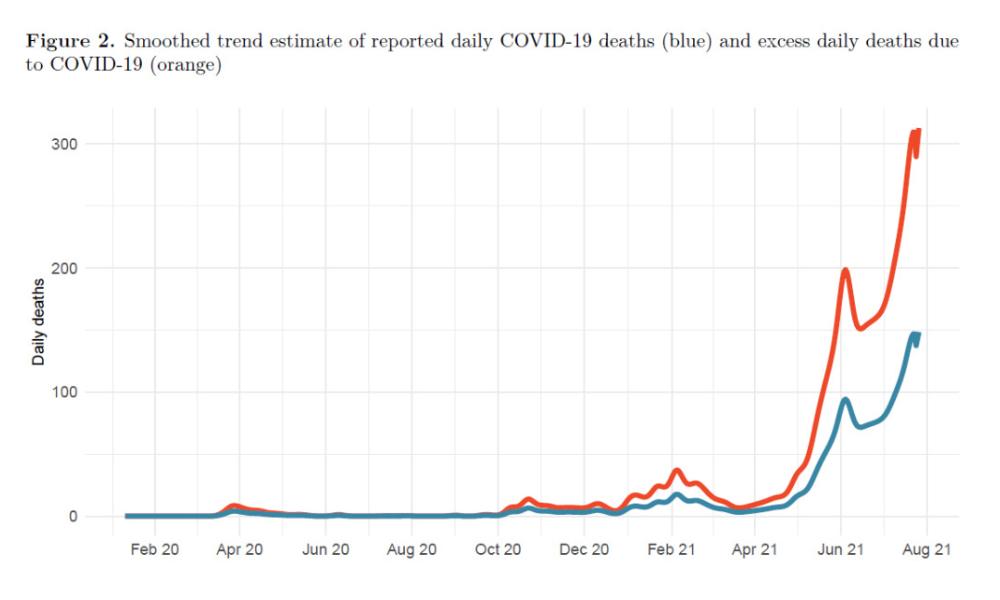
It should be noted that as grim as the death toll may sound, it is likely to be an undercount of Covid-19’s true cost on human lives.
Some countries account for this by releasing official estimates on “excess mortality”, meaning the number of deaths due to all causes that are above the numbers expected in “normal” conditions.
Malaysia has not released such figures or even data on all-cause mortality for last year.
Nevertheless, the Institute for Health Metrics and Evaluation in Seattle, USA, estimated that excess mortality due to Covid-19 in Malaysia is 2.1 times the reported number of deaths.
The estimate accounts for a large range of factors, including the extent of Covid-19 testing, the utilisation rate of healthcare facilities, deteriorating mental health, reduced number of non-Covid-19 deaths reduced traffic accidents and heart patients dying of Covid-19 instead, and reduced spread of non-Covid-19 infectious diseases.






Report this comment
Are you sure you want to delete this comment?
This action cannot be undone.