


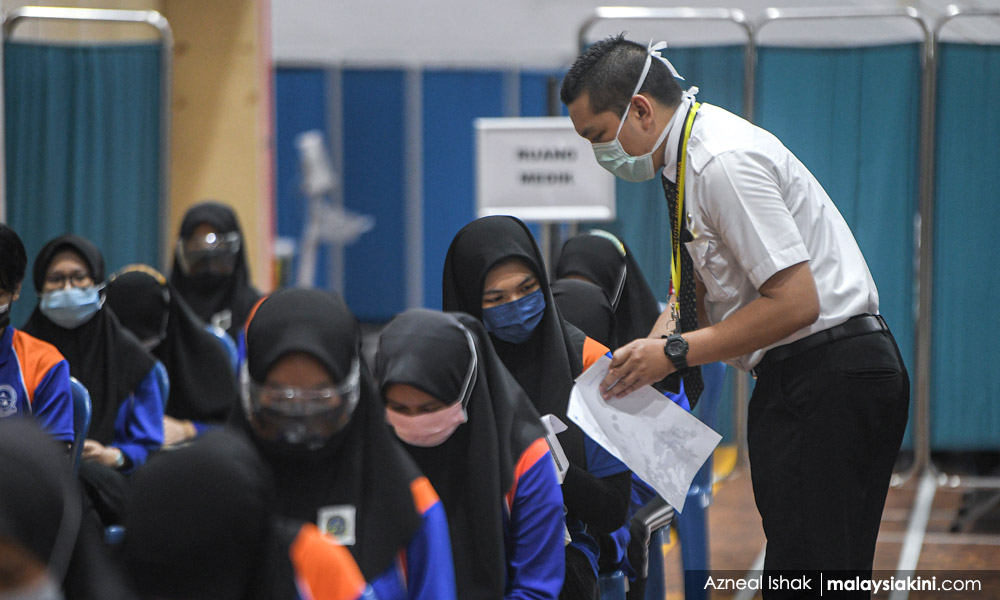

Risk of myocarditis among vaccinated teenagers very low - MOH
Children are facing a higher risk of developing myocarditis and pericarditis after being infected by Covid-19 compared to when they get vaccinated against the coronavirus, said a Health Ministry expert.
Dr Nik Khairulddin Nik Yusoff, who heads the Paediatric Unit at Raja Perempuan Zainab 2 Hospital in Kelantan, told reporters today that parents should get their kids vaccinated as the benefits far outweigh its risks...
Children face a higher risk of developing myocarditis and pericarditis after being infected by Covid-19 compared to when they get vaccinated against the coronavirus, said a Health Ministry expert.
Dr Nik Khairulddin Nik Yusoff, who heads the Paediatric Unit at Raja Perempuan Zainab 2 Hospital in Kelantan, told reporters today that parents should get their kids vaccinated as the benefits far outweigh its risks.
"Reports have been widely circulated on social media regarding the side effects of mRNA vaccines such as Pfizer and Moderna among male teenagers and male adults aged below 30, where there were cases of myocarditis and pericarditis.
"These cases usually happen about a week after receiving the second dose.
"However, the number of such cases is very small. Only about 0.001 percent from the total number of recipients of the vaccines," he said during a virtual media engagement session.
"Many studies have shown that the risk to develop myocarditis after contracting Covid-19 is far higher compared to the risk posed by vaccination," he stressed.
The session was organised by the Health Ministry to brief the media on the ongoing National Covid-19 Immunisation Programme for Adolescents.
Myocarditis is the inflammation of the heart muscle, while pericarditis is the inflammation of the outer lining of the heart. Both cases can disrupt the heart's normal functions.
"So far, according to data that we received from across the world, most of the cases that were reported (among teenagers who receive mRNA vaccines) only involve mild side effects and they recovered quickly with simple treatment," he said.
Nik Khairulddin added that Covid-19 vaccination is crucial to protect children from the virus, especially when most of the adult population has been vaccinated against it.
According to Health Ministry statistics, the number of children below 18 infected by the coronavirus has jumped from 12,620 cases last year to 410,762 between January and Sept 21 this year.
Deaths due to Covid-19 have also increased to 75 compared to six cases for the whole of 2020.
The health authority believed that the highly transmissible Delta variant was the number one culprit behind the jump.
Avoid heavy physical activities
While serious side effects rarely occurred, Nik Khairulddin said the ministry will still monitor the situation.
The doctor said parents and their children would be given a briefing on the signs they should look for after receiving the vaccination, such as chest pain, difficulty breathing, high heart rate and palpitation.
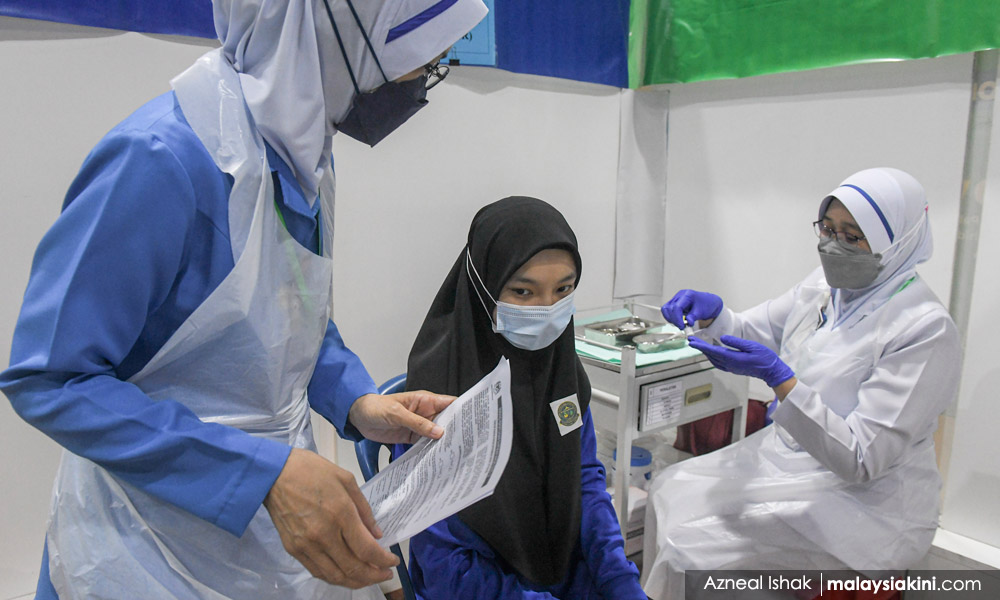
"These are among the symptoms which we will inform them so they will be able to identify and get treatment."
The ministry also advised teenagers to avoid doing heavy physical work such as sports activities for between two days and a week after receiving their jab.
Dr Zulkifli Ismail, a consultant cardiology paediatrician, said many of the myocarditis cases reported in the US are believed to have been involved in such activities after getting inoculated.
"This advice is actually not only for adolescents but for anybody getting vaccinated. They should take about a week off from heavy activities.
"For children, we advise them to take two days to one week (to rest)."
Vaccine recipients are also advised not to take medication such as paracetamol and ibuprofen before getting their jab with the aim of preventing fever and pain.
Nik Khairulddin said such medicine should only be taken if one starts developing fever or pain after inoculation.
"It will be more effective. The guideline not to take (the medicines) to prevent pain and fever is not only for the Covid-19 vaccine but for all vaccines," he said, adding that the practice could hinder the vaccine from achieving the best effect.


Are you sure you want to delete this comment?
This action cannot be undone.