


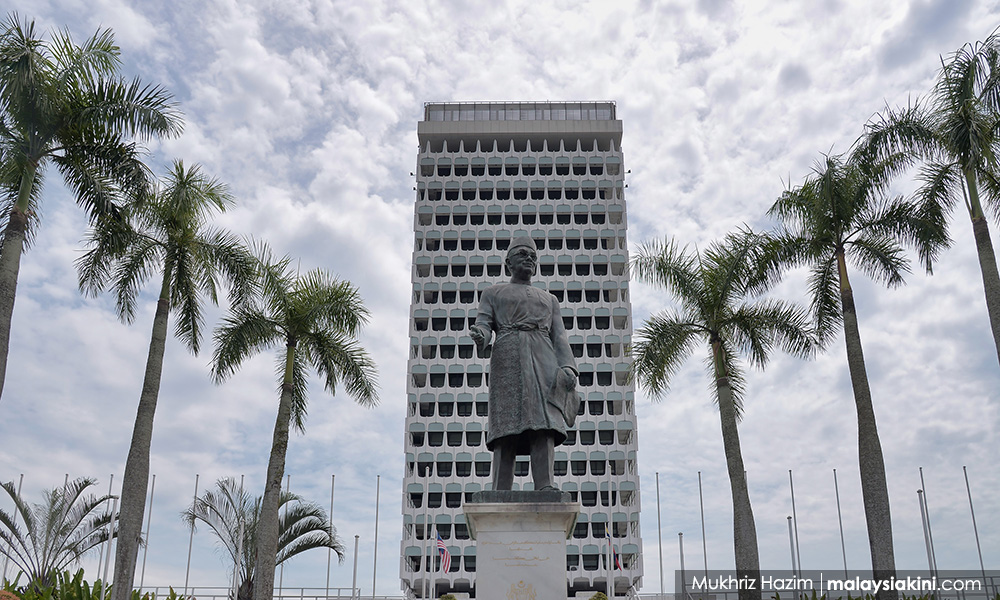

NGO coalition wants more PSCs to monitor govt
A coalition of civil society groups wants the government and Pakatan Harapan - which recently signed a memorandum of understanding on institutional reforms - to set up more parliamentary special select committees (PSCs).
The Seed Community for a Professional Parliament (SCPP) said that while a new list of PSCs and their members is expected to be announced next week, several issues have remained unclear.
“Firstly...
A coalition of civil society groups wants the government and Pakatan Harapan - which recently signed a memorandum of understanding on institutional reforms - to set up more parliamentary special select committees (PSCs).
The Seed Community for a Professional Parliament (SCPP) said that while a new list of PSCs and their members is expected to be announced next week, several issues have remained unclear.
“Firstly, we want to know whether the number of committees would be added sufficiently and that it will not be like Muhyiddin Yassin’s time as the prime minister.
“Will each ministerial portfolio be monitored by a PSC? The status quo where eight ministries were skipped from being placed under PSC monitoring should not happen again.
“And is it appropriate for a PSC to monitor more than two ministries?” it asked in a statement.
The new BN-Perikatan Nasional federal government led by Prime Minister Ismail Sabri Yaakob last month signed a reform deal with Harapan where both sides agreed for a set of reforms to be carried out.
One of them is parliamentary reforms, including the restructuring of PSCs and increasing the number according to necessity.
Both parties also agreed to set up an MOU Steering Committee tasked to oversee the implementation of the deal. It comprises members from both the government and Harapan.
Will there be a cap on PSC members?
The Seed Community raised the question of whether the number of MPs that are to become PSC members should be capped at 82.
This, according to the coalition, was based on the logic that the number of opposition MPs in a PSC cannot exceed the number of government MPs.
The government has 114 seats in Parliament, of which 73 are ministers and deputy ministers, who cannot sit in a PSC.
This leaves only 41 government MPs who are eligible, while there are 106 MPs in the opposition.
“If only 41 opposition MPs can become members of PSCs, then 65 others would be denied their rights to get involved in the process to monitor the executive and drafting of government policies during the period when Parliament is not in session,” it added.


Are you sure you want to delete this comment?
This action cannot be undone.