



Govt to mandate weekly Covid tests at primary schools
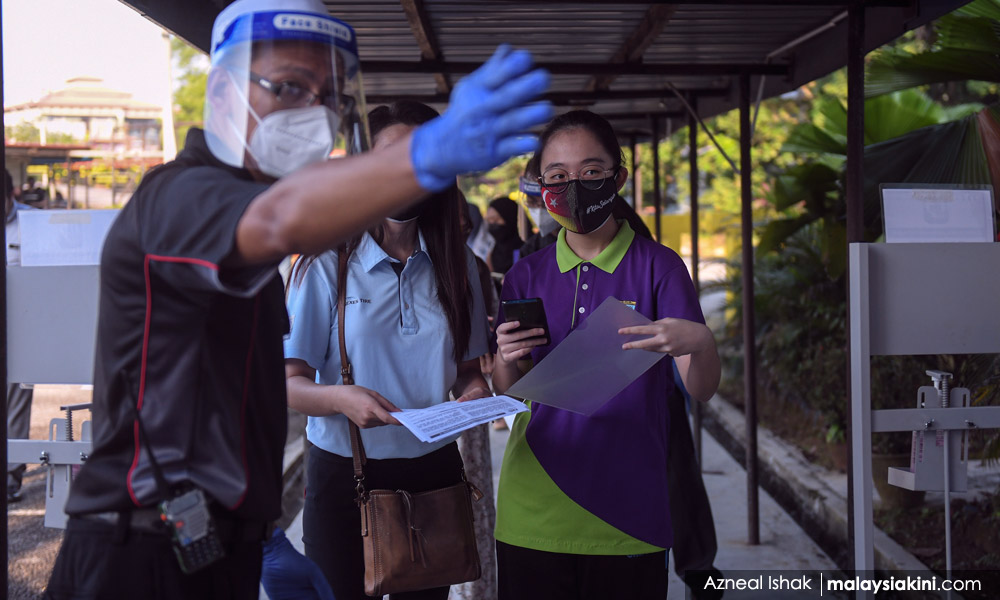
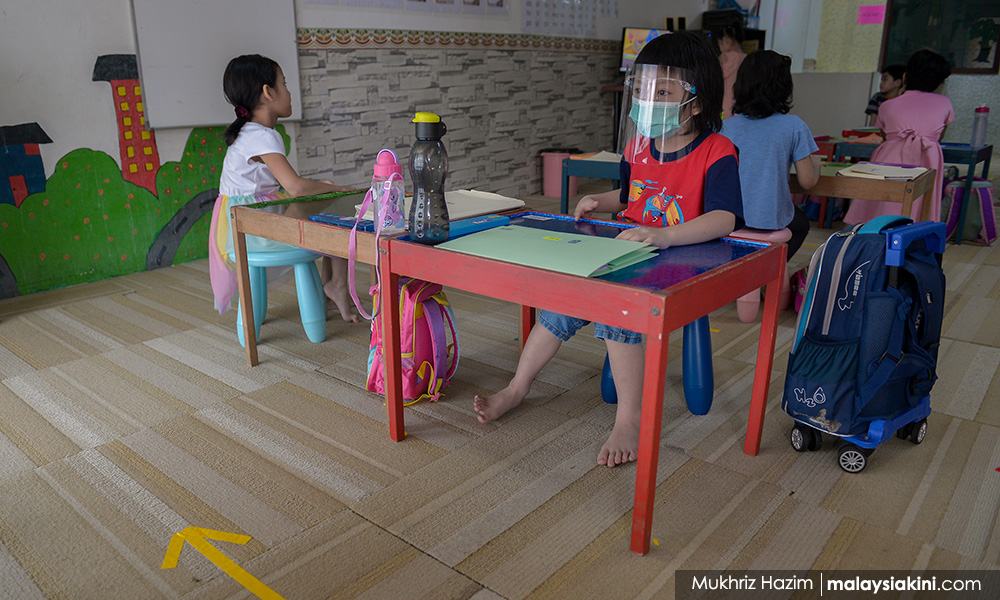
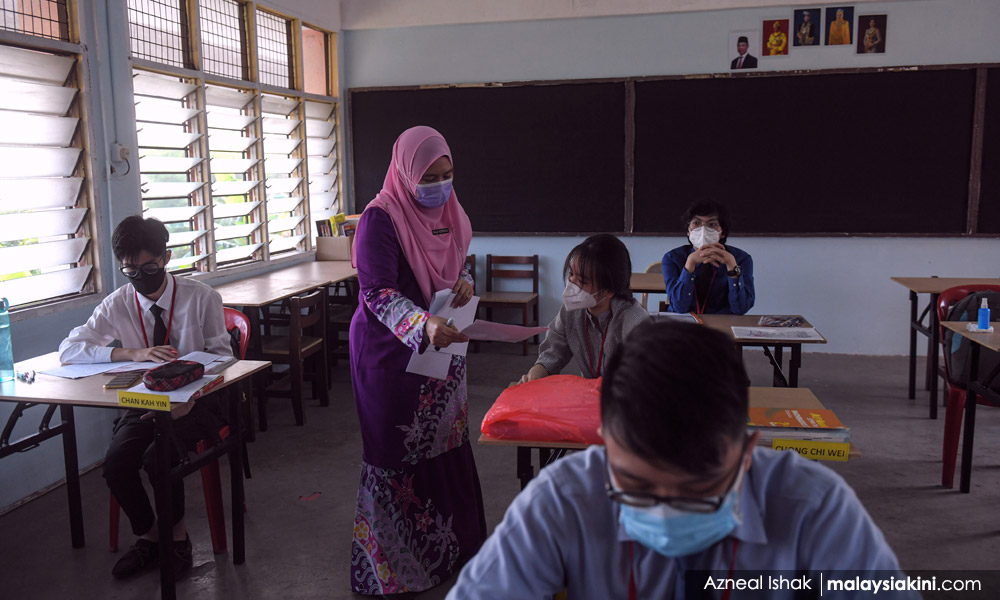
The government will soon mandate weekly Covid-19 screening to be conducted at primary and elementary schools, where students are not yet eligible to be vaccinated against the disease.
Health Minister Khairy Jamaluddin said this is one of the items in the National Covid-19 Testing Strategy that will be launched next Monday and is aimed at ensuring there would be no Covid-19 clusters at schools...
The government will soon mandate weekly Covid-19 screening to be conducted at primary and elementary schools, where students are not yet eligible to be vaccinated against the disease.
Health Minister Khairy Jamaluddin said this is one of the items in the National Covid-19 Testing Strategy that will be launched next Monday and is aimed at ensuring there would be no Covid-19 clusters at schools.
The testing will cover 10 percent of each school’s student population per week regardless of whether they show Covid-19 symptoms or not, and a different group of students will be rotated to take each round of testing.
“If they have symptoms, they must be tested. But if they have no symptoms, a 10-percent sample of the student population needs to be tested to ensure there are no clusters at school,” he told a press conference in Putrajaya today.
The National Covid-19 Testing Strategy was previously slated to be posted on the Health Ministry’s website on Oct 22, but there is still no sign of the document to this day.
It is meant to give clear guidelines on who should take a Covid-19 test, when to take the test, and what type of test should be used. It is part of Malaysia’s effort to transition into the endemic phase of the Covid-19 outbreak.
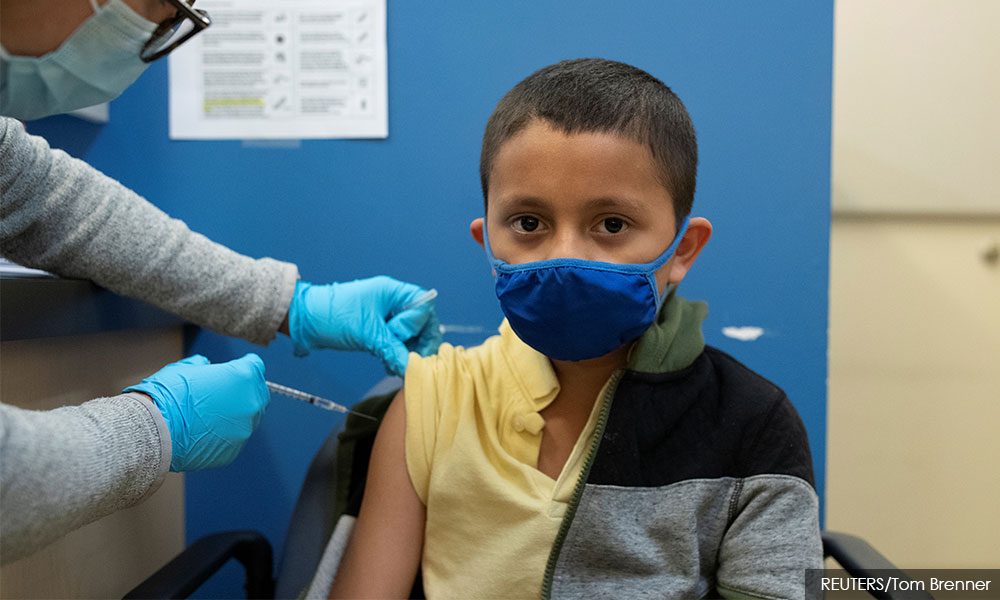
Malaysia has thus far rolled out the vaccines to people aged 12 years and above.
While other countries have approved Covid-19 vaccination for children as young as five years old, Khairy had previously reportedly said Malaysia is expected to receive vaccine deliveries for children below 12 only towards the end of the second quarter of next year.
According to the report by the health news site CodeBlue on Nov 22, the minister said this is because the priority for the vaccines are once again being snapped up by richer countries even though Malaysia was among the earliest to express willingness to sign an agreement to procure the vaccines.
Covid-19 alert system
On another matter, Khairy assured that the ministry’s planned Covid-19 alert system will not entail movement restrictions seen in previous Covid-19 waves.
Under the system, additional restrictions will be put in place if certain indicators on Malaysia’s Covid-19 situation breach a predetermined threshold.
“But I’d like to clarify these restrictions - the restrictions we propose are not a lockdown but are instead restrictions on certain sectors only.
“We are still finalising it because we want to ensure the restrictions are aimed at reducing the number of cases while at the same time not disrupting the economy,” he said.
He said while the spread of Covid-19 in Malaysia has plateaued and the number of deaths is consistently in decline, other indicators such as hospital utilisation and the number of active cases have given cause for concern.
Apart from rolling out booster shots, he said the ministry will also respond by intensifying its enforcement efforts, particularly at business premises.
“I have received reports that many businesses no longer check the vaccination status of their customers.
“I have directed the ministry’s enforcement division to conduct checks on these businesses and to issue compounds against premises that don’t check vaccination status or don’t follow standard operating procedures set by the ministry.
“The order was given just now to intensify enforcement efforts in the field especially at restaurants and other businesses where full vaccination is a condition for entry,” he said.


Are you sure you want to delete this comment?
This action cannot be undone.