



Reclamation project gets approval - despite discovery of ancient artefacts
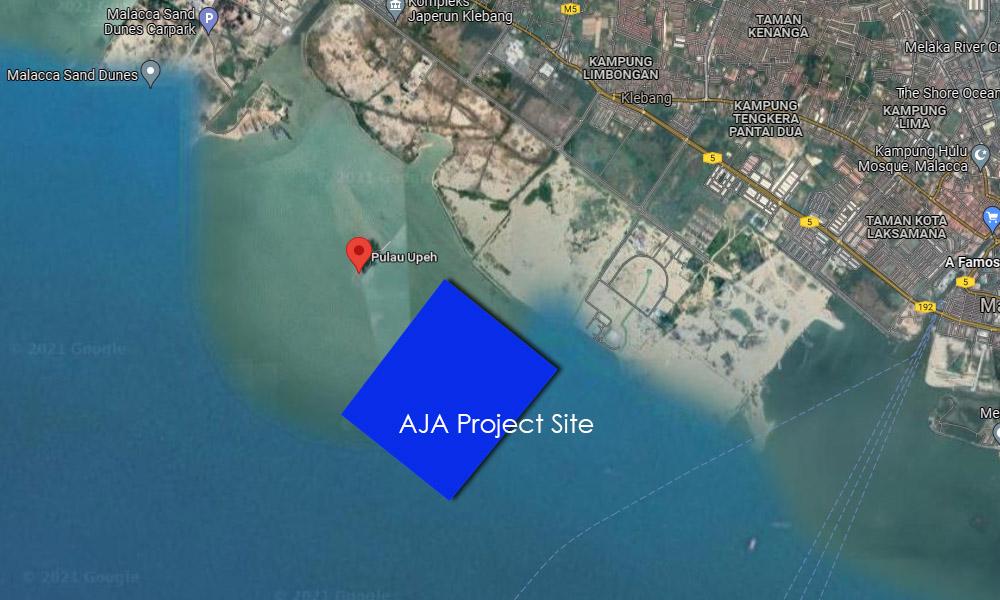
Apart from the potential adverse impact on marine life and the livelihood of fisherfolk, the AJA reclamation project in Klebang, Malacca, could also hamper the discovery of historical artefacts.
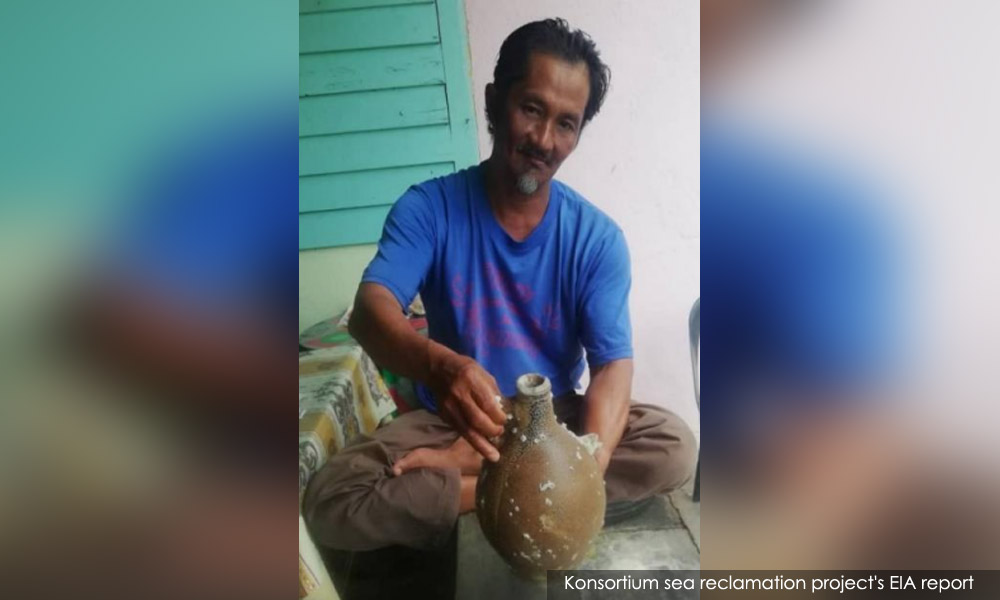
The heritage impact assessment (HIA) report for the project cited how fisherman Rashid Mad Zain (above) found porcelain from China during the transition period between the Ming and Qing dynasties, as well as items from Europe...
Apart from the potential adverse impact on marine life and the livelihood of fisherfolk, the AJA reclamation project in Klebang, Malacca, could also hamper the discovery of historical artefacts.
The heritage impact assessment (HIA) report for the project cited how fisherman Rashid Mad Zain (above) found porcelain from China during the transition period between the Ming and Qing dynasties, as well as items from Europe.
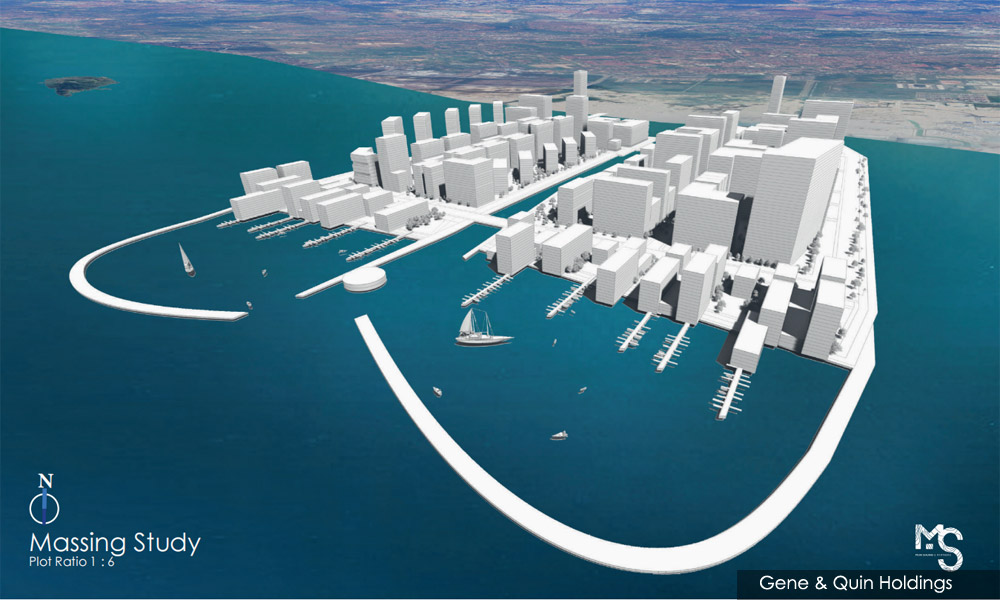
The AJA project is a sub-project of the Melaka Waterfront Economic Zone (M-WEZ) mega reclamation project.
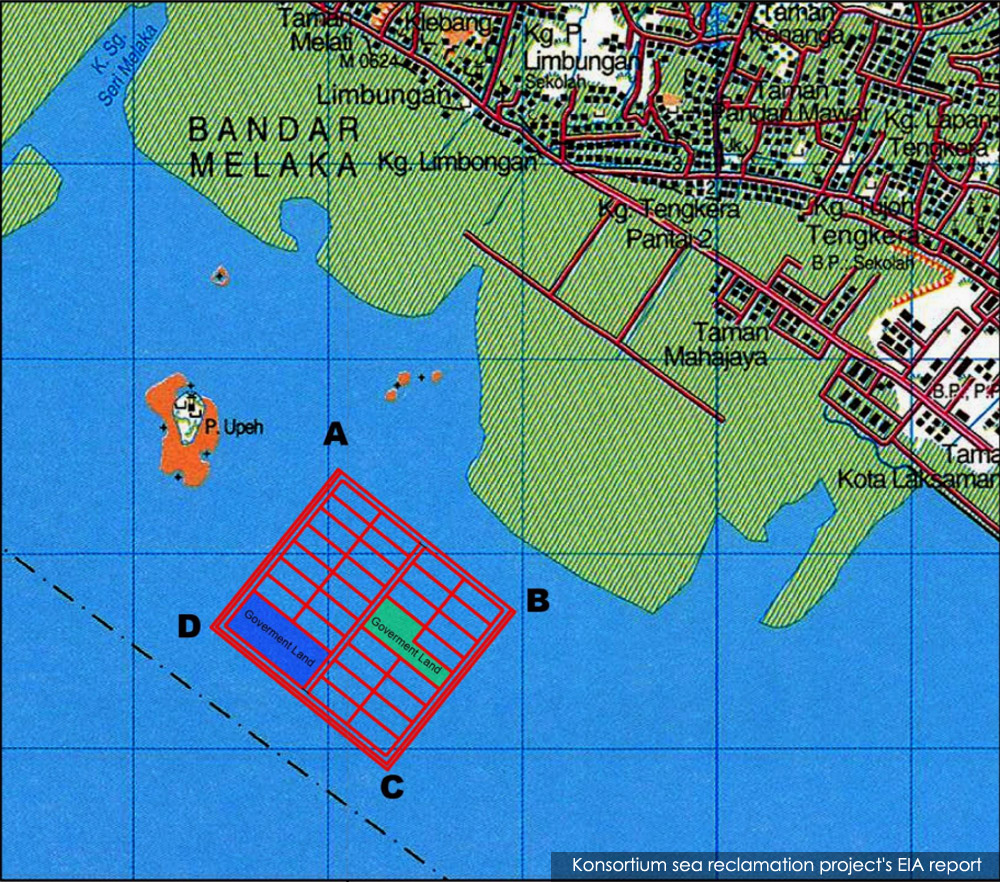
The developer is Konsortium Pembangunan Tanah Laut (Melaka) Sdn Bhd (KPTLM) while the concession areas are owned by four companies linked to Malacca Umno leaders.
Read more: Malacca Umno duo linked to reclamation project
25pct of project site overlaps with protected heritage area
According to the HIA report, besides Rashid, others have also discovered artefacts when fishing, proving that Malacca's coastal areas are rich in such items.
This included shipwrecks, weapons, ceramics and coins from the period of the Sultanate of Malacca, Portuguese Malacca, Dutch Malacca and the British colonial era.
An archaeological underwater exploration in early 2000 recorded between 30 and 40 shipwrecks in Malacca's estuary areas - but a full expedition was not conducted due to various constraints.
Furthermore, 25 percent or 75 acres of the proposed reclamation site have been gazetted as protected national heritage areas since 2010.
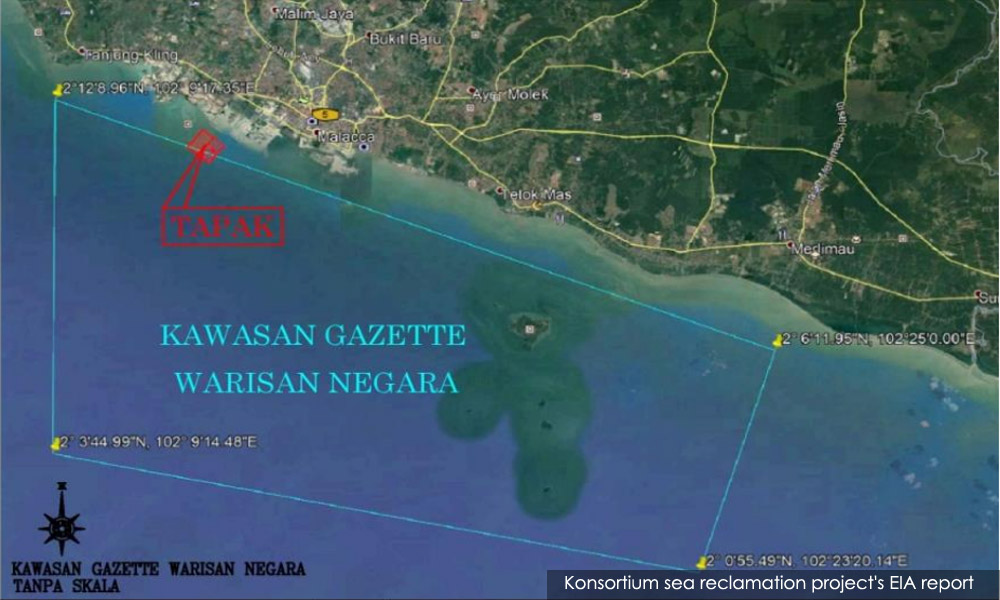
The HIA report states that the Malacca Department of National Heritage (DNH) wanted the developer to get the green light from the federal government before mining activities are carried out in protected areas.
“Section 64(2) of National Heritage Act 2005 states that activities within the protected zone cannot be carried out unless there is a written approval from the heritage commissioner,” it adds.
Divers found ancient Chinese pottery
In order to meet the requirements of the National Heritage Act, the HIA team undertook numerous steps to evaluate the historical value of the proposed site.
This included conducting interviews with the fisherfolk, scanning and detecting potential heritage sites on the seabed as well as deploying diving teams to search for potential areas.
The team said it only managed to find pottery from China dating back to the 17th century after combing the area for five days.

“The findings indicate there was no important underwater historical relics such as shipwrecks and artefacts like porcelain, coins, beads or old building structures in the project area,” it said.
The report further concluded that the artefacts found in the past do not have “outstanding universal” heritage value and therefore the proposed project should not be stopped.
Heritage Dept wanted search area expanded
However, the DNH appeared unconvinced.
According to appendixes in the HIA report, DNH requested the HIA team to expand the search area, improve documentation and resubmit the report last January.
However, the appendix documents state that the report was not resubmitted.
Last May, the DNH requested the HIA team to conduct another targeted search in the areas where the Chinese pottery was found, to ensure that these were not from a nearby shipwreck.
However, the developer replied that the pottery was found within 20 metres from the heritage-protected area. It also promised to carry out rescue works and inform the authorities if more artefacts are discovered.
On Sept 1 this year, DNH gave conditional approval for the proposed project.
The HIA report was prepared by Asyaari Muhamad, a senior maritime archaeological researcher from UKM’s Institut Alam & Tamadun Melayu.
The report was submitted to the Department of Environment, together with the project’s environmental impact assessment (EIA) report.
Members of the public can submit their feedback on the proposed project before this Saturday, Dec 25.
Malaysiakini has contacted Gene & Quin Holdings (the parent company of Konsortium Pembangunan Tanah Laut (Melaka)) for comment.





Report this comment
Are you sure you want to delete this comment?
This action cannot be undone.