



Govt to shorten booster interval after local Omicron case
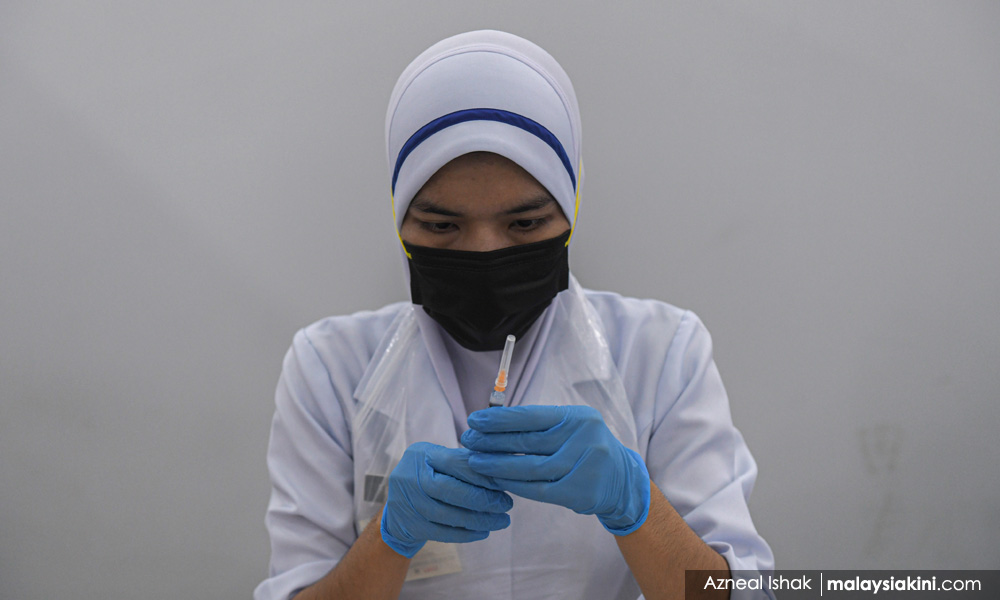
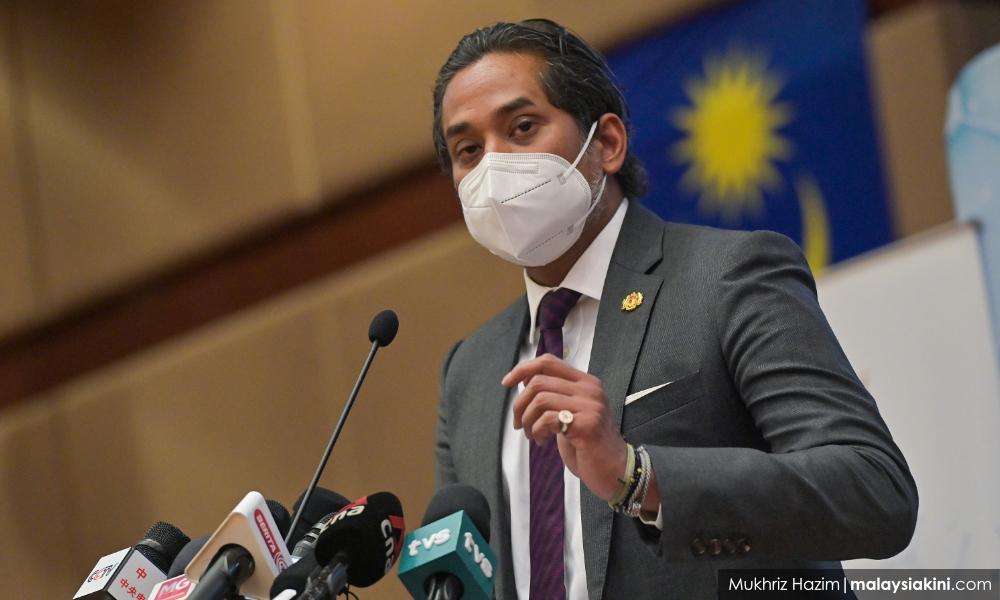
The Health Ministry will announce a shorter interval for Covid-19 booster shots early next week, said its minister Khairy Jamaluddin.
“This will make most Malaysians who have already received their first and second doses eligible for their third dose,” he told a press conference in Putrajaya today.
The move follows suit with measure taken by other countries such as Germany and Australia, which are recommending shorter booster internals in a bid to stem the spread of the new variant.
The Health Ministry will announce a shorter interval for Covid-19 booster shots early next week, said its minister Khairy Jamaluddin.
“This will make most Malaysians who have already received their first and second doses eligible for their third dose,” he told a press conference in Putrajaya today.
The move follows suit with measures taken by other countries such as Germany and Australia, which are recommending shorter booster internals in a bid to stem the spread of the new variant Omicron.
Several studies have produced preliminary data showing that two doses of the current generation of Covid-19 vaccines are ineffective in the prevention of symptomatic Omicron variant infections, but a booster shot can restore most of the original protection.
While there is data suggesting that Omicron variant infections were generally milder than the earlier Delta variant, Khairy said whether this is applicable to Malaysia remains to be seen.
“The epidemiology in the UK and in Malaysia are different, so when the Omicron wave arrives, we don’t know whether this will cause hospital admissions to increase or not.”
Umrah pilgrims urged to get boosters
Khairy’s announcement is in response to an increasing number of Omicron variant cases detected at Malaysia’s international entry points and the likelihood of quarantine breaches, as well suspected cases of Omicron transmission within the country.
“The likelihood that Omicron is already in the community is quite high because the case in Sarawak has no (recent) history of travel. This shows that Omicron is already here, and we expect cases to rise,” he said.
He added that the ministry strongly advises people planning to travel overseas to get their booster shots to do so, particularly those travelling to perform Umrah pilgrimages in Saudi Arabia.
Out of the 49 Omicron variant cases confirmed in Malaysia on Dec 23 and 24, 30 cases (61 percent) involve travellers returning from Saudi Arabia. These travellers arrived in Malaysia between Dec 13 and Dec 17.
As for those partaking in the Christmas and upcoming New Year celebrations, the minister reminded them to take precautions against the disease including performing a Covid-19 self-test before visiting friends and family.
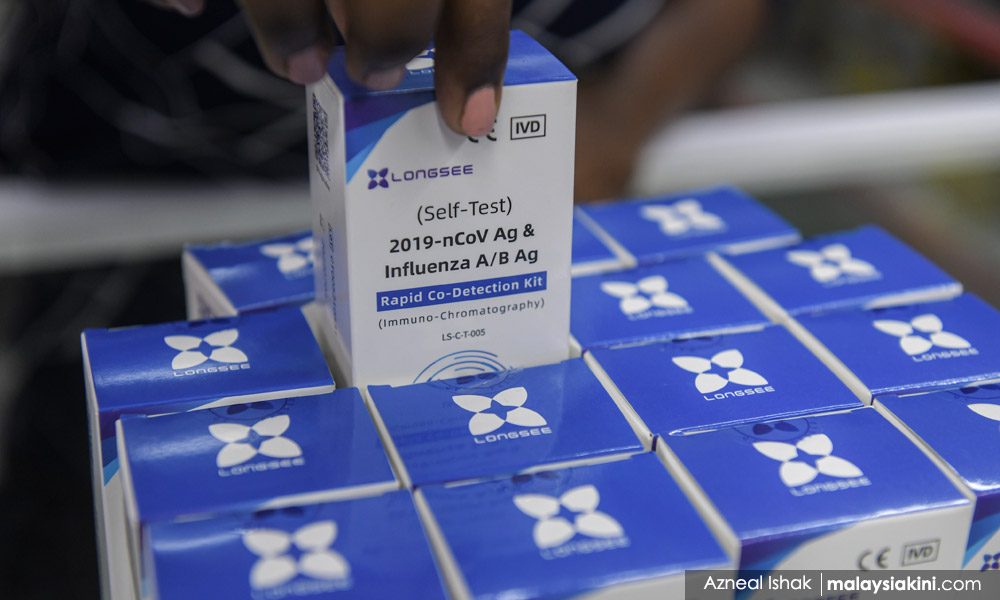
On Dec 1, Khairy announced that the Covid-19 booster shot rollout would be accelerated following the emergence of the Omicron variant, with the aim of increasing it from 120,000 doses per day to 150,000 doses per day.
Health Ministry data shows an average of 131,083 booster doses were administered per day in the last seven days up to Dec 24, for a total of 5,363,641 doses administered.
This amounts to 16.4 percent of the population, or 23.5 percent of fully vaccinated adults.
Khairy said ongoing efforts to accelerate the booster rollout will be intensified.
Increasing genomic surveillance
Apart from booster shots, he said the ministry will increase its genomic surveillance as well to boost its capacity to track the emergence and spread of Covid-19 variants.
This entails increasing the government’s Covid-19 genomic sequencing capacity to 3,000 samples per month in January next year, and to outsource some of the sequencings to the private sector.
“I have asked the Finance Ministry and the Treasury to increase it further. We will outsource to private laboratories and add another 2,000 samples – We will do 5,000 per month to boost our genomic surveillance,” he added.
In July, it was reported that the government was investing RM3 million to increase genomic sequencing to 3,000 samples over a three-month period from August to October.
Apart from genomic sequencing, Khairy said the government already uses relatively inexpensive test kits that can detect the Omicron variant through S-gene target failure (SGTF).
Following discussions with the health director-general, Khairy said the use of SGTF to detect the Omicron variant at international entry points will be increased, and all cases with SGTF will be presumed to be Omicron variant cases.
SGTF is a phenomenon where a component of some PCR tests that recognises the coronavirus’ S-gene fails to do so due to the presence of certain mutations, even though other components of the test still report a positive test result.
According to a World Health Organization report on Dec 7, most Omicron samples to date carry this mutation, but confirmation through genomic sequencing is still necessary because the mutation is not unique to the Omicron variant.
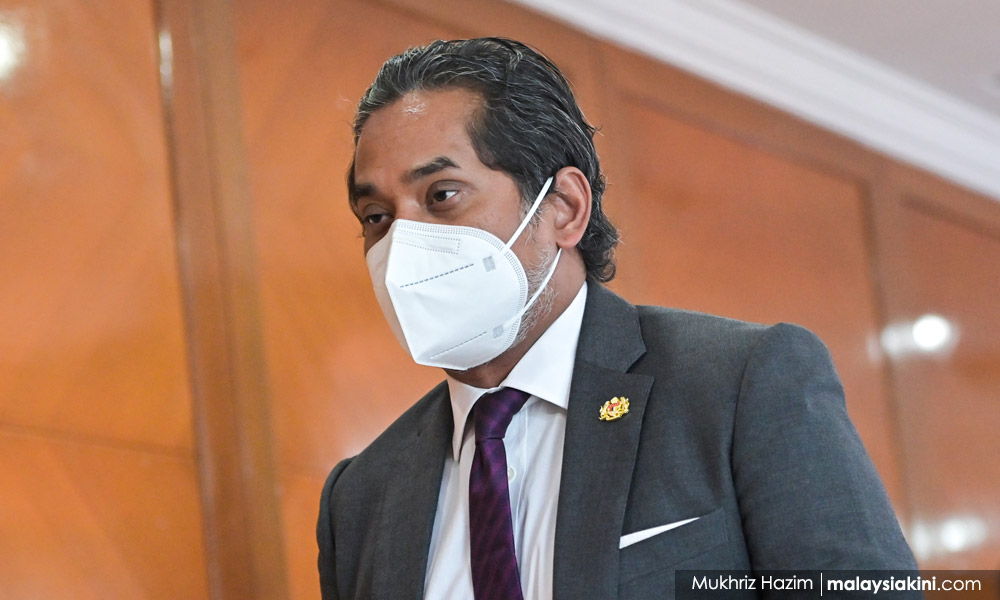
Khairy said all instances of SGTF in Malaysia were later confirmed to be the Omicron variant when successfully sequenced. However, some samples could not be sequenced because the viral load of the sample was too low.
As for choosing which Covid-19 samples will undergo genomic sequencing, Khairy said it will be performed on all Covid-19 cases involving international travellers, as well as high-risk cases.
Cases considered “high risk” to be sequenced include:
- Cases from areas with high levels of Covid-19 transmission or experiencing a sudden increase in cases
- Paediatric cases from areas experiencing an increase in cases involving children
- Severe cases among people below 60 years old without underlying comorbidities
- Patients with “unusual manifestations” such as rapid deterioration
- Cases of suspected Covid-19 reinfection
- Vaccine breakthrough cases involving healthcare workers, and some community cases
- Covid-19-like cases that repeatedly test negative in PCR tests, or have low or missing S-gene levels




Are you sure you want to delete this comment?
This action cannot be undone.