


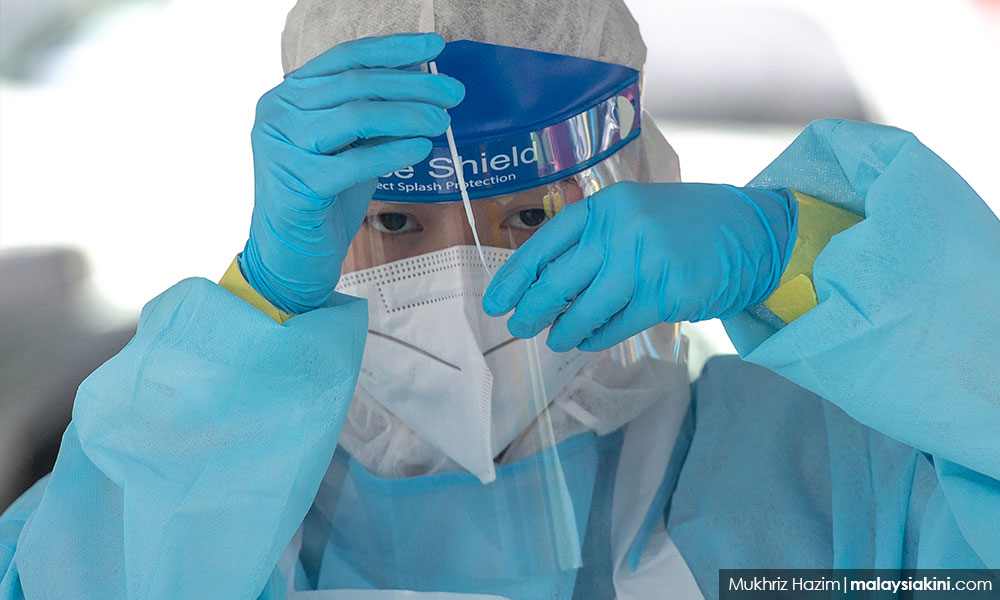

Rapid tests may not catch early Omicron cases, study suggests
Rapid antigen tests (RTK-Ag) may not be sensitive enough to catch early cases of Covid-19 infection involving the Omicron variant until a patient is already highly infectious, a study suggests.
“The policy implication is that RTK-Ag tests may not be as fit-for-purpose in routine workplace screening to prevent the asymptomatic spread of Omicron, compared to previous variants, given the shorter time from exposure to infectiousness and lower infectious doses sufficient for transmission,” the study authors wrote...
Rapid antigen tests (RTK-Ag) may not be sensitive enough to catch early cases of Covid-19 infection involving the Omicron variant until a patient is already highly infectious, a study suggests.
“The policy implication is that RTK-Ag tests may not be as fit-for-purpose in routine workplace screening to prevent the asymptomatic spread of Omicron, compared to previous variants, given the shorter time from exposure to infectiousness and lower infectious doses sufficient for transmission,” the study authors wrote.
The US-based study analysed 30 Covid-19 cases between Dec 1 and 30 in New York, Los Angeles, and San Francisco.
Due to workplace requirements, these individuals had undergone daily Covid-19 PCR and RTK-Ag tests. During PCR testing, S-gene target failure (SGTF) was detected in 29 cases, which is highly suggestive of the presence of the Omicron variant.
The researchers found that on Day 0 and Day 1 of a positive PCR test, all antigen tests used in the study produced false-negative results even though 28 of the cases already harbour enough of the virus to be infectious.
Moreover, at least four cases transmitted the virus to other people in between false-negative RTK-Ag test results.
It took around three days from the first PCR positive result for RTK-Ag tests to start reporting the correct results.
Incubation period
Within two days after the first PCR positive test, all individuals in the study also started developing symptoms. For comparison, an earlier study published in The Lancet Regional Health estimated the Delta variant to have an incubation period of 4.3 days, and earlier variants to be around five days.
The researchers in the new study also analysed five cases where patients continued to undergo daily saliva PCR, nasal swab PCR, and nasal swab RTK-Ag tests after the infection was detected.
They said the viral load in the saliva is found to reach a peak one or two days sooner before the nasal tests.
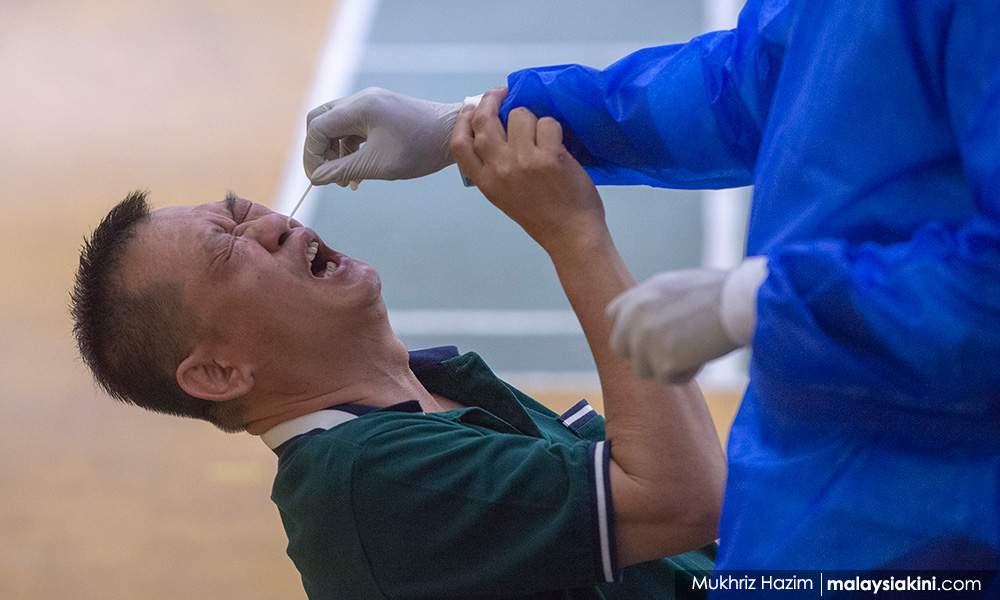
The paper was posted on the preprint repository medRxiv yesterday and has yet to undergo peer review.
Additionally, three out of four study authors declared unpaid directorships in SalivaDirect as a potential conflict of interest, and one is a paid employee at a testing laboratory.
SalivaDirect is based at the Yale School of Public Health and provides test protocols for its saliva-based PCR tests to other laboratories, but does not supply test kits.
The study followed a statement from the US Food and Drug Administration on Dec 28 last year stating that early data shows RTK-Ag tests can still detect the Omicron variant, but may have reduced sensitivity.
However, it did not release any data to support its statement and said the finding still needs to be validated through clinical studies.
Meanwhile, a World Health Organization report on Dec 23 last year said there are no reported false negatives among the four RTK-Ag tests it had approved, while statements from manufacturers indicated most RTK-Ag tests retained their ability to detect the Omicron variant.
However, it also noted that more data needs to be collected on this issue.
RTK-Ag tests less sensitive
Prior to the study, RTK-Ag tests are already known to be less sensitive than PCR tests particularly when it comes to catching Covid-19 cases in very early phases of infection.
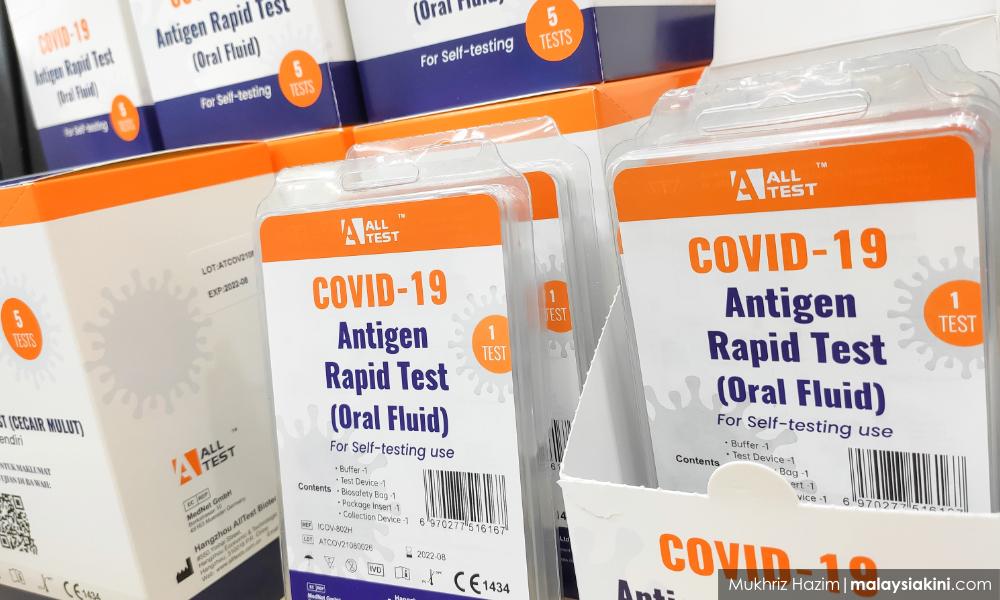
However, they were still considered a useful screening tool because it is fast, cheap, and easy to use without the need for complicated laboratory equipment. It was also sensitive enough with earlier variants to catch infectious cases.
Malaysia’s National Covid-19 Testing Strategy relies heavily on RTK-Ag tests in a variety of scenarios to enable some semblance of normal social and economic life while mitigating the risk of Covid-19 transmission.
Among others, high-risk workplaces are required to undergo RTK-Ag tests weekly regardless of vaccination status, and a random sample 10 percent of students at each primary school and preschool are also to undergo weekly testing.
The document also encourages taking RTK-Ag tests before undertaking activities such as interstate travel, visiting elderly people, attending large conferences, and holding social gatherings.
“It is important to prevent transmission of the virus to your family members and community while preventing the emergence of clusters by getting tested,” the document reads.






Are you sure you want to delete this comment?
This action cannot be undone.