



Stopping chicken export may cause negative effects to country - Loke
The government’s decision to suspend the monthly export of chickens was a drastic move and might cause negative effects on the nation, said DAP secretary-general Anthony Loke.
He said the government should instead focus on the food supply chain as a whole and come up with a long-term solution to tackle food shortage, and not wait for it to turn into a crisis.
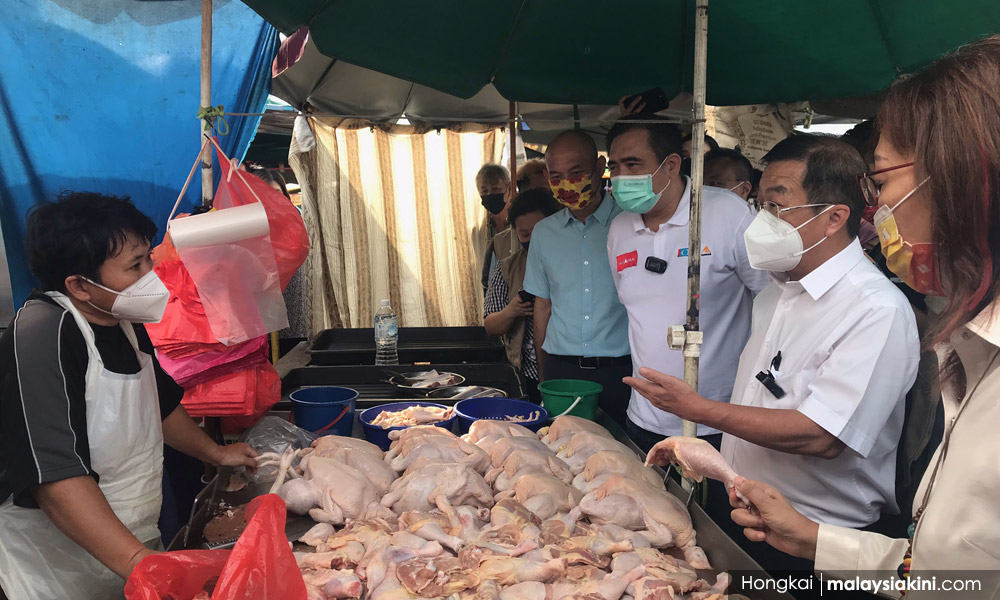
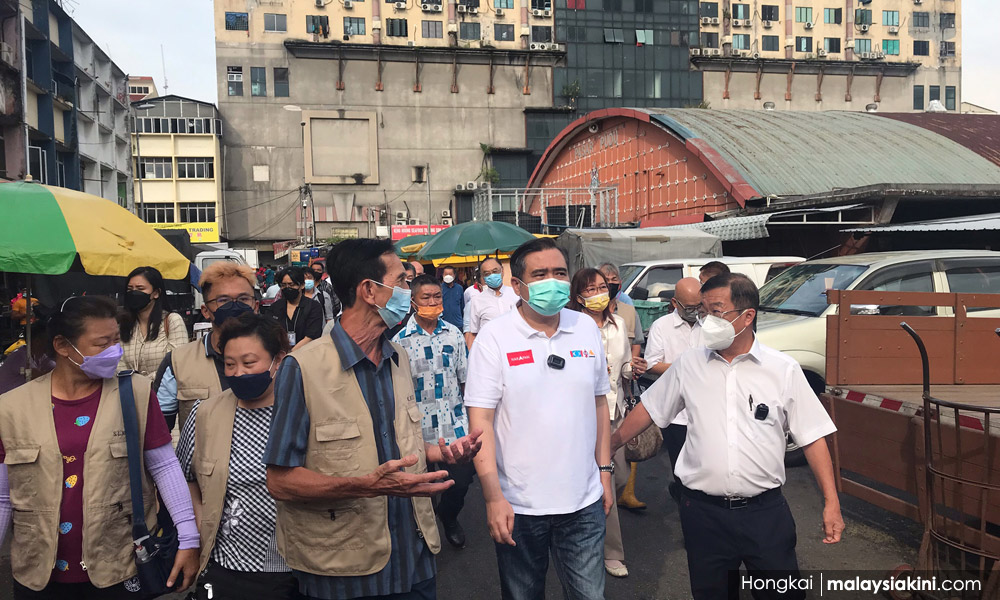
"Even though the food supply might increase in the short-term, our economy and other matters seemed to be affected," the Seremban MP said in a press conference after visiting Pasar Pudu in Kuala Lumpur today.
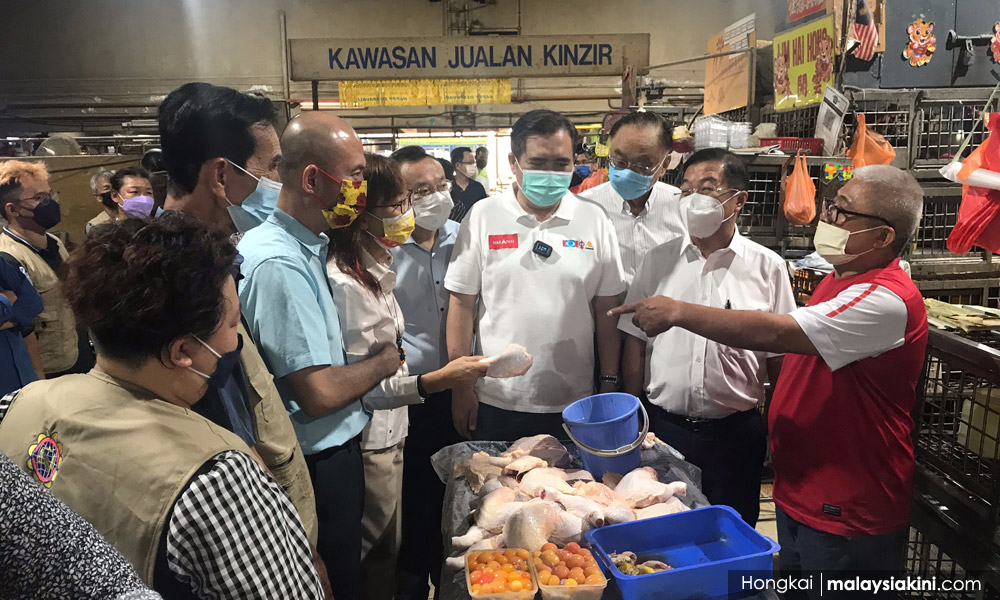
He was joined by his colleagues Cheras MP Tan Kok Wai, Bukit Bintang MP Fong Kui Lun, Kepong MP Lim Lip Eng, Seputeh MP Teresa Kok, and also by the Persatuan Penjaja-penjaja dan Peniaga Kecil Pudu Kuala Lumpur chairperson Lim Kin He.
During the visit, the MPs listened to the complaints from chicken traders, including Lim, about the insufficient supply of broilers.
At the press conference, Loke explained that broiler suppliers gain cross-subsidy through exportation, and they usually have a long-term contract with their overseas buyers, so the suspension would lead to contract breach and losses.
"Such policy and move will have a negative impact on the image of our country as a trading nation.
"The government can ban the exportation of one item today, but what will happen if there is another shortage of another food item tomorrow? Will the government put a stop to the export also?
"This will set a dangerous precedent and cast doubts on foreign countries towards Malaysia’s supply chain," said Loke.
Food inflation
In the same press conference, Loke criticised the government for not viewing the entire food supply chain as a whole when handling the issue of food shortage.
He said the inflation also affected other goods such as meat and vegetables, citing an example of the price of pork which skyrocketed from around RM20 per kilogram to almost RM40 now.
People will then choose to buy other meat, such as chicken because pork is now too expensive and this resulted in a shortage of chickens, he explained.
Loke, therefore, reiterated the need for the government to come up with long-term measures on this issue.
READ MORE: KINIGUIDE | Chicken shortage and food insecurity - what's behind it?
He also reminded the government of its National Action Council on Cost of Living, which aimed to resolve livelihood issues before they turned into a crisis, and asked what the council is doing about this crisis.
The council was chaired by the deputy prime minister and involved all the ministries during the Pakatan Harapan administration.
Loke suggested the government make use of the prosperity tax by setting up a price stabilisation fund to ensure all food supplies were adequate and prices are reasonable.
He also urged the government to monitor domestic food supply and prices intensively.
"We need a long-term solution. As we said, we need to focus on self-sustainability, which produces the country's basic food items, (such as) chicken, vegetables and so on ourselves, without relying on imports.
"We have vast land for agriculture. Singapore has no land for self-sustainability, but we have. We have the means for self-sustainability. Therefore, we need a policy between the federal and state governments to achieve it.
"The problem is, the coordination between the federal government and the state governments has a lot of bureaucracy," added Loke.
Subsidiary payments
Meanwhile, Tan said the DAP and Harapan had been reminding the government about the reliance on food imports, but it fell on deaf ears.
Besides chicken traders, he said chicken farmers are also facing difficulties.
The government previously promised to subsidise chicken farmers with a price control scheme with an allocation of RM729.43 million, but only RM50 million were paid out.
The Agriculture and Food Industries Ministry, in a statement today, promised to expedite the subsidy payments to chicken farmers.
Kok, meanwhile, urged the government to expedite the handling of the food crisis and make it the most important agenda of the government.
She suggested for the government to set up a task force comprising various ministries, including Agriculture and Food Industries Ministry, Domestic Trade and Consumer Affairs Ministry, and Transport Ministry, to name a few, to handle the issue and increase food production.
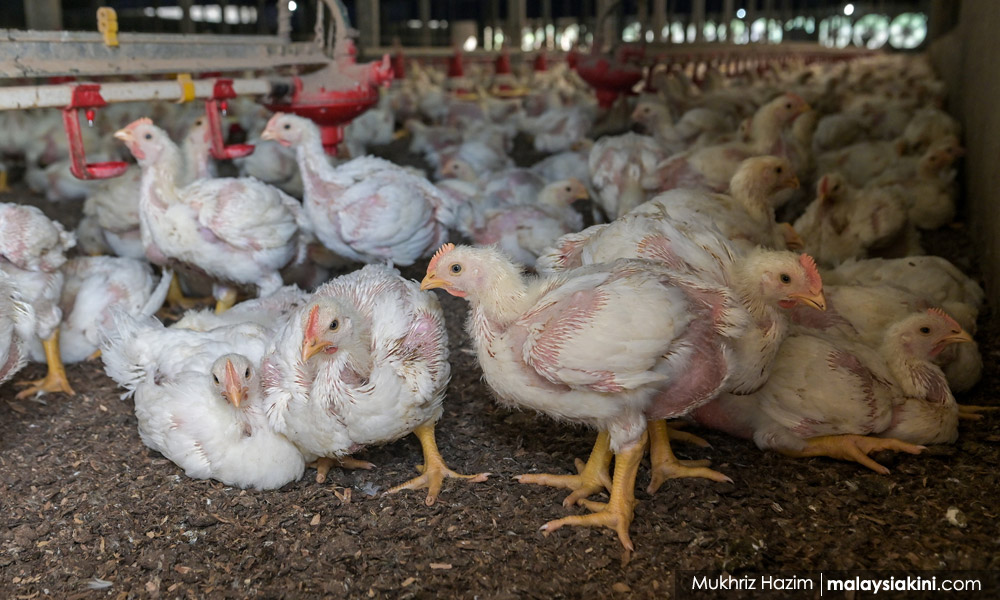
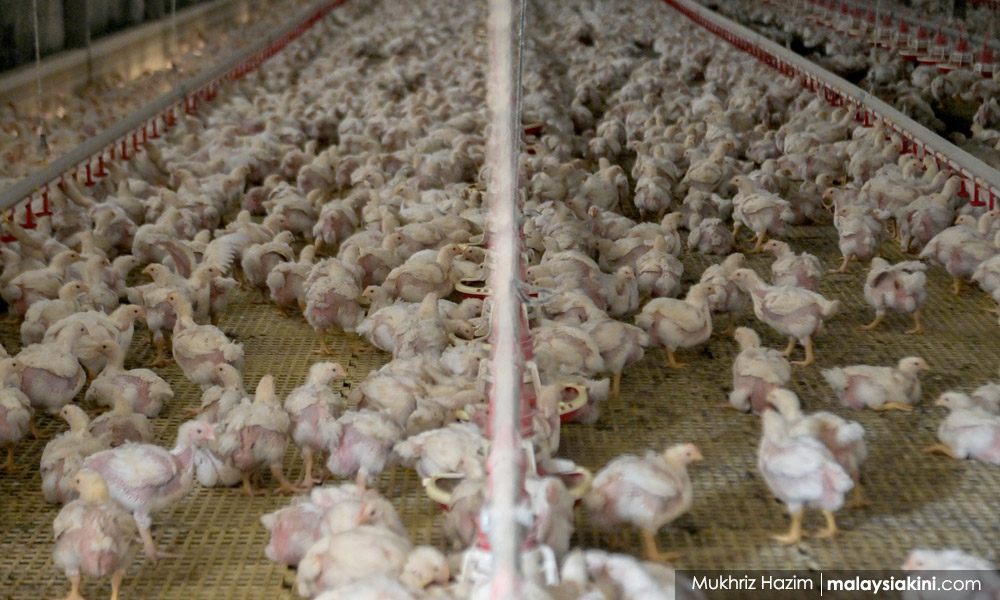
Prime Minister Ismail Sabri had announced yesterday that the cabinet decided to stop Malaysia's monthly export of 3.6 million chickens beginning June 1 to address a food supply shortage.


Report this comment
Are you sure you want to delete this comment?
This action cannot be undone.