



'M'sia needs independent commission on climate change'
Past president of the Federation of Private Medical Associations, Dr Milton Lum, said 2050 is a long way ahead but the question is what are the milestones the country wants to achieve on the way there and who reports the milestones and to whom...
Malaysia needs to establish an independent commission on climate change to monitor and report on annual carbon dioxide emission reduction milestones, either to the public or Parliament, so as to keep track of the nation’s progress in becoming carbon neutral by 2050.
Past president of the Federation of Private Medical Associations, Dr Milton Lum, said 2050 is a long way ahead but the question is what are the milestones the country wants to achieve on the way there and who reports the milestones and to whom.
“There are talks about climate change but nobody seems to be quite bothered about it because it is not something that is immediate or threatening. It doesn’t sink in but if it is an immediate threat, such as Covid-19, everybody becomes a bit more compliant to mask-wearing and physical distancing.
“Everyone has to recognise that there is a problem and this means that government authorities have to educate the population that there is such a (climate change) problem.
“The government has to devise methods of addressing it and getting those methods accepted and implemented by the population as it is a very big challenge,” Lum said as a guest speaker on Bernama TV’s programme, ‘The Nation: The Impacts of Climate Change on Human Health’ in Kuala Lumpur yesterday.
Human activities cause climate change
“A lot of people don’t think climate change is a problem but if you use behavioural science as Health Minister Khairy Jamaluddin said eloquently in Geneva recently that you can get your message across better than if you don’t use it.
Lum said Khairy mentioned the use of behavioural science and its application to increase the vaccination rate for Covid-19 in this country, which is commendable as information on Covid-19 is dispersed effectively.

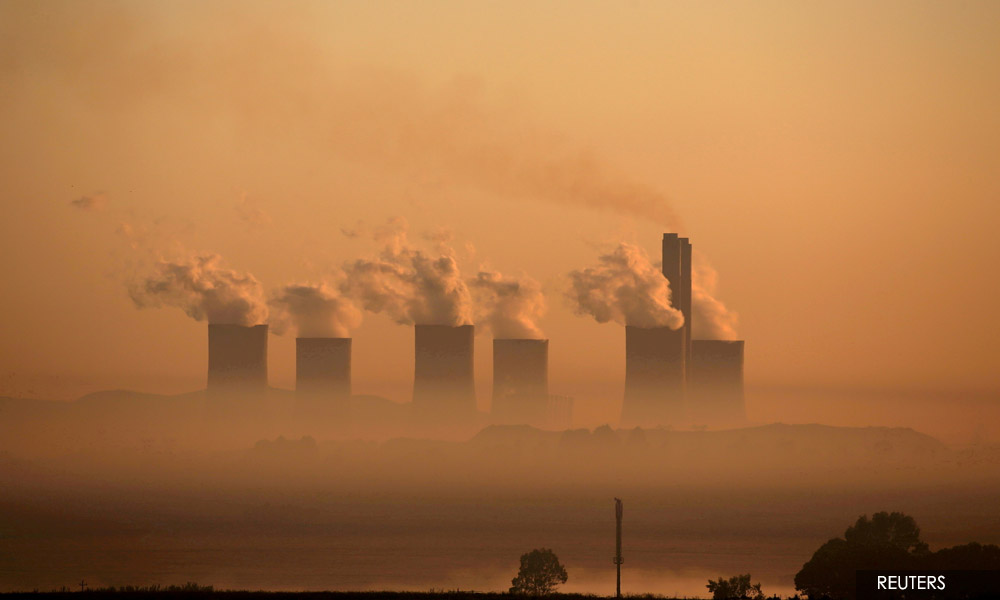
“The main drivers of climate change are human activities, particularly the burning of fossil fuels like coal, oil and gas and these cause greenhouse gas emissions which are primarily carbon dioxide and methane.
“There are landfills for garbage disposal, causing methane emissions and it is estimated that the carbon dioxide emissions are the highest today for two million years and it is not a number to trifle with.
“We’re already seeing the effects of climate change on human health, water supply and food security. When the water supply is affected, it gives rise to the spread of water-borne diseases and when people can’t get clean water, it creates other medical diseases.
“Food security is a problem caused by climate change and will lead to malnutrition. Based on findings by the United Nations Population Fund (UNFPA), Malaysia has one of the highest malnutrition rates in the Asean region.
“The Scandinavian countries have shown that countries can mitigate climate change while coinciding with growth in their economy and Malaysia should learn from them,” Lum added.
- Bernama


/file/publisher-c1a3f893382d2b2f8a9aa22a654d9c97/2020/09/6270b0b5f57237a0cf52338b7b94faa1.jpg)





Are you sure you want to delete this comment?
This action cannot be undone.