


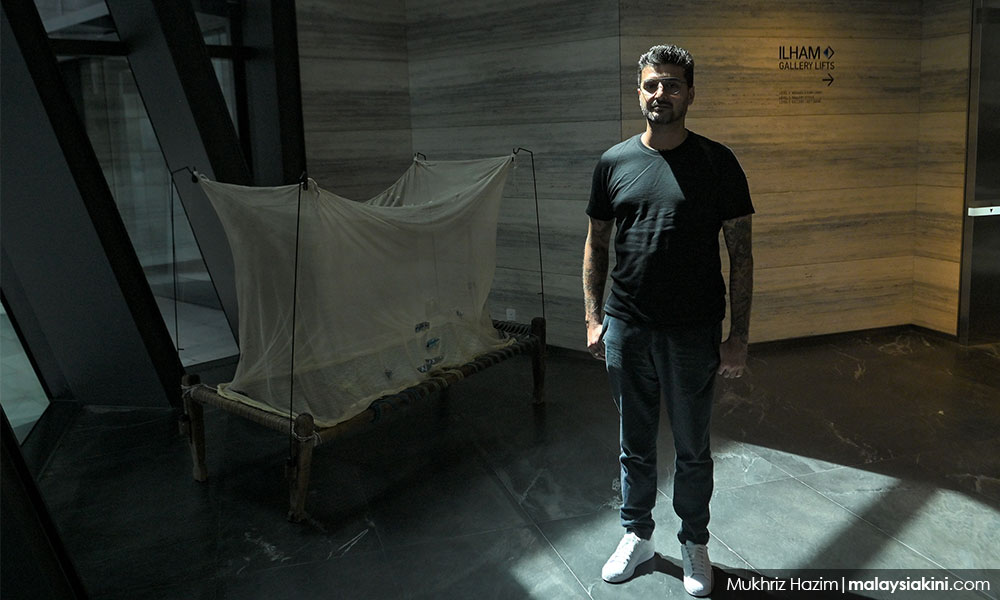

Artist pays homage to Sikh watchmen grandparents
The theme has been featured in his work more than once as he touched on it in his solo exhibition “Tagistan” (2020), and now he delves a little more into his own history with his current exhibits at Ilham Gallery titled “Jaga Life”.
Jaga Life pays tribute to the Sikh watchmen...
Kuala Lumpur-based artist Dhavinder Singh, 39, has a deep love and connection to the fast-disappearing industrial heart of Kuala Lumpur, and his latest work captures a special moment in time when he lived with his grandparents as a child in Jalan Chan Sow Lin’s factory area.
The theme has been featured in his work more than once as he touched on it in his solo exhibition “Tagistan” (2020), and now he delves a little more into his own history with his current exhibits at Ilham Gallery titled “Jaga Life”.
“Jaga Life” pays tribute to the Sikh watchmen and, in Dhavinder’s case, his maternal grandparents, who looked after a few factories in Chan Sow Lin.
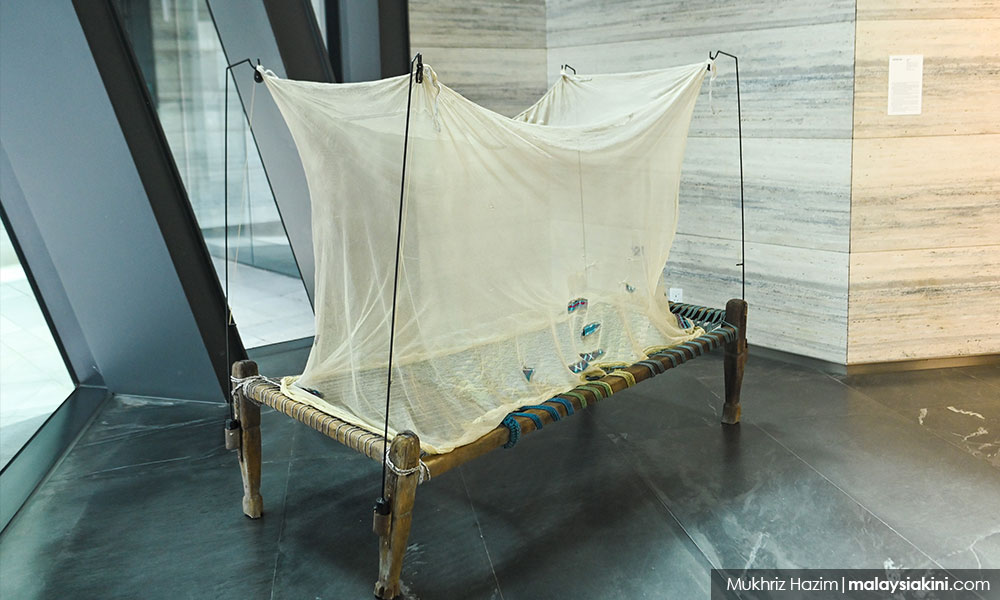
In the lift lobby of the gallery, you will find an old Charpoy bed with a mosquito net that his grandmother used. At the entrance of the gallery, you will see the time recorder and cardholder that these guards used to clock in and clock out.
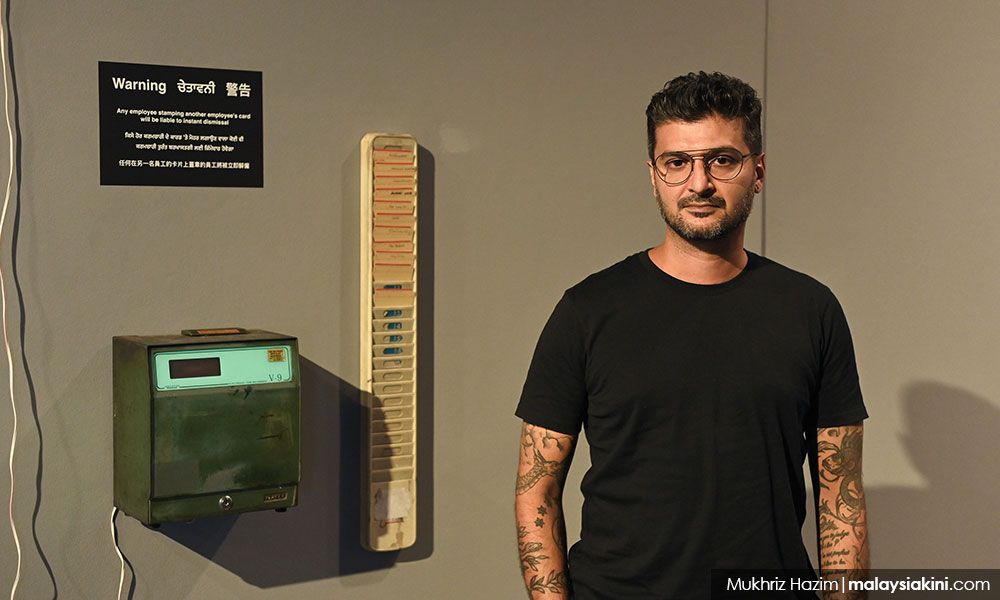
Dhavinder studied art at the Malaysian Institute of Art and honed his skills further at the Cardiff School of Art & Design.
He is currently attached to Rimbun Dahan as part of a three-month residency but came to the Ilham Gallery to tell us why “Jaga Life” is so close to his heart.
“I have lived with my grandparents since I was one year old in Chan Sow Lin. We lived above this place called Nam Hing Engineering, which was a factory that made vertical saws for timber mills.
“My grandpa had a day job. He was a civil servant with the Public Works Department. In those days, people had more than one job. He had a big family, five kids,” he told Malaysiakini.
When his grandfather did his rounds, his grandmother, who was a housewife, would stay at home.
His grandparents were the caretakers of four or five different factories.
“We had relatives from India coming in, and they looked like they were fresh off the boat. They wanted shelter, they wanted accommodation. My parents would tend to accommodate them, especially when they are from the same village.”
His grandfather was also a money lender.
“It was an interesting childhood for me living in a factory and seeing these different people come through,“ recalled Dhavinder.
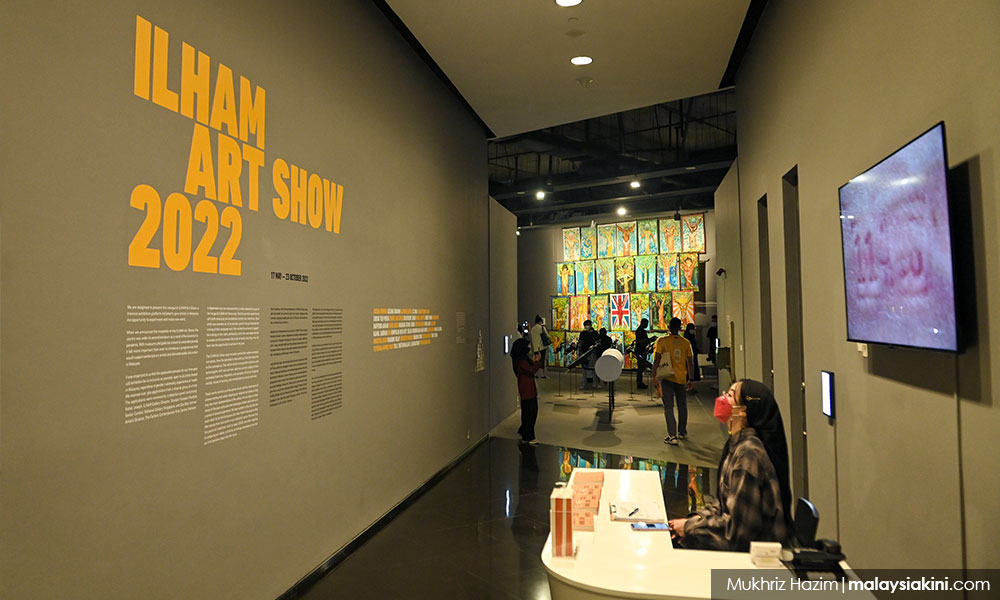
Not only were his grandparents working as caretakers, but it was also a job his mother and aunts had done too. Dhavinder himself was a “jaga” as a kid on weekends when his grandparents were not around, and he was alone in the factory.
Despite coming from a traditional household, Dhavinder looks anything but a typical Punjabi young man. Sporting tattoos all over his arms and neck, Dhavinder’s choice of career would have raised a few eyebrows in his community.
“I think I was probably an angry teenager. I think I was influenced by Western culture, stuff I read in magazines and such. “
However, Dhavinder credits his artistic abilities as something he probably got from his mother, a single parent.
“We rarely spent time together, but on weekends we would go for a movie, go get something to eat, stuff like that.
“Otherwise, my grandparents were there 24-7 for my entire childhood. I spent 14 years with them. That is how I got to experience different spaces, different factories built for different purposes.“
His mother was a seamstress who also made bridal wear and a makeup artist.
“I think as a child, she used to draw Disney characters for me. I grew up surrounded by 80s and 90s popular culture because of my mum. Her teens were in the 60s and 70s, and I am sure she has seen a lot of counter-culture and influenced her siblings as well, which my grandparents were against.
“She was the first to cut her hair short. She would also wear men’s clothing,“ said Dhavinder, explaining his somewhat rebellious nature.
The idea to do “Jaga Life” was triggered during his “Tagistan” exhibition.
“Tagistan” was part of his proposal to get a grant from the Cultural Economy Development Agency (Cendana).
“I had a vague idea of what I really wanted to do. I just did not know how to package or put a theme to it.
“I had already collected a lot of items and objects from the areas that my grandparents used to look after when I was with them. A lot of these buildings are either demolished or only remnants are left.
“Whatever I could scavenge, I salvaged from there. I have been hoarding some of this stuff for 10 or 15 years,” he said.
He did get the grant, and while he was working on “Tagistan” the idea for “Jaga Life” took root.
“The term ‘jaga’ has been around since I was a kid. Maybe it was something I could relate to when I realised that the place was no longer going to be there. I never thought of it earlier when I was doing my other exhibitions.”
“Most of the objects in this ‘Jaga Life’ exhibition, such as the charpoy bed, were from the workshop downstairs.
“I had never paid attention to these things before. The bed and mosquito net were mundane objects. We repurposed it as a way to pay respect to it. It has served a purpose over the years, and you pay homage to it.”
Dhavinder has more things he saved that he might use for future exhibits.
“It was a fun journey setting up this show,” he said, adding that he had friends who helped him salvage things he needed, and some even added their names to the punch cards.
Right now, he is putting together a book about the Chan Sow Lin area and the families living there.
“There is not much of the past left there now. I am trying to find old photographs and record conversations.
“It will be done based on my perspective as an artist.”
Tellingly, he said it would not be a coffee table book that collects dust but something that can be repurposed.



Are you sure you want to delete this comment?
This action cannot be undone.