



COMMENT | Bucha and Katyn - two Russian crimes 82 years apart
COMMENT | After the Russian troops were forced to withdraw from the Kyiv area, Ukrainian forces liberated the small town of Bucha.
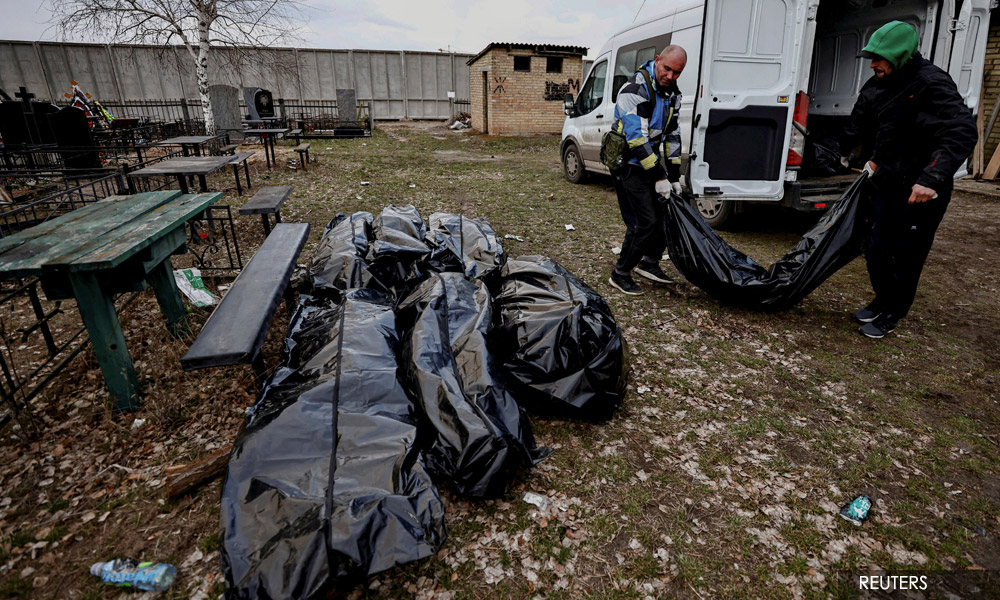
It soon became the symbolic embodiment of the brutalities of the Russian occupation of Ukraine. Hundreds of civilian inhabitants were massacred, tied and shot at the back of the head; women were raped and mutilated. Even children were not spared. Their sanatorium was converted by Russians into a mass rape-cum-torture chamber.
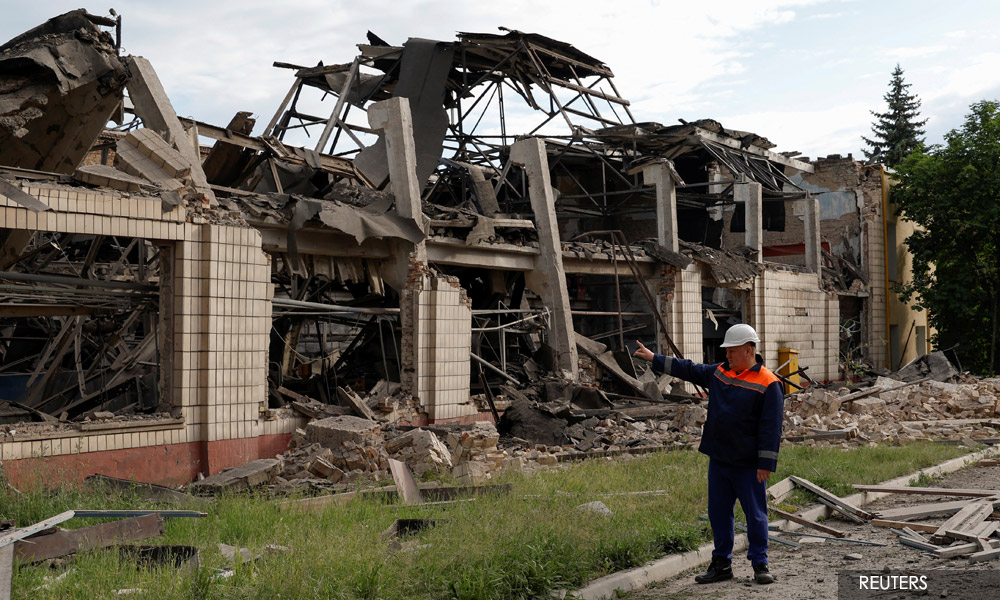
As the Ukrainian army continues to liberate their country, new evidence of more heinous crimes is emerging: families shot dead in their cars while fleeing to safety or flattened by Russian tanks with their passengers inside and completely ruined cities like Mariupol, in which tens of thousands are known to have been killed by massive Russian shelling.
There is mounting evidence of mass robberies by Russian troops breaking into shops, private houses and flats, stealing TV sets, smartphones, notebooks, refrigerators, washing machines, sinks and taps, toilets, pressure cookers, and even dog kennels.
Hundreds of destroyed Russian army trucks and armoured vehicles litter the muddy fields and rust along the roads, full of stolen quilts, cutlery, toys, toiletries, and dresses.
Russia's "liberation and denazification of Ukraine" looks more like an expedition by a mediaeval robber-baron than a modern, civilised (if one could call war civilised at all) fighting force
COMMENT | After the Russian troops were forced to withdraw from the Kyiv area, Ukrainian forces liberated the small town of Bucha.
It soon became the symbolic embodiment of the brutalities of the Russian occupation of Ukraine. Hundreds of civilian inhabitants were massacred, tied and shot at the back of the head; women were raped and mutilated. Even children were not spared. Their sanatorium was converted by Russians into a mass rape-cum-torture chamber.
As the Ukrainian army continues to liberate their country, new evidence of more heinous crimes is emerging: families shot dead in their cars while fleeing to safety or flattened by Russian tanks with their passengers inside and completely ruined cities like Mariupol, in which tens of thousands are known to have been killed by massive Russian shelling.
There is mounting evidence of mass robberies by Russian troops breaking into shops, private houses and flats, stealing TV sets, smartphones, notebooks, refrigerators, washing machines, sinks and taps, toilets, pressure cookers, and even dog kennels.
Hundreds of destroyed Russian army trucks and armoured vehicles litter the muddy fields and rust along the roads, full of stolen quilts, cutlery, toys, toiletries, and dresses.
Russia's "liberation and denazification of Ukraine" looks more like an expedition by a mediaeval robber-baron than a modern, civilised (if one could call war civilised at all) fighting force employed by a permanent member of the UN Security Council, one of the five burdened with the apparently unbearable duty, of protecting world peace and security.
The invasion may come as a shock to the gullible public and politicians of Western and some Eastern nations, who created for themselves a comfortable picture of Russia as a civilised country and President Vladimir Putin, a man "one can do business with", but not for Russia's neighbours. We live in a real, not an imagined world.
The Soviet Katyn war crime
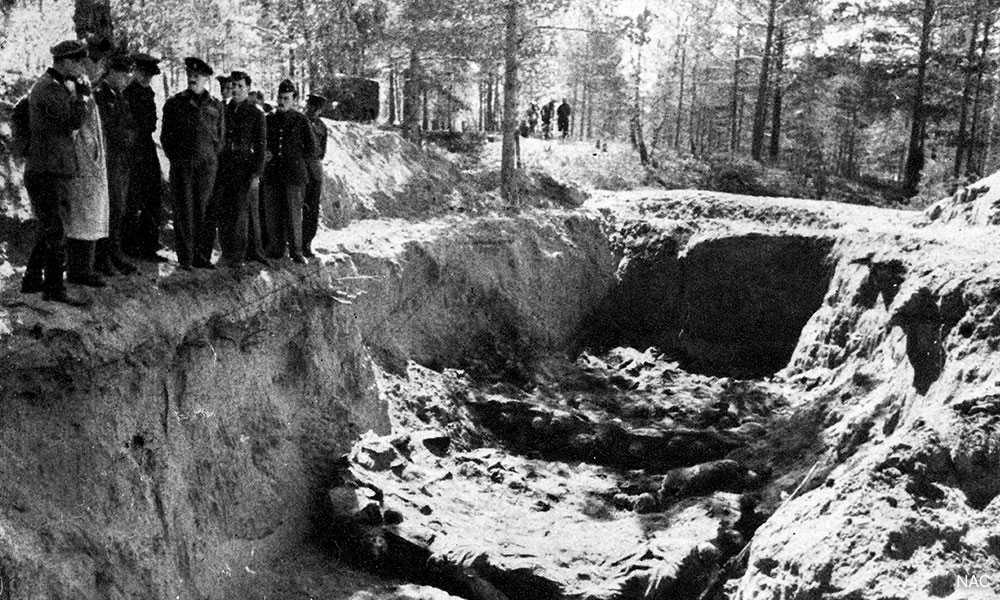
I bet there are not more than a couple of Malaysians who know what Katyń was. In the Spring of 1943, nearly two years after the German invasion of the Soviet Union, German troops discovered mass graves outside the city of Smolensk.
Local inhabitants led them to the secret wooded place, where three years earlier Soviet internal NKVD troops buried thousands upon thousands of unknown bodies. The victims were Polish citizens and, as it turned out, mostly prisoners of war. There was one woman among them.
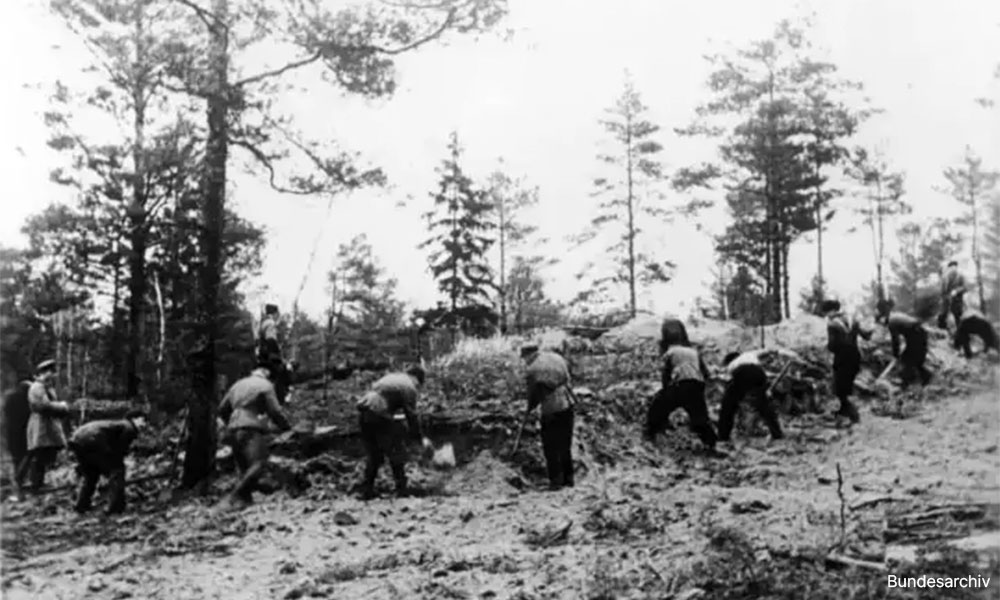
Buried in deep trenches, in many layers and covered with earth, they were easy to identify by their uniforms, personal documents and belongings. It was not the only mass grave.
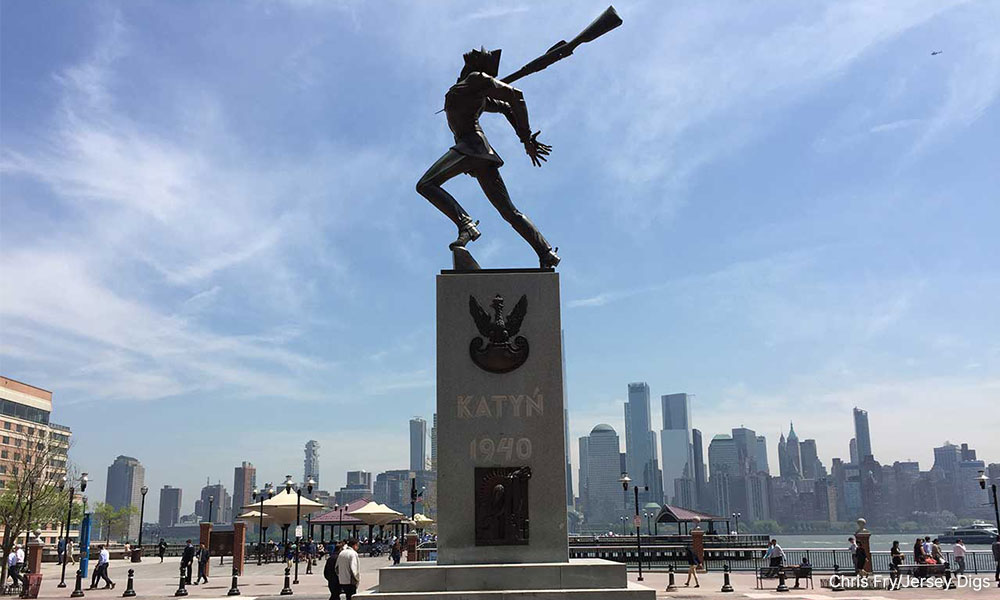
There were more, in a number of places, in which close to 22 thousand people were buried - army officers, policemen, civil servants, and intellectuals, all considered "class enemies" by the Soviets. Some of the victims were Byelorussians, Ukrainians, Tartars and Jewish. Before the Second World War (WW2), the Polish state was multi-ethnic.
As soon as the order to kill arrived from Moscow, prisoners were brought one by one to the cellars of the local prison and murdered with a revolver shot to the back of the head, the preferred method of Bolshevik executioners.
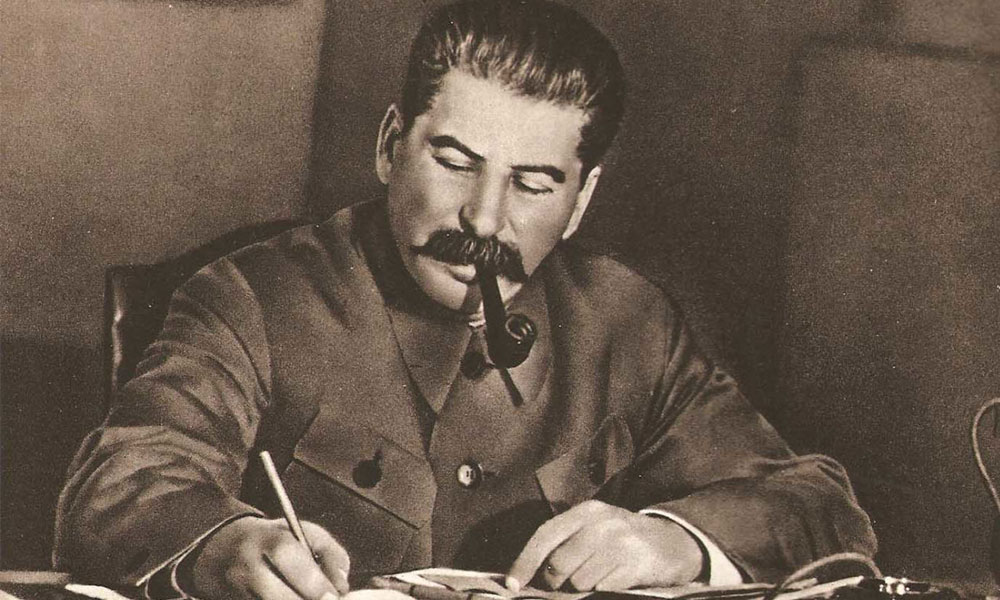
A similar method was now used in Bucha against Ukrainian men and women, pointing at a certain cultural continuity in Russia. Six members of the Soviet Communist Party's Politburo headed by Stalin signed the execution order.
They are known as perpetrators by name now, but unfortunately too late. They were all, of course, buried with Soviet state honours. Some of the actual killers survived until their late 80s.
No one was charged, lest of all, convicted. One of them was probably the biggest mass murderer of all time, personally guilty of murdering more than 10 thousand people.
Many of the more prominent murderers were actually awarded for their crimes, some with cars, others with ministerial positions, money and dachas.
It is not much different today – the 64th Autonomous Brigade of the Russian army, guilty of the Bucha massacre, was awarded the "Guards" title, an award normally given for distinction in battle. President V. Putin gave this coveted title to a unit guilty of murder, rape and thievery.
The culture of lies
Russia acknowledged the Katyń crime only after the collapse of the Soviet Union, thanks to the efforts of Polish authorities, social organisations and independent Russian historians, primarily of the Human Rights organisation "Memorial".
"Memorial" was recently banned in Russia by the Putin regime, and one of its prominent researchers, Yuri Dmitriyev, was sentenced to 15 years in jail. The Soviet and Russian dissidents that created the civil society, brutally persecuted by dictatorial regimes over the past century, had some very dedicated and brave members indeed.
It is often assumed that WW2 began with a German attack on Poland. This is only partially true. Poland was attacked by its two neighbours, the second being the Soviet Union of which today's Russia is a proud legal successor. The Soviet Union's attack came two weeks after the German when Polish troops were still fighting the first invader.
It was done in accordance with the Soviet-Nazi agreement, better known as the Molotov-Ribbentrop Pact. It provided, among others, for the dismemberment of Poland and its annexation, one of the few international agreements the USSR had actually kept.
The Soviet crime became a problem for the Western allies. Poland was an ally, but so was the USSR. And now Germans accused the Soviets of mass murder of Polish citizens. The Soviets vehemently protested and kept repeating the lie for half a century. Asked by Poland's prime minister in exile about the whereabouts of the thousands of Polish prisoners of war, then premier of the Soviet Union Joseph Stalin, known for his sublime sense of humour, replied, "Can't find them. Must have escaped to Manchuria."
The Soviets denied they had anything to do with it. It was, the Soviets claimed, the Germans themselves who made the killing and burying to smear the peace-loving Bolsheviks.
This is not much different from the case of the Bucha massacre, with official Russian representatives denying any complicity and accusing the Ukrainian side of murder, rape and robbery of their own people.
Murderous minds
Both massacres have wider political implications. In the case of Katyń, WW2 Western allies decided to pretend to believe Moscow's fairy tale. After all, Russians were now killing Germans. Better let's not annoy Uncle Joe (Stalin). It was then UK prime minister Winston Churchill, who said he was willing to ally with the Devil to defeat Satan, and he did.
But it is different in the case of Bucha. The crime is so obvious and already so well-documented that primitive denials hold no water. Like massive shelling of civilian targets, the use of phosphorus and cluster bombs by Russian troops first in Syria and now in Ukraine, both forbidden by international agreements of which Russia is a part, the horrors of the Bucha massacre had a clear aim.
Not unlike the army of Genghis Khan, sweeping across conquered lands, killing and burning left and right, Bucha was to terrify the civilians and convince the political and military leadership of Ukraine that all resistance was useless and would only lead to massive civilian casualties. But the result is quite the opposite.
It not only strengthened the resolve and fighting spirit of the Ukrainian people but caused so much anger and disgust among the people and governments of Europe and much of the world that now Ukraine is receiving more sympathy and military and civilian aid than ever before.
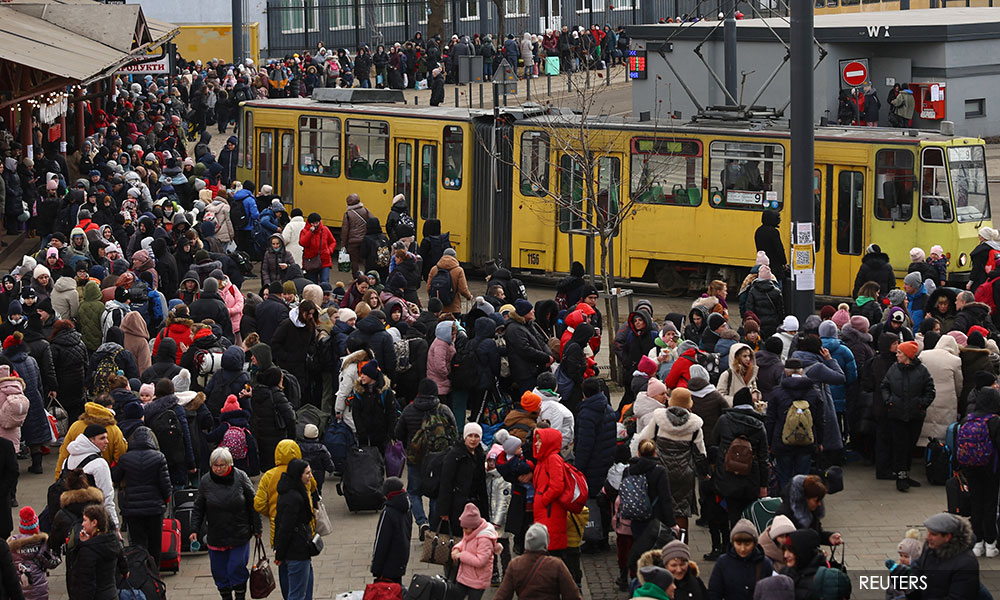
There are six million Ukrainian refugees, a great majority of them women and children, who found asylum all over Europe and four million in Poland alone. Two formerly neutral Scandinavian countries, Sweden and Finland, have already applied to join Nato. Another gross miscalculation by Russia, the first being the invasion itself.
Murderous minds crazed by hyper-nationalistic, xenophobic, hateful propaganda promoted freely and in abundance by the Russian state media – there is no independent journalism in Russia now, blessed by the Russian Orthodox Church, are the same now as in 1939.
However, times have changed, technology is different, and most importantly, human attitudes have changed too. In today's Europe, and in much of the contemporary world, crimes like the one committed in Bucha just do not pass.
Eight decades ago, no one would have bothered about a massacre the size of Bucha. It would just take a passing mention, maybe. There were hundreds, thousands of Buchas, from Oradour in France down to Shanghai. There was Auschwitz, Babi Yar and Gulag. There was the monstrous Nanjing massacre, but who has heard about it? Now we do. We do know the perpetrators and the victims of Srebrenica, Grozny, Aleppo, Afghanistan, and Rwanda.
It is not easy to hide anymore, even in Russia.
KRYSZTOF DEBNICKI is Poland’s ambassador to Malaysia.
The views expressed here are those of the author/contributor and do not necessarily represent the views of Malaysiakini.


Report this comment
Are you sure you want to delete this comment?
This action cannot be undone.