



Indonesia announces temporary freeze on migrant workers for M'sia
Effective immediately, Indonesia will impose a temporary freeze on all workers entering Malaysia owing to the latter’s breach of the terms in the domestic worker memorandum of understanding (MOU) between the two countries signed just three months ago.
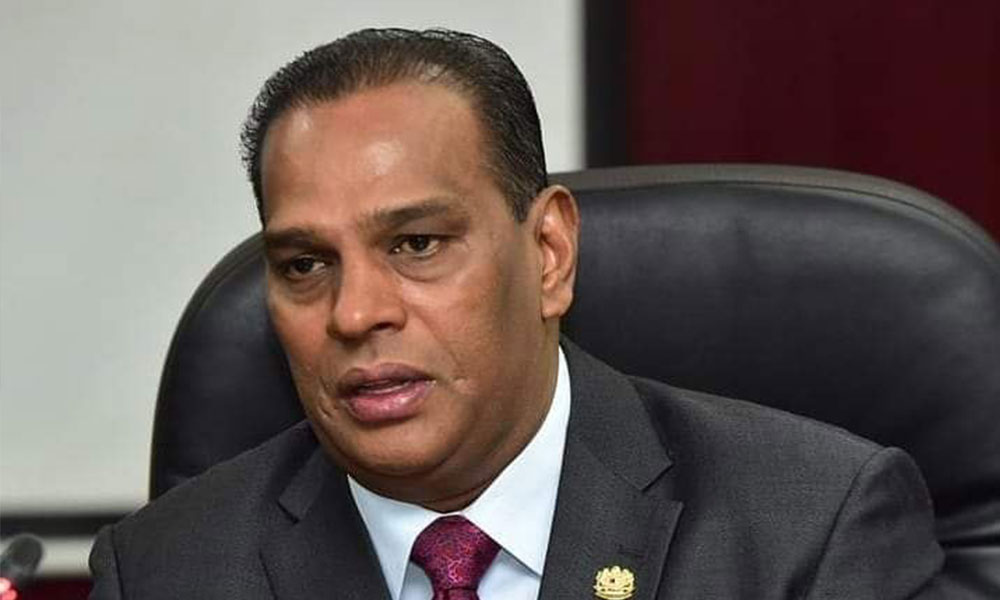
Responding to clarification sought by Malaysiakini, the Indonesian Ambassador to Malaysia Hermono confirmed that an official communication to this effect was sent to Human Resources Minister M Saravanan yesterday.
Hermono said the letter cited a breach of the terms in the MOU on the recruitment and protection of Indonesian domestic workers...
Indonesia will impose a temporary freeze on all workers entering Malaysia effective immediately, due to the latter’s breach of the terms in the domestic worker memorandum of understanding (MOU) between the two countries signed just three months ago.
Responding to clarification sought by Malaysiakini, Indonesian Ambassador to Malaysia Hermono confirmed that an official communication to this effect was sent to Human Resources Minister M Saravanan yesterday.
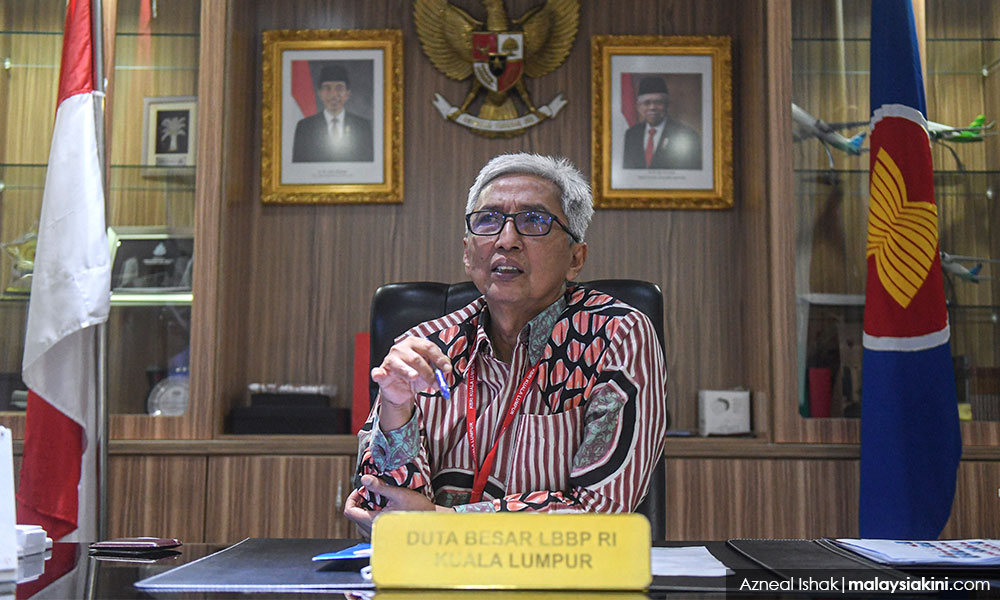
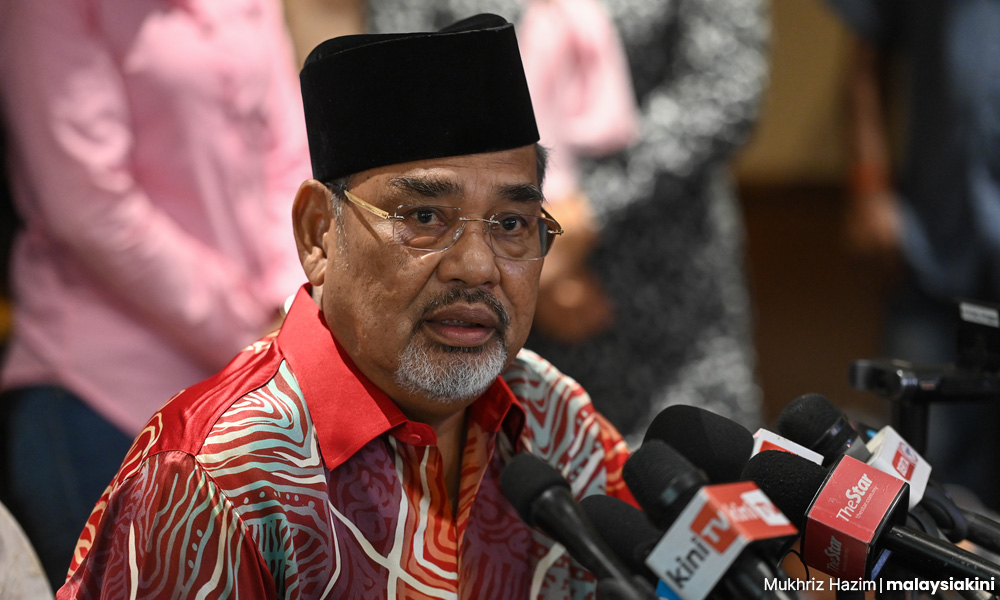
Hermono (above) said the letter cited a breach of the terms in the MOU on the recruitment and protection of Indonesian domestic workers signed on April 1.
“The minister has been informed of our intentions to reinstate a temporary freeze on recruitment of Indonesian labour into all sectors in Malaysia effective immediately,” he said, adding that all recruitment agencies in Indonesia were also informed yesterday and will comply.
Hermono, who goes by one name, explained that the Immigration Department’s continued application of its Maid Online System (MOS) in the recruitment of Indonesian domestic workers was a blatant breach of the MOU.
“We have solid evidence that the Immigration Department, under the Home Affairs Ministry, continued to use the MOS to facilitate the recruitment of Indonesian domestic workers into Malaysia,” he added.
When contacted, Saravanan responded in brief that the matter will be discussed with the home minister.
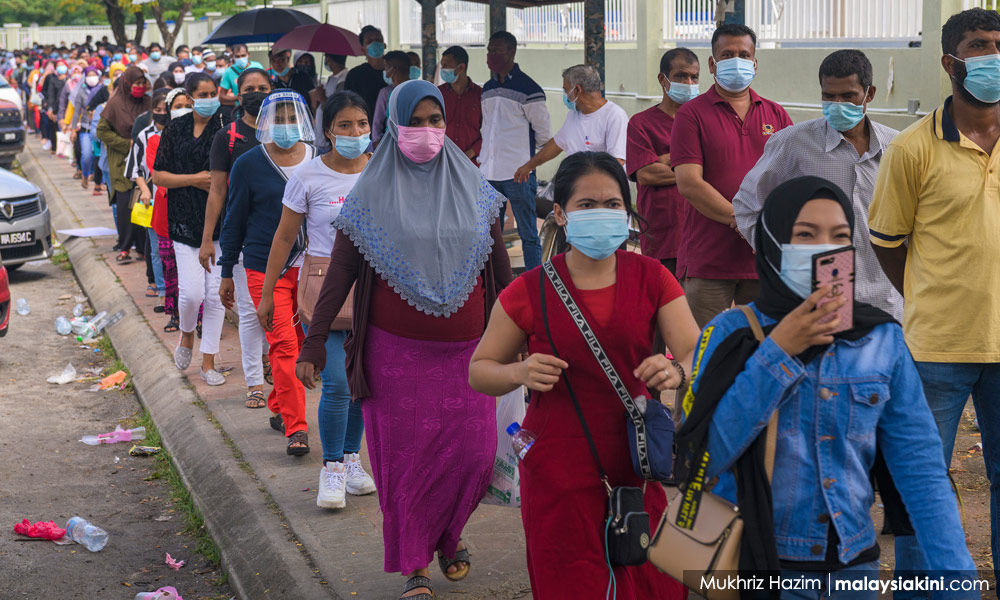
It was reported that despite lifting a Covid-19 freeze on applications for new recruitments in February, Malaysia has not seen a significant return of migrant workers due to slow government approvals and protracted bilateral negotiations with Indonesia and Bangladesh over worker protection.
This untimely labour freeze will further debilitate companies already at breaking point, forced to refuse orders and forgo billions in sales, hampered by a shortage of more than a million workers that threatens the country’s economic recovery.
Malaysia lacks at least 1.2 million workers across manufacturing, plantation and construction, a shortage worsening daily as demand grows, industry and government data show.
New applications on hold
Hermono confirmed that all new applications submitted from today will be put on hold along with 15,000-20,000 applications already received.
Of this figure, it was estimated that 10,000 workers were intended for the plantation and manufacturing sectors.
He also confirmed that applications for domestic workers had only reached 16 but none have arrived in Malaysia after the MOU signing.
In other sectors, only an estimated 1,000 to 1,500 workers have arrived thus far.
When asked if this would lead to an increase in the trafficking of Indonesians to meet the labour demands, Hermono explained that Malaysian companies could no longer afford to do so.
“Malaysia is a key player in the global supply chain and companies hiring undocumented migrant workers stand to lose their contracts with their buyers or have their goods seized at ports of entry, like in the United States.
“We will file complaints against any company found to be hiring undocumented workers,” he stressed.
Over the past two years alone, the US had placed temporary bans on goods produced by seven Malaysia-based companies, citing forced labour elements.
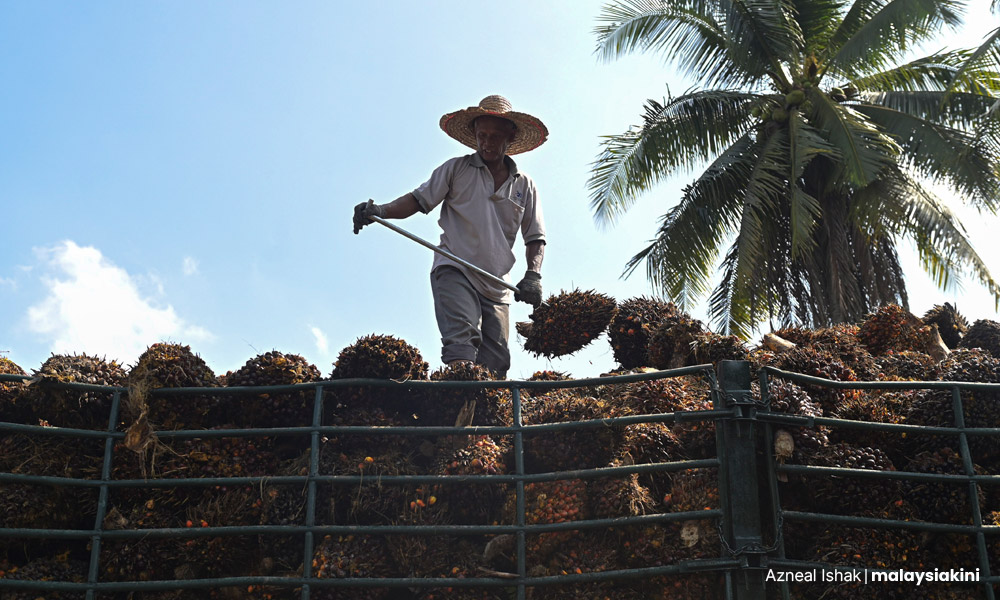
Meanwhile, the hard-hit palm oil industry, which contributes 5 percent to Malaysia's economy, warned that three million tonnes of the crop could be lost this year as fruits rot unpicked.
This translates to losses of more than US$4 billion (RM17.7 billion).
The rubber glove industry estimates US$700 million of lost revenue this year if the labour shortage persists.
MOS akin to trafficking tool
The MOS recruitment system that is available on the Immigration Department’s website has been described by local activists and immigration experts as a tool that facilitates trafficking and forced labour as it did not require employers nor the recruitment agencies to be accountable for the welfare and safety of workers.
Hermono explained that the fundamental purpose of the MOU to protect domestic workers was negated with the use of the MOS as it flouted almost all the terms in the bilateral agreement.
“The MOS bypassed the One Channel System that was introduced in the MOU especially to protect the welfare of domestic workers as we will have full knowledge of the workers’ whereabouts, who their employers were and that their contracts safeguarded their rights.
“It engaged only with government-registered agents from both countries and linked the recruitment process between both countries so everyone involved is accountable,” he said.
Pointing out the crucial feature of the recruitment and placement flow of the One Channel System, Hermono said the Immigration Department could only issue an employment visa after the embassy endorsed the employment contract.
“Meanwhile, the Immigration Department’s system allowed illegal agents to bring Indonesian workers into the country using a tourist visa and it was never known if the worker was underaged, if her tourist visa was converted to an employment visa or even if she had a contract,” the ambassador elaborated.
He said the MOS allowed anyone to recruit and place Indonesian women as domestic workers in Malaysia, even the infamous Indonesian recruitment scouts known locally as ”calo”.
Through the MOS, Hermono said, Indonesia women would disappear into Malaysian households, some never to be heard from again and many ended up behind lock and key as well as subjected to forced labour practices.
Second labour freeze in 8 months
For these reasons and more, Hermono said the MOS was banned by Indonesia as the government was mandated by its law to ensure the safety and wellbeing of its citizens employed abroad.
The country’s Law on Protection of Migrant Workers (No 18/2017) also compels the Indonesian government to ensure a bilateral agreement was in place if there was inadequate protection in the domestic labour laws of receiving countries.
Last month, the embassy also sought the cooperation of the Home Ministry to identify Indonesians recruited through the MOS prior to the MOU signing, to facilitate employment contracts for those without.
This would be the second time Indonesia has opted to implement a freeze on its workers seeking employment in Malaysia.
Last December, Indonesia did so pending the compulsory inking of the MOU in order to finalise a prolonged negotiation.
The freeze was also due to the soaring Covid-19 deaths of Indonesian workers in Malaysia last July and August.
That freeze was lifted five months later after the signing of the MOU.
MOU negotiations that commenced in 2016 when its earlier version lapsed were fraught with challenges that had, by February this year, led to two postponements of its signing and even an openly expressed lack of confidence in the Home Ministry’s commitment to fully implementing the terms.
Among the key contentions behind this was poor participation from the Home Ministry in the negotiations and the contradictory roles and actions between the ministry and the Human Resources Ministry.
Through workers who fled to the embassy in January, Indonesia discovered that the MyTravelPass was misused to facilitate the entry of new domestic workers into Malaysia, recruited via the MOS even when borders were closed to labour migration in 2021.
However, on February 11, Saravanan assured that he and Home Minister Hamzah Zainudin were united in ensuring the protection and welfare of Indonesian workers here.
Indonesia disappointed MOU not honoured
Hermono said Indonesia was disappointed that the MOU was broken in such a short time.
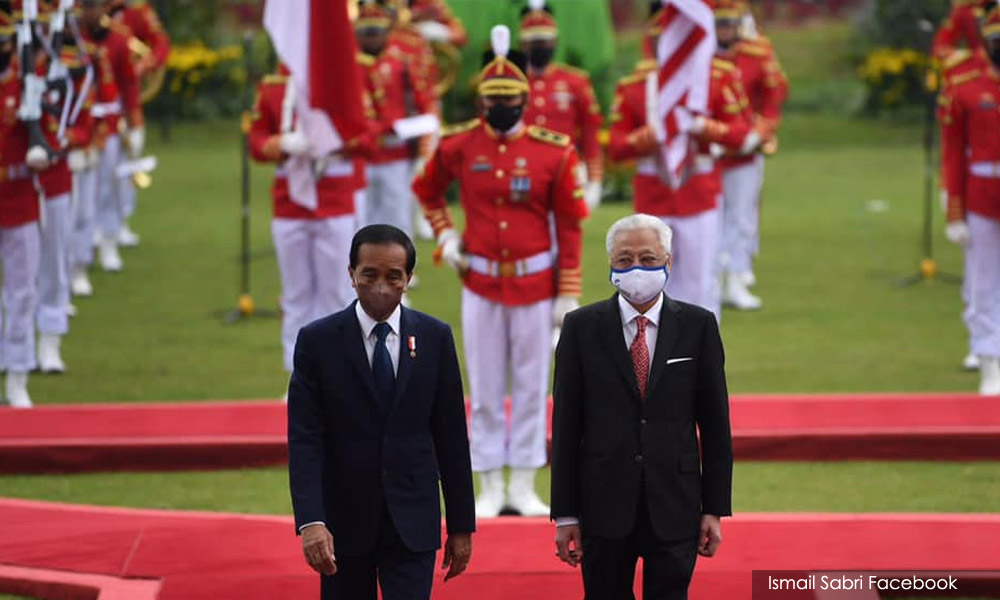
Prime Minister Ismail Sabri Yaakob had flown to Jakarta to meet President Joko Widodo and witness the signing by Saravanan and Indonesia’s Manpower Minister Ida Fauziyah on April 1.
“President Jokowi was clear in his desire that the MOU did not remain only beautiful on paper but its terms are fully implemented by both parties.
“We are disappointed that the MOU has not been honoured,” he lamented.


Report this comment
Are you sure you want to delete this comment?
This action cannot be undone.