



Apex court to hear constitutional issues on MACC probe against judge
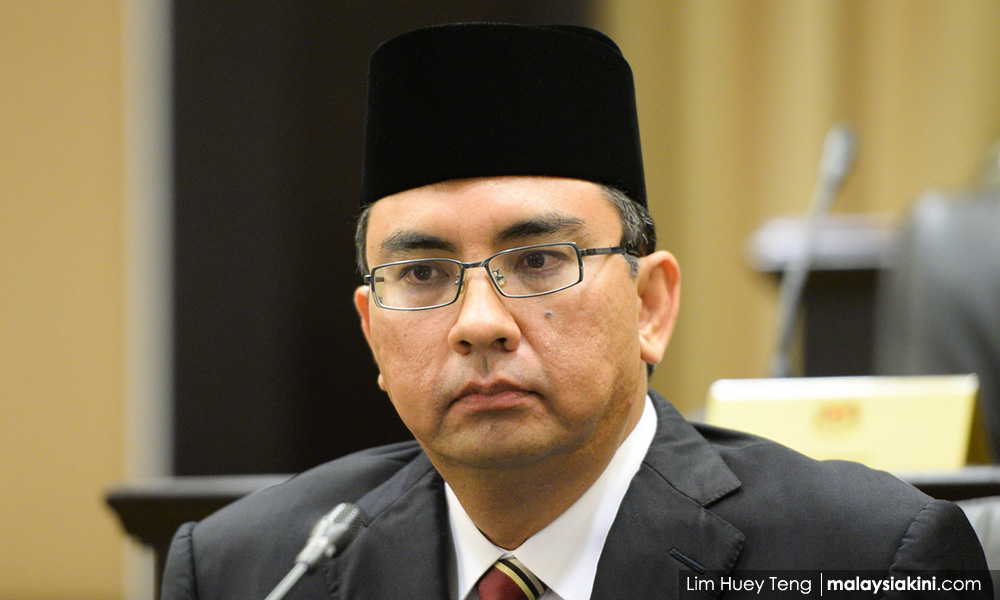
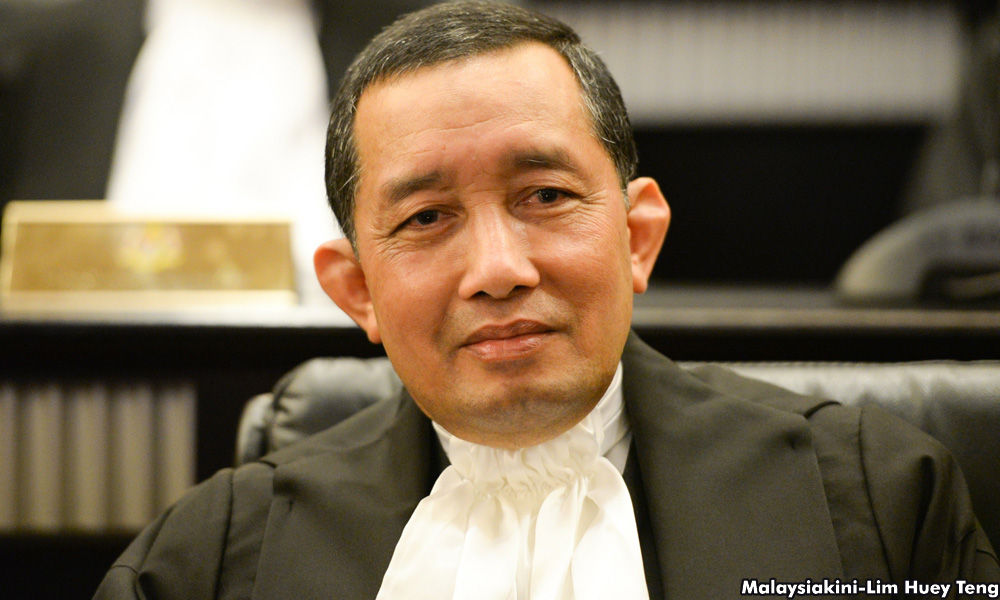
Haris Ibrahim and two other lawyers have succeeded in getting the Federal Court to look into the constitutional issues linked to the MACC investigation into Court of Appeal judge Mohd Nazlan Mohd Ghazali.
The Kuala Lumpur High Court this afternoon allowed the trio’s bid to refer to the apex court on the issues involving the Federal Constitution.
Haris as well as Nur Ain Mustapha and Sreekant Pillai contended that...
Haris Ibrahim and two other lawyers have succeeded in getting the Federal Court to look into the constitutional issues linked to the MACC investigation into Court of Appeal judge Mohd Nazlan Mohd Ghazali.
The Kuala Lumpur High Court this afternoon allowed the trio’s bid to refer to the apex court on the issues involving the Federal Constitution.
Haris as well as Nur Ain Mustapha and Sreekant Pillai contended that a ruling by the apex court over the constitutional issues would resolve their related main legal action before the High Court.
The ruling by High Court judge Noorin Badaruddin today is in relation to the constitutional issue of whether the enforcement authorities can initiate a criminal investigation against a sitting superior court judge.
Another constitutional issue is whether the prosecution can initiate criminal court proceedings against a serving judge of the superior courts.
“This is an issue of fundamental importance as it affects the judiciary as a whole and underscores the importance the urgency of the matter.
Noorin ruled that it is imperative for the apex court to make a finding on the issues as it involves public concern over the independence of the judiciary in carrying out its duty.
“Even though this court is empowered to hear the (constitutional issue) questions, if the questions need to go through the appellate process, then the Federal Court is the correct and appropriate forum to hear the matter as it affects the judiciary as a whole and deliver a final pronouncement from the highest court of the land.
“This court is of the view that the definite and final pronouncement from the Federal Court would benefit parties over the speedy and final determination of the (main) proceedings,” Noorin ruled.
On May 6 before the High Court, the three lawyers filed the originating summons over the Nazlan probe.
Haris had recently disclosed that he has Stage 4 lung cancer and might have only a year left to live.
However, that has not stopped him from fighting for what he believes in, having filed a lawsuit alongside Nur Ain and Sreekant against the MACC, its chief commissioner Azam Baki, and the federal government.

The legal practitioners seek to declare that the MACC was not entitled to investigate judges unless they have been suspended or removed.
It also seeks a declaration that a public prosecutor is not empowered to institute or conduct any proceedings for an offence on serving judges of a court and that investigations against Nazlan were unconstitutional.
Alleged links to 1MDB
The MACC has confirmed it had opened an investigation paper on Nazlan on April 23, following a report lodged by Persatuan Sahabat Ulul Amri Malaysia based on allegations contained in former Goldman Sachs banker Tim Leissner’s testimony in a US court.
According to the group, Leissner’s testimony linked Nazlan to 1MDB’s deal involving Tanjung Energy Holdings Sdn Bhd in 2012.
At the material time, Nazlan was part of Maybank. He joined the judiciary in 2017 as a judicial commissioner.
Former prime minister Najib Abdul Razak’s legal team has also tried to discredit Nazlan by claiming that he had a conflict of interest in the 1MDB case.
Nazlan, when he was a High Court judge in 2020, sentenced Najib to 12 years in prison and RM210 million for corruption, abuse of power, and money laundering.
The Court of Appeal upheld the decision last year. Najib is appealing the case in Federal Court, which has set 10 days next month to hear his appeal.
Separation of powers breached
The trio of lawyers claimed MACC’s investigation into Nazlan was a breach of the separation of powers between the executive branch and the judiciary.
“The Federal Constitution guarantees each of us access to justice administered by a judiciary that is free from interference of any sort. The Constitution guarantees all of us equality before the law and equal protection of the law.
“It is not our view that judges of the High Court, the Court of Appeal and the Federal Court are immune from criminal investigation or prosecution. Like all of us, they must be held accountable for any crimes they may have committed.
“However, the power to investigate and institute criminal proceedings must be balanced against the need to ensure public confidence in the judiciary,” they alleged.
They claimed that the federal government and attorney-general agree with MACC’s conduct due to their silence on the graft buster’s assertions that it is entitled to investigate the Court of Appeal judge.
“The judiciary is therefore left without any recourse as it is in no position to descend into the arena and seek the necessary declarations of its own accord.
“We were therefore compelled by circumstance to have these important constitutional issues determined,” they alleged.
The MACC previously said it had the power to investigate all public officers, including judges.
It added that in line with the principle of separation of powers, MACC would submit the investigation paper to the Attorney-General’s Chambers (AGC) when completed to decide whether to press charges or otherwise.
The MACC said that they had investigated judges in the past and all the investigation papers were submitted to the AGC for evaluation.
On the probe into Nazlan, the commission said they had received three reports against the judge so far, and the investigation is still in its preliminary stage.
The reports were lodged on March 15, April 23, and April 27 this year.
Solicitor-General I Ahmad Terrirudin Mohd Salleh led the legal representatives for the MACC, its chief commissioner and the government.




Report this comment
Are you sure you want to delete this comment?
This action cannot be undone.