


/file/publisher-c1a3f893382d2b2f8a9aa22a654d9c97/2022/09/f9decc74a1b052c98789d7c3df59bb6f.jpg)

Origin of the first Bersih march - as chronicled by journo Danny Lim
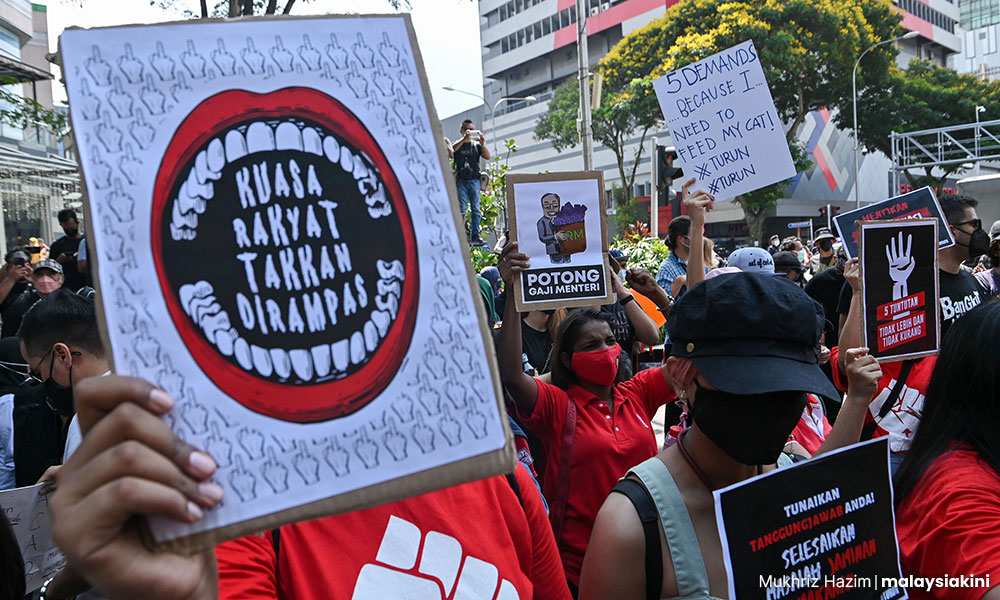
The very first Bersih rally on Nov 10, 2007, was seen as a turning point in Malaysian politics.
It started as a gathering of people at the heart of Kuala Lumpur, holding placards and shouting slogans.
However, when the authorities clamped down on the gathering and water cannons were...
The very first Bersih rally on Nov 10, 2007, was seen as a turning point in Malaysian politics.
It started as a gathering of people at the heart of Kuala Lumpur, holding placards and shouting slogans.
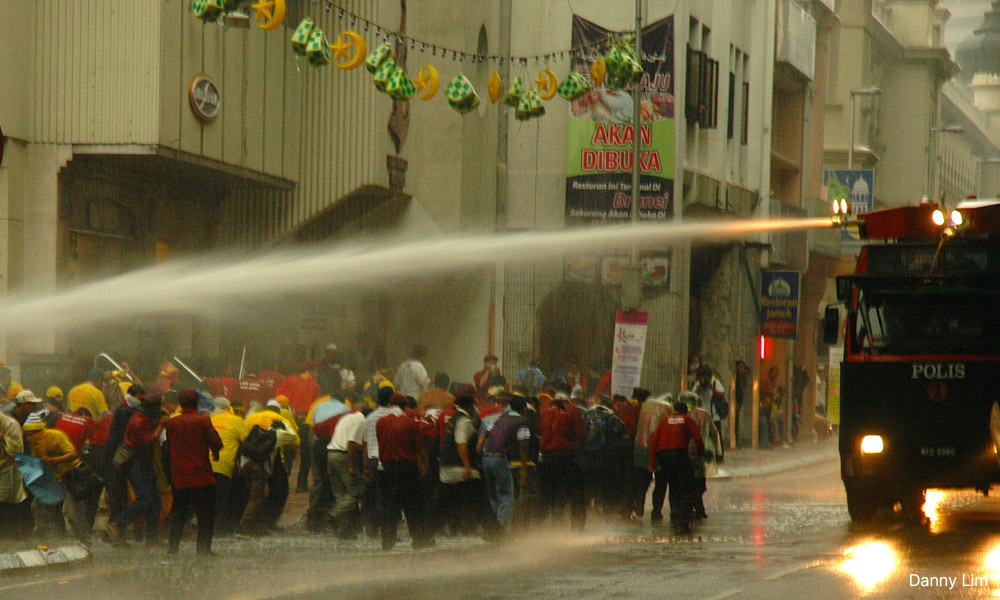
However, when the authorities clamped down on the gathering and water cannons were used to disperse the crowd, the movement took a life of its own.
This led to other Bersih protests, each drawing bigger crowds, attracting more media attention and also a platform for the opposition that was denied access to the masses.
Bersih is a coalition of NGOs formed in 2006, and its main agenda was to seek reforms of the current electoral system to ensure free, clean and fair elections.
The movement had accused the Election Commission (EC), which is under the Prime Minister’s Department, of manipulating the election process and therefore giving the ruling BN coalition an unfair advantage.
That first rally in 2007 was a game changer in Malaysian politics. However, there are many things the man on the street does not know about the events that led up to that moment.

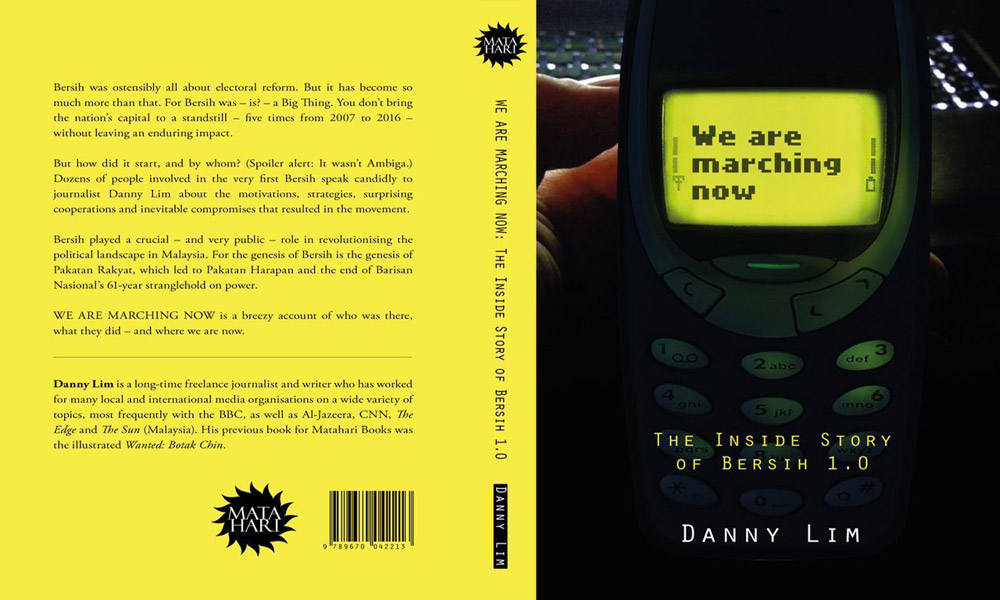
Shedding some light on it is long-time freelance journalist Danny Lim, who wrote the recently published book “We are marching now: The inside story of Bersih 1.0”.
Lim has worked for several Malaysian media companies as well as international media organisations such as BBC, Al-Jazeera and CNN. He was previously a senior writer at The Edge and The Sun.
Origins of Bersih 1.0
In an interview with Malaysiakini, Lim said that a local magazine had approached him in early 2013 to write about the Bersih movement.
“The magazine lauded the movement collectively as a ‘Brilliant Malaysian’ and needed a profile to garland Bersih in its pages. This did not interest me at all. I had no desire to reflect on its achievements or its impact.
"Instead, I wanted to discover things about Bersih that people hadn’t noticed. I wanted to take a behind-the-scenes look at its origins and operations," explained Lim.
In the aftermath of the third rally in 2012, there were some misconceptions that Bersih marches had been hijacked by some politicians. As a journalist, Lim knew that these accusations were not entirely accurate and decided to look into them.
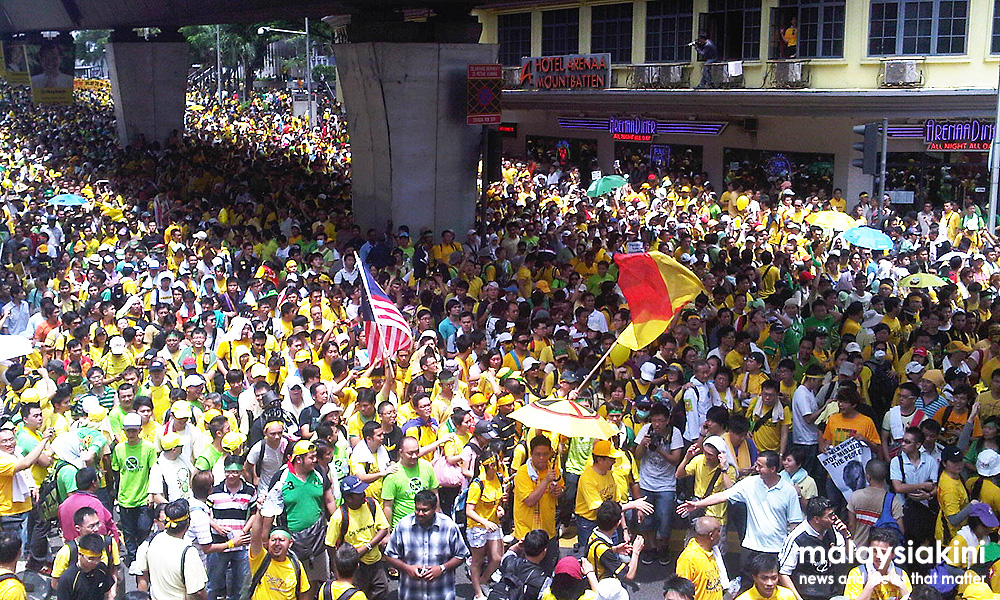
“Investigating that was worth an article. But to write a whole book? As I spoke to the protagonists within Bersih, I found myself drawn to this wildly unpopular opinion: I liked politicians.
"I had an irreverent fondness for people with agency and self-belief to seek an active role on the political stage. I respected them for all that they promise to be. But more than that, I relished them for all the reasons people distrust them," he said.
According to Lim, it takes a certain personality, brimming with righteousness and ambition, driven as much by hope as vanity, to march into the public sphere and ask, beg, cajole thousands, even hundreds of thousands to join them. Not to mention to face the unnervingly high probability of getting pummelled, tear-gassed and arrested.
“In selling this dream, they also had to contend with the inevitable compromises, with themselves and with each other. As the movement gained mass and velocity, its gravitational pull attracted more diverse personalities, from rabble-rousing college dropouts to revolutionary jungle bomoh to ex-Biro Tatanegara indoctrinators.
"Some inert, some combustible, but always agitating for change. They just had slightly different ideas of what this change would look like.
“How these personalities colluded and collided would shape how they made choices that interacted with broad historical forces and made history themselves by coming together for a singular purpose,” Lim elaborated.
Putting together the book
The idea to write the book came about in 2013 after Lim finished with the magazine article. He had already conducted some interviews for the magazine and just continued researching, gathering materials and doing further interviews (77 in total).
Work and personal commitments required his attention and so he worked on the book intermittently over the proceeding years.
“I only seriously committed to the process of collating and digesting my research and interviews around 2018-2019, and writing from 2020 to 2022, with plenty of lengthy interruptions in between,” said Lim.
Asked why Bersih 1.0 should be considered a pivotal part of Malaysian history, he replied: “You don’t bring the nation’s capital to a standstill – five times from 2007 to 2016 – with estimated (and disputed) numbers ranging from 40,000 (the first rally) to 500,000 (the fourth) protesters thronging the streets, including the grudgingly-tolerated participation of a 91-year-old ex-prime minister notorious for brutally crushing public protests, without leaving an enduring impact.”
He added that these rallies are forever etched in Malaysian political history.
Regardless of one’s political persuasion, if ever there was a single sustained movement that has revolutionised the political landscape in Malaysia, Bersih was it.
“In tracing the origins of Bersih, one will discover its roots to be inextricably intertwined with the origins of the Pakatan Rakyat coalition and its successor, Pakatan Harapan.
"The genesis of Bersih is the genesis of the political coalition which created history in 2018 by breaking the 61-year stranglehold of BN,” Lim explained.

Due to media coverage, most people associate the Bersih marches and gatherings with certain personalities. This book features Faisal Mustaffa, whom Lim described as very important in grooming and cultivating the movement in its infancy.
“On a long enough time scale, it is inevitable that people will drift in and out of an organisation, especially one that is essentially a broad-based collective movement like Bersih.
"Many, like Faisal, became busy with other pursuits and commitments. Remember that Bersih was not a full-time job for nearly all of the people associated with the movement, and it was not until Bersih 2.0 was formally established (which is outside the timeline that my book focuses on) that they had dedicated full-time staff,” Lim elaborated.
Covering the marches
Reporters were not spared during these rallies.
Recalling his own experiences covering Bersih rallies, Lim said: “I’ve been lucky to avoid getting beaten and have only been subject to the sting of tear gas, particularly at the first three rallies.
"In 2007, I was situated outside Masjid Jamek where the worst of the clashes occurred. In 2011, I was in the crowd ‘trapped’ on Jalan Pudu at both ends and had to scale the uphill incline of Tung Shin Hospital to escape the tear gas barrage.
"Fortunately, I was not among the group of protesters that were cornered by the police within Tung Shin’s grounds. For the third rally in 2012, I was among the body-to-body human traffic on Jalan Tun Perak that could only slowly shuffle away from tear gas because it was jam-packed in every direction," he recalled, adding that the fourth and fifth rallies were uneventful for him in terms of such violence.
Some people believe that the rallies after Bersih 1.0 veered from the original cause and became more about getting snapshots on social media.
“There may have been a FOMO (fear of missing out) element to the latter rallies that attracted more than just people strictly concerned with electoral reform, including perhaps those interested in the social currency of being there.
“But no matter what motivated them to come to the rallies, it cannot be stressed enough that the threat of getting tear-gassed, beaten and/or arrested was very real to everyone who attended the rally.
“Even at those rallies which turned out to be largely peaceful, those threats were hanging in the air, ever-present," he added.
By the fourth and fifth rallies, Bersih was perceived to be an effective channel of public protest that provided a broad enough umbrella to include people who wanted to voice up on causes not directly related to electoral reform, like environmental and 1MDB issues.
"With each subsequent rally, Bersih itself altered and expanded its list of demands to embrace wider issues about democracy and governance,” said Lim.
Excerpts from the book:
What Bersih did achieve went beyond electoral reform. The “miracle” was really in how it had the optimal conditions to accommodate and channel broad-based concerns. Disparate groups from Islamists to feminists to environmentalists found enough shared interest to congregate under the Bersih umbrella. And future iterations of Bersih would widen this umbrella, to the extent that it would become, “a household name synonymous with grassroots pressure for political and electoral reform.” [this quote is from a paper by Dr Khoo Ying Hooi, who wrote the most authoritative academic treatise on the Bersih movement]
“Bersih is not the first group to talk about electoral reform,” says (Tian) Chua, “but it’s the first mass movement that was able to bring people to the street and show impact.”
More to come
Asked what he hopes people will take with them when they read this book, Lim said: “Besides experiencing an absorbing read, I hope people have a better understanding and empathy for the precarious balancing act that often involves complex compromises and odd alliances with unlikely bedfellows. That happens when you try to effectively engage in the democratic and political process, inside or outside government.”
He added that there will be another book after We are marching now.
“This book focuses on Bersih’s first iteration, where it was led by political parties – from its origins right through the first rally in 2007 up to just before its second incarnation, known as Bersih 2.0.
“If all goes well, the next book should cover the movement’s transition into an organisation truly led by civil society”, Lim said.
“My next book will delve into the trials and tribulations of this transition from a coalition led by the political parties to a formal organisation led by civil society.”
The book “We are marching now: The inside story of Bersih 1.0” is available at Kedai Fixi (at Sunway Putra Mall), Kinokuniya, Gerakbudaya, Lit Books and Riwayat. It's also available on Shopee.
/file/1272/cf0d41b6505189f061f64e6ac3f9cb56.jpeg)
/file/publisher-c1a3f893382d2b2f8a9aa22a654d9c97/2020/10/aef2b00854807196d5d5054cfba4b041.jpg)
/file/publisher-c1a3f893382d2b2f8a9aa22a654d9c97/2021/11/ea1c11ac1432c4df03f5abc7f9f68929.jpg)
/file/publisher-c1a3f893382d2b2f8a9aa22a654d9c97/2022/03/1339be035f41140ddae54e5ef8c7d6cc.jpg)
/file/1059/75b562f2b7f76508f72de89b385bf2e5.jpg)
/file/publisher-c1a3f893382d2b2f8a9aa22a654d9c97/2020/04/940cc59b13af0ada7876f5746cb64130.jpg)


Report this comment
Are you sure you want to delete this comment?
This action cannot be undone.