


/file/publisher-c1a3f893382d2b2f8a9aa22a654d9c97/2023/03/06bf01fb3967e03c494369bebe2482ef.jpg)

Syerleena's journey: From kickboxing and water sports coach to reformist MP
INTERVIEW | Under the blue skies on the coast of Penang Island, a young university graduate took an unusual path, teaching water sports enthusiasts windsurfing and wakeboarding.
The visual communication graduate from Universiti Sains Malaysia (USM) then went on to work as a kickboxing coach and fitness instructor, while also being active in the independent music scene. She even performed in the UK at 27 when she was in a band with her brother Riz.
More than a decade later, this outgoing woman, Syerleena Abdul Rashid, is the newly elected Bukit Bendera MP.
Syerleena joined DAP in...
INTERVIEW | Under the blue skies on the coast of Penang Island, a young university graduate took an unusual path, teaching water sports enthusiasts windsurfing and wakeboarding.
The visual communication graduate from Universiti Sains Malaysia (USM) then went on to work as a kickboxing coach and fitness instructor, while also being active in the independent music scene. She even performed in the UK at 27 when she was in a band with her brother Riz.
More than a decade later, this outgoing woman, Syerleena Abdul Rashid, is the newly elected Bukit Bendera MP.
Syerleena joined DAP in 2013 and quickly became a rising star of the party.
She was appointed a local councillor after joining the party, before running in the 2018 general election and winning the state seat of Seri Delima.
Last year, the 43-year-old achieved even greater success - she was given a chance to contest a parliamentary seat and won with a huge majority of 42,610 votes.
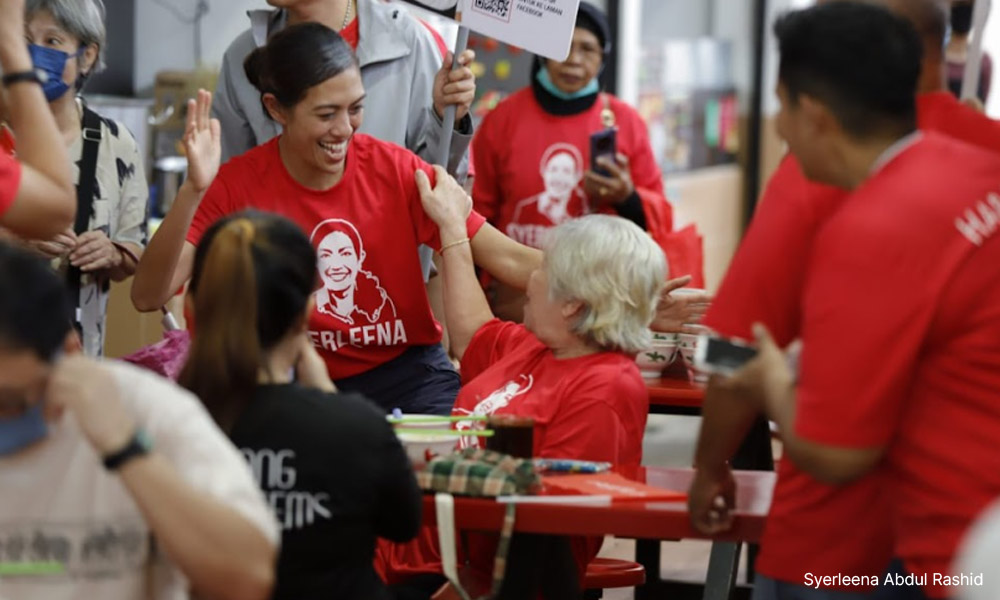
Born into Reformasi household
In a recent interview with Malaysiakini, Syerleena shared her experiences of transitioning from sports, music and arts to full-time politics.
She comes from an academic family, with her mother being a professor at USM and her father a secondary school teacher.
Many of her mother's friends were from social science and political science backgrounds including several members of the NGO Aliran.
Meanwhile her father, during the pre-internet days, would order newspapers and ask his children to do “homework” - read the news and summarise it during dinner.
"(He is really) a cikgu. (And this is) a little bit (similar) to homework," she laughed.
"I'm blessed to have parents who put me in such an environment. They've always said, ‘you should ask questions, try to think outside the box. Don't just simply blindly accept things’,” Syerleena said.
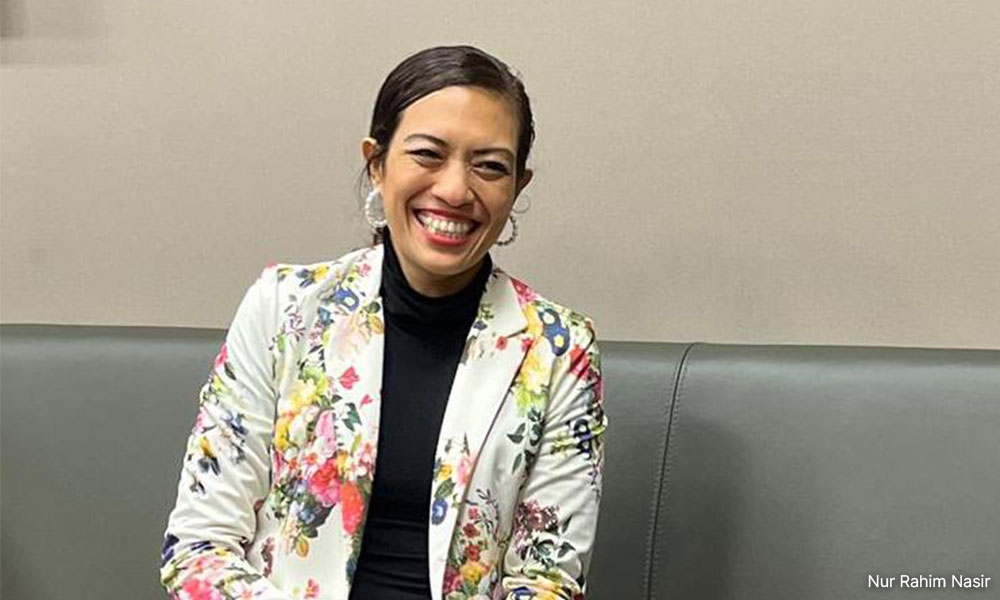
Born in 1980, the Reformasi movement that changed the political landscape of Malaysia happened when she was 18.
She still remembers the day when she saw her parents disappointed and almost in tears.
Syerleena had just returned home from Pizza Hut, where she was working part-time after finishing SPM.
The then deputy prime minister Anwar Ibrahim had been sacked that day.
"They didn't say anything, just sat there watching the news. So I asked what happened.
"They told me that Anwar had been fired. I remember sitting there looking at them, they were so distraught.
"My father was very much an Anwar supporter… and I was thinking, wow, this will definitely have a huge impact on my life. And it did,” she said.
Unable to resist the call
Politics and elections are not something unfamiliar to Syerleena’s family.
Although her parents are educators and have not been involved in politics, a few of her uncles were active in political parties.
One of them, Rosli Hanafi, ran for the Batu Uban state seat under a DAP ticket in 1995, and others have joined Umno and Warisan.
Although Syerleena did not participate in the student movement during her university days when the intense Reformasi movement was ongoing, the unsuccessful change of government in the 2013 election called her to enter politics.
Being a staunch supporter of the Pakatan Rakyat coalition, she first discovered in GE13 that even if a coalition receives the majority votes, it does not necessarily mean that it can form a government.
"I remember I was upset. I cried. And then I called up a friend who was already a DAP member, (and I said) let’s talk about politics.
“He was working for a Penang assemblyperson and now he has also become a state assemblyperson for Pulau Tikus," Syerleena said.
That friend was Chris Lee, who convinced Syerleena to join DAP over tea at a mamak stall.
Syerleena's family supported her decision to enter politics, but reminded her of the potential “negative events” that she may encounter, especially being a female politician.
These "negative events" have indeed appeared multiple times in Syerleena's political career, especially during elections.
Race and religion issues
As a progressive Muslim female politician, Syerleena has had to contend with personal attacks. She remains determined not to let this distract her from carrying out her duties.
"Yes, there are those who only have the ability to speak about race and religion; they are not raising the issue because of an existing gap but to create one. The challenge for the government is to solve the real problems that the rakyat has.
"One of my biggest concerns is that we need to address issues surrounding the cost of living and designing a sustainable future with equitable solutions, and a particular community I’m looking into is the arts and creative industry.
“The Covid-19 pandemic has left the country with a massive debt which now needs to be addressed while solving these problems," she said.
READ MORE: Syerleena: No green wave in Penang, people want good governance
Syeerlena also has no intention of reacting to attacks like a victim and remains firmly committed to adopting a liberal approach.
"A victim may be defined as someone who is not empowered to change the situation; I on the other hand am working hard to make sure that all Malaysians can solve their problems and have hope for a better future. The rakyat is my focus, not the labels
"We live in a democracy, not a theocracy. Voters vote for candidates who they feel will represent them in Parliament and ensure that their voice is heard.
“That is why during my maiden speech to Parliament I choose to speak about cyberbullying and child grooming because there are thousands of young people without a voice on this issue,” she said.
Syerleena believes when certain parties demonise liberalism, it shows their fears rather than their understanding of the word and the concept.
“We need to focus on delivering for the rakyat not splitting hairs on the political rhetoric that may look good on a TikTok video but does not solve any real problems," she added.
Although Bukit Bendera and Seri Delima are both urban seats, Syerleena believes that the so-called "liberal" label has not hindered her communication with semi-rural and rural folks.
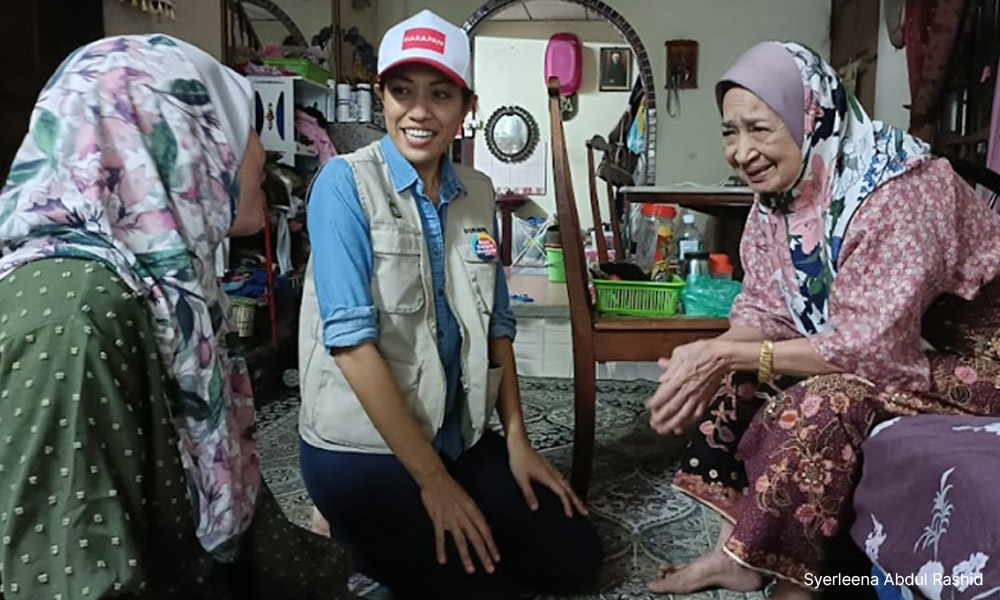
"It depends on how you present yourself and how you communicate with people. If you go to the rural areas, of course, you wouldn't speak English.”
Fighting for sports and arts
Syerleena was vocal on public issues well before entering politics and joining DAP, she wrote letters to the city council and then local council exco Chow Kon Yeow while managing her water sports and recreation company.
She was pushing for the regulation of water activities and dealing with marine pollution issues. She also founded the Penang Water Sports Association for this purpose.
"I witnessed how the unregulated activities destroyed the beach, tourism, and local economy. Back then, there were a lot of accidents happening on the beach involving all these (unregulated) activities.
“So through this association, we tried to push for regulated activities to help protect the environment. I also wrote articles to promote awareness.
“If you believe strongly in something, then you can create that change. You have every means necessary to change things. It's not about the position, it's not about having all these cables,” she said.
After winning the parliamentary election last year, Syerleena has been an MP for more than three months and continues to serve as an assemblyperson for Seri Delima, although she will soon step down from the latter role.
She has also had to temporarily put aside her love for sports and music, including the rock band Priwayat which she founded with Penang state executive councillor Zairil Khir Johari.
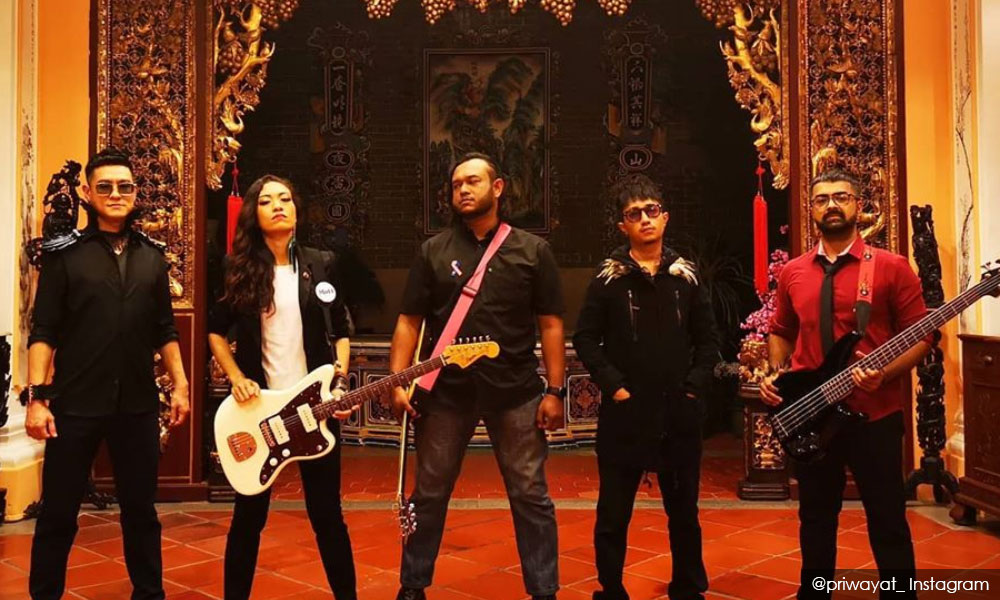
Now, she is looking to use the new platform to fight for more reform and resources in the arts and music field that she cares about.
This includes advocating for more exposure, opportunities, and recognition for local musicians, as well as promoting "music tourism" and improving entertainment tax-related systems.
She is planning to create more performance platforms for local artists in her constituency as well.
"Because I've personally been in that field, I know how it is and I know how it affected all my friends. Even my brother.
“We have so many talented Malaysians. But why is it that when we listen to the radio, it's not their songs that we're listening to? We have really good movies. Why are we not seeing them in movie theatres?
“I think there should be a support system and give them a platform to showcase their talent. It's still a business at the end of the day. So when you generate that business, you help them flourish,” she said.
As an example, Syerleena said if a music festival can attract crowds from all over the world, it can benefit local businesses such as hotels, restaurants, and fashion stores, forming a music tourism industry.
Change of approach needed
The biggest challenge is to ensure all parties understand how the arts and culture sector works, including the state, federal, and local governments, she conceded.
“When you talk about the taxing system, this is where you need to differentiate local artists and international ones. If local, is the show for profit? Are you charging for tickets?” she said.
In Malaysia, entertainment tax and licence fees have often been cited as a burden for local independent live music spaces.
Independent venue owners have been complaining about the entertainment tax being charged regardless of business size.
Meanwhile, the licence fees fall under the jurisdiction of local governments, and fees vary from region to region.
According to Syerleena, Penang has the lowest licence fee and the application is relatively easy to get approved.
On these awaiting reforms, she has started to contact like-minded people in the music sector to discuss the plan.
“I don't think the reforms I want to promote should come from my personal ideas, there should be a bottom-up approach, with collective brainstorming and feedback from various stakeholders.
“Because right now everything is very top-down. Sometimes you don't really know the crux of the matter,” she stressed.
A few days ago, Syerleena highlighted the RM25 million allocation for the arts and culture sector in Budget 2023, during a parliamentary debate.
She said the amount was too little to repair the various art sectors that were severely affected during the pandemic.
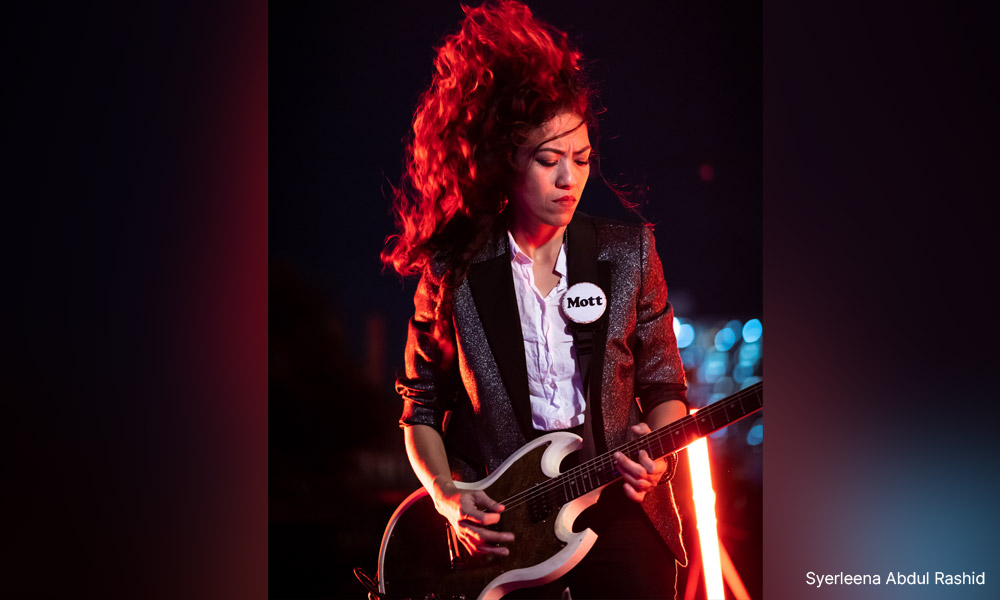
Her past experiences in the arts have allowed her to find different solutions to problems.
"That's why I often say appreciating art is equally important as learning technology, mathematics and science. It allows people to use different parts of their brains and think in different ways.
"My background is very diverse. I didn't graduate from law, but I've always been interested in politics."
After all, she still refuses to “get used to being a politician” after 10 years.
"This sounds like you reach a level where you become numb. For me, it's a role that I will continue to serve the people.
“It's about bridging that gap, and being that catalyst of change for the people, be it in my constituency or even leading this movement to change the country,” she added.
/file/publisher-c1a3f893382d2b2f8a9aa22a654d9c97/2023/03/c63025815e0ab6c21e3f02a41cabfb7c.jpg)
/file/publisher-c1a3f893382d2b2f8a9aa22a654d9c97/2023/01/84e76fba0f34eb33386aebc739d260f5.jpg)
/file/publisher-c1a3f893382d2b2f8a9aa22a654d9c97/2022/03/04325d7941fc8c3e6a475ff584a98b37.jpg)
/file/publisher-c1a3f893382d2b2f8a9aa22a654d9c97/2023/01/b6650136995d95512048eec953075ff6.jpg)


Are you sure you want to delete this comment?
This action cannot be undone.