


/file/955/ee8878115e94a0b8f1d06a449f565854.jpg)

KINIGUIDE | How do foundations get and benefit from tax exemptions?
This matter came to light on March 9, when Perikatan Nasional chairperson Muhyiddin Yassin accused former finance minister Lim Guan Eng of revoking the tax exemption granted to the Albukhary Foundation.
Muhyiddin made this claim after he was questioned by the MACC, where among the issues raised by the anti-graft agency was the former prime minister’s acceding to the foundation’s appeal against the cancellation of the tax exemption.
Lim has since denied any knowledge of cancelling the foundation’s tax-exempt status. Yesterday, Prime Minister Anwar Ibrahim also backed Lim’s denial...
KINIGUIDE | Tax exemption has come to the forefront of the people’s attention with the recent revelation of the Albukhary Foundation’s tax-exempt status.
This matter came to light on March 9, when Perikatan Nasional chairperson Muhyiddin Yassin accused former finance minister Lim Guan Eng of revoking the tax exemption granted to the Albukhary Foundation.
Muhyiddin made this claim after he was questioned by the MACC, where among the issues raised by the anti-graft agency was the former prime minister’s acceding to the foundation’s appeal against the cancellation of the tax exemption.
Lim has since denied any knowledge of cancelling the foundation’s tax-exempt status. Yesterday, Prime Minister Anwar Ibrahim also backed Lim’s denial.
Despite the attention on the tax-exempt status of the Albukhary Foundation (photo, above), not many people fully understand how tax exemption works in this country, or what laws govern this matter.
Malaysiakini spoke to several experts in order to shed light on the matter.
What provisions can the government use to grant tax-exempt status to companies?
There are several provisions in the Income Tax Act 1967 that deal with tax exemption, tax lawyer S Saravana Kumar said, such as Sections 127(3), 127(3A) as well as Section 44(6) of the Act.
He said that any orders by the minister approving tax exemption under Section 127(3) must be laid out in Parliament and gazetted.

There is also Section 127(3A), which Saravana said, can be granted by the minister at his discretion and without any conditions.
“There are no conditions under Section 127(3A). The minister can give it to whoever he wants.
“Section 127(3A) is so wide that if the minister likes you, he can give it to you, literally,” the lawyer said.
The percentage of profit that is exempted from tax is also up to the minister’s discretion, he added.
For non-profit or charitable companies, their tax exemption status would go under Section 44(6), which does not fall within the purview of the minister.
“That will be under the powers of the director-general of the Inland Revenue Board (IRB).
“The companies will need to apply and get the approval from the director-general,” he said.
Saravana noted that under Section 44(6), the approval is solely signed off by the IRB’s director-general.
If a company were to receive tax exemptions under that provision, it will automatically be exempted from tax on 100 percent of its profits, he added.
A company that receives tax exemption simply means it does not have to pay taxes on its profits.
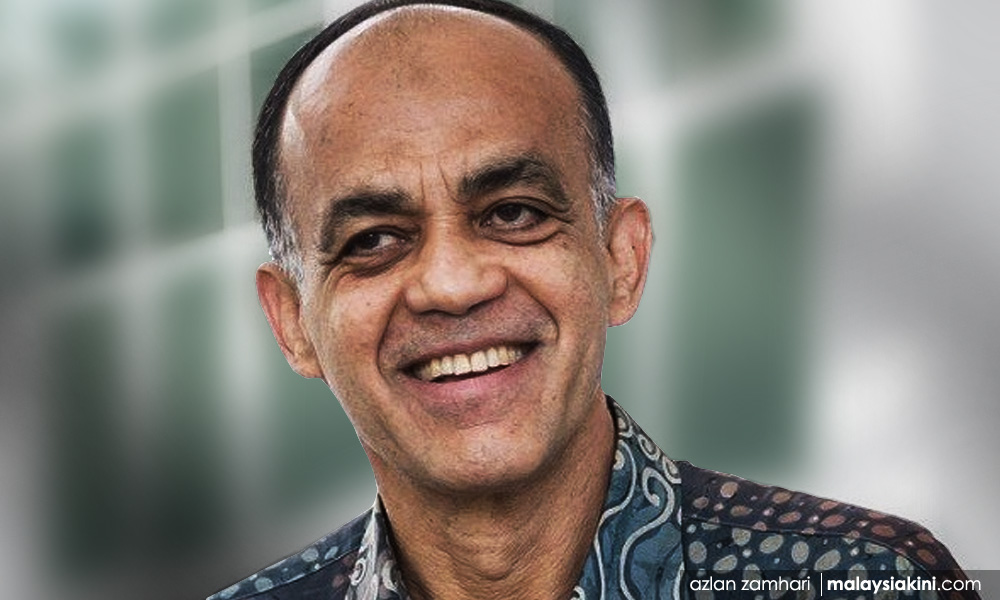
Anwar had said yesterday that the Albukhary Foundation, headed by tycoon Syed Mokhtar Albukhary, received its tax-exempt status under Section 44(6).
As such, he said, the Finance Ministry’s records show that Lim, as the finance minister then, had never revoked the status as alleged by Muhyiddin.
What problems can arise from granting tax exemptions to non-profit companies under Section 44(6) of the Income Tax Act?
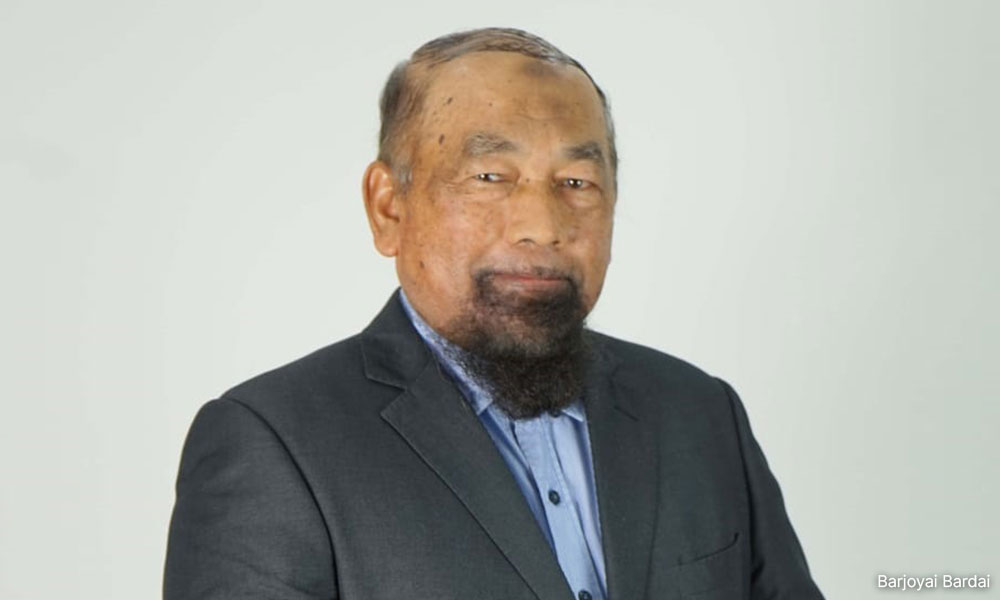
Universiti Tun Abdul Razak economist Barjoyai Bardai, who has a focus on taxation in his research, told Malaysiakini there was a case about four decades ago involving Yayasan Sabah, which highlighted the importance of transparency and accountability in the granting of tax exemptions.
Back then, Barjoyai said, Yayasan Sabah held many subsidiary companies which were making profits as usual.
“Under the normal model, the companies under the foundation will make profits and then they will be taxed as a company, then the profit after the tax will be paid as a dividend to the foundation.
“So the foundation found a loophole, which was to get this tax-exempt status under Section 44(6), where the donors will be exempt from tax on the donations they make from the income.
“So some of the subsidiaries were making big profits from timber operations and such and then they donated all their profits to the foundation and as a result, they don’t suffer any tax and the foundation will get all their profits,” Barjoyai said.
What has been done since then to prevent the abuse of Section 44(6)?
After that incident came to light, the rules surrounding tax exemptions for non-profit companies have been tightened, limiting donations from companies to only 10 percent of the companies’ aggregate income, Barjoyai said.
Besides limitations on the donor companies, foundations which enjoy tax exemptions can only utilise 25 percent of their accumulated funds and profits for non-charitable purposes.
“The rest must be for charitable purposes,” the economist added.
To further provide accountability, the board of trustees of such foundations must consist of 50 percent of “outsiders” – independent individuals from the group controlling the foundation.
The foundations must also report their financial statements to the Security Commissions and IRB on an annual basis.
If they fail to fulfil these requirements, the IRB can revoke their tax-exempt status at any time, he said.
What is considered “charitable purposes” in the context of non-profit foundations enjoying tax exemptions?
Barjoyai said the IRB has strict guidelines on “charitable purposes” for foundations exempted from tax.
For example, charitable activities must not be related to religion and they must be open to the public.
He noted that there is no specific mention of political donations being barred in the guidelines.
“This is the problem. Sometimes they are not exhaustive in listing what is allowed,” he said.
However, he said, there have been cases where foundations donating all their proceeds to political parties have had their tax-exempt status revoked by the IRB.
So how did Albukhary Foundation’s tax-exempt status come to attention amid Muhyiddin’s charges?
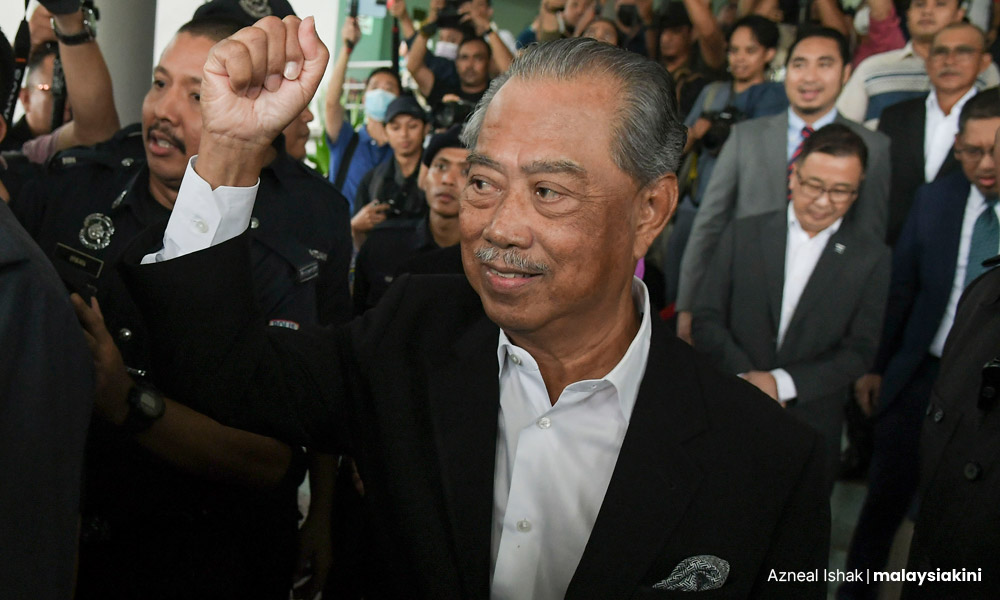
When Muhyiddin was released from MACC questioning on March 9, he told reporters that one of the charges was in relation to his decision to grant tax exemption to Albukhary Foundation.
He was later charged with four counts of abuse of power and two money laundering charges involving RM232.5 million.
The four abuse of power charges, framed under Section 23(1) of the MACC Act 2009, accused Muhyiddin of using his position as then-prime minister and Bersatu president for an inducement of RM232.5 million from three companies and an individual between March 1, 2020, and Aug 20, 2021.
One of the companies named was Bukhary Equity Sdn Bhd, owned by Syed Mokhtar and his wife Sharifah Zarah Syed Kechik, with the former having a 99 percent stake.
The two money laundering charges Muhyiddin faced were under Section 4(1)(b) of the Anti-Money Laundering, Anti-Terrorism Financing and Proceeds of Unlawful Activities Act 2001, read with Section 87(1) of the same Act.
The Bersatu president is accused of receiving RM120 million of the proceeds in Bersatu’s CIMB bank account from an illegal activity from Bukhary Equity Sdn Bhd between Feb 25, 2021, and July 16, 2022.
He is also accused of receiving another RM75 million in the same bank account from the company between Feb 8, 2022, and July 8, 2022.
Company records show that Bukhary Equity Sdn Bhd is an “investment holding” company with an address in the heart of Kuala Lumpur.
This address was shared by Perspective Lane (M) Sdn Bhd, Albukhary Foundation and the Perdana Global Peace Foundation.
READ MORE: Who's who in Muhyiddin's trial
/file/publisher-c1a3f893382d2b2f8a9aa22a654d9c97/2023/03/5459e6d471b72aa77315c8704da75a03.jpg)
/file/publisher-c1a3f893382d2b2f8a9aa22a654d9c97/2023/03/f73863b9b1b30c038d36acf5faae72ee.jpg)
/file/publisher-c1a3f893382d2b2f8a9aa22a654d9c97/2022/04/5f106955ffaa0dc32e1f3e31d20074db.jpg)
/file/publisher-c1a3f893382d2b2f8a9aa22a654d9c97/2023/03/942b3579c2ed75777035047ee4d5423a.jpg)
/file/publisher-c1a3f893382d2b2f8a9aa22a654d9c97/2023/03/e799e356246a2321ff872abbb43399dd.jpg)


Report this comment
Are you sure you want to delete this comment?
This action cannot be undone.