


/file/publisher-c1a3f893382d2b2f8a9aa22a654d9c97/2023/04/6304c58c77ecb001ee5912986d22fa63.jpg)

Group warns killers will escape justice if mandatory death abolished
Fighting back tears, 60-year-old Tan Siew Ling could barely get a word out as she stood at the rostrum - where MPs hold press conferences - in Parliament today.
In her hands was a portrait of her daughter Annie Kok Yin Cheng - who was raped and killed in 2009.
"My daughter was killed in 2009 when she was 17. She was raped and murdered. (The murderer) slit her neck and she died..."
Fighting back tears, 60-year-old Tan Siew Ling could barely get a word out as she stood at the rostrum - where MPs hold press conferences - in Parliament today.
In her hands was a portrait of her daughter Annie Kok Yin Cheng - who was raped and killed in 2009.
"My daughter was killed in 2009 when she was 17. She was raped and murdered. (The murderer) slit her neck and she died," were the only words she was able to muster at the press conference before choking up and was unable to continue.
Tan is a member of a group of families of murder victims who are strongly opposed to any efforts to abolish the mandatory death penalty - which the Dewan Rakyat is debating today.
Other groups opposed to the bill were also present.
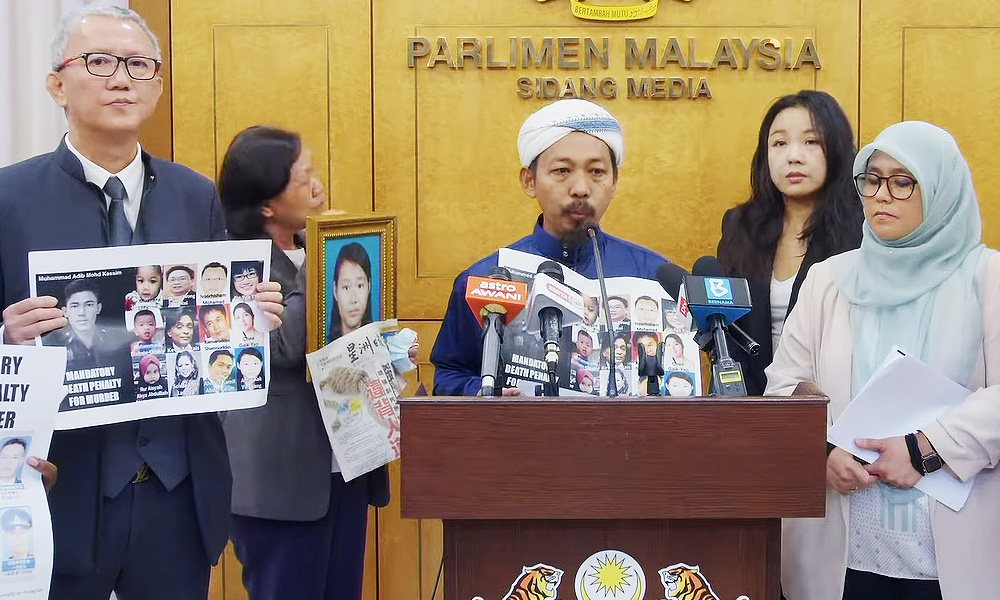
Taking over from Tan, Kedah Pembela Ummah chairperson Noor Hakimi Abd Halim argued that abolishing mandatory death could lead to retaliatory killings.
He cited how the father of three children who were murdered warned that he would kill the man responsible for his children's deaths if the perpetrator was let free.
He also claimed it would embolden murderers.
"If the mandatory death penalty is abolished, murderers will feel safe and would no longer be afraid to murder," he said.
Under the mandatory death penalty abolishment bill, judges still have the discretion to sentence those convicted of murder to hang.
However, judges may also choose to hand down an alternative sentence of 30 to 40 years imprisonment and whipping.
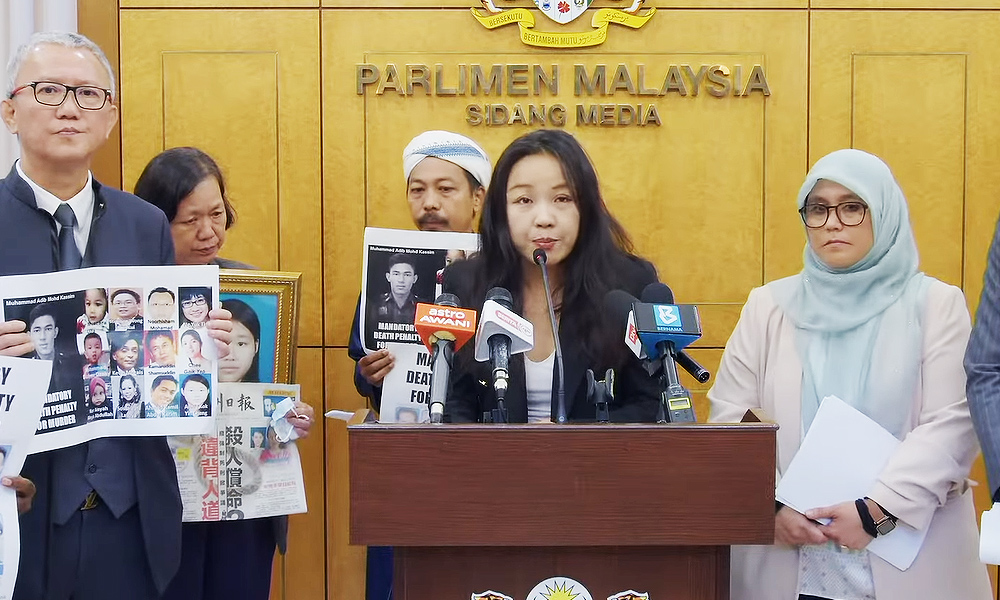
Lawyer Christina Teng argued that when given discretion, judges often choose not to hand down the death sentence.
She said even now, those charged with murder often get punished for culpable homicide or accidental killing instead.
"Killers are released this way," she said.
Not serious enough
As for the alternative prison sentence, Teng said those imprisoned can have their sentence reduced by one-third due to good behaviour and other remissions.
"A brutal killer who has raped and killed or robbed and killed premeditatively will get released this way; (30-40 years imprisonment) is not a serious enough punishment for a serious crime," she added.
Teng and the group then handed a memorandum protesting against abolishing the mandatory death penalty to Perikatan Nasional lawmakers Mas Ermieyati Samsuddin and Wan Ahmad Fayhsal Wan Ahmad Kamal.
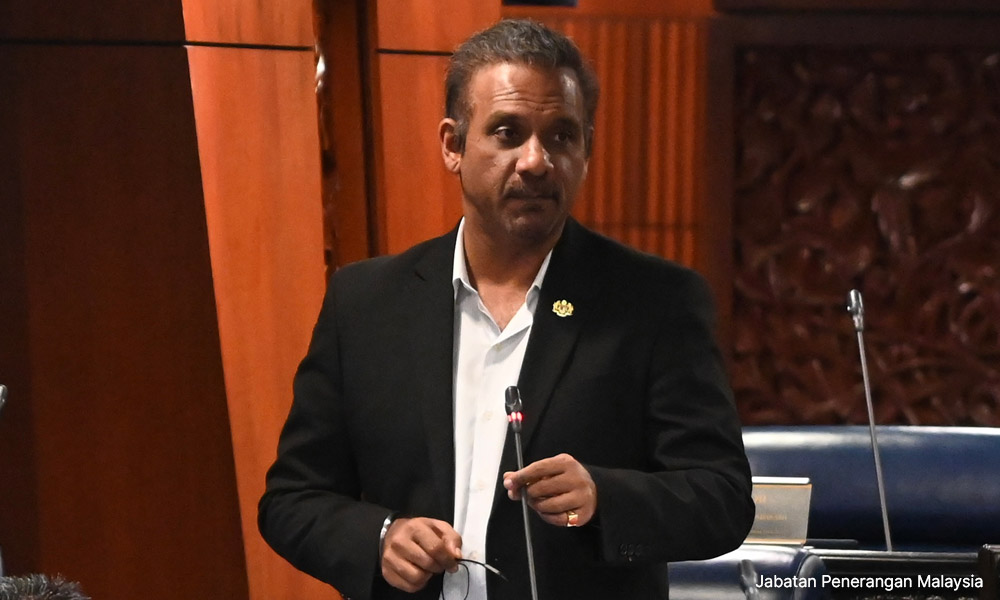
In response, Deputy Minister in the Prime Minister’s Department (Law and Institutional Reform) Ramkarpal Singh said he sympathises with victims and families who are affected.
Speaking in a press conference at the Parliament lobby after the passing of the abolition of the mandatory death penalty later today, he explained that the ministry had attempted to convince them that the death penalty is not an effective measure as it was thought to have been.
“We want to explore and look at other holistic measures to combat and reduce crime, particularly major and heinous crimes.
“To achieve that, we have to look at other ways of sentencing (the perpetrators).
“Perhaps the death sentence is not the answer to reducing such cases,” he told reporters.
/file/publisher-c1a3f893382d2b2f8a9aa22a654d9c97/2020/01/fa3738c8d9885a20459a2ad3757b1c03.jpg)
/file/publisher-c1a3f893382d2b2f8a9aa22a654d9c97/2021/06/d0ed969732f3786e62bb6095bda2f9ee.jpg)
/file/publisher-c1a3f893382d2b2f8a9aa22a654d9c97/2023/03/2df37d0609d338b5541f991524c02f7e.jpg)
/file/1327/b065d39ebcdfe798c3f5beba90e024d6.jpeg)


Report this comment
Are you sure you want to delete this comment?
This action cannot be undone.