




Protect Rohingyas in transit
Malaysia has been urged not to detain Burmese refugees but to assist them to relocate to a third country.
Malaysia has been urged not to detain Burmese refugees but to assist them to relocate to a third country.
The call was made by the Myanmar Ethnic Rohingya Human Rights Organisation Malaysia (Merhro), in response to a recent statement by the government that it does not recognise refugees.
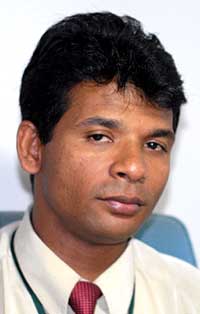 "The issue of refugees, especially Rohingyas, is not over. The people and the government should not close their eyes to the problem," said Merhro president Zafar Ahmead when met yesterday.
Last week, Foreign Minister Syed Hamid Albar said in Parliament that Malaysia is not a signatory to the 1951 United Nations (UN) Convention and 1967 Protocol, which protects the rights of refugees.
"Refugees have become a perennial problem for us...anybody who comes into the country without proper documentation will be considered illegal," Syed Hamid was quoted as saying in the New Straits Times .
One of several persecuted ethnic minorities in Burma, an estimated 12,000 Rohingyas are in the country.
They should not be categorised as illegal immigrants, said Zafar.
"We appeal to the government not to arrest them and place them in overcrowded facilities."
Rohingyas are more likely to be in limbo compared to other Burmese ethnic groups.
Although Muslims, they are not accepted for resettlement in Malaysia. The government does not recognise refugees as it is not a signatory to the convention.
In addition, entry to third countries is made harder due to their religion, said Zafar.
"We were told that developed countries are less favourable to accepting Muslims," he said.
In limbo
He said the government should provide some measure of protection for refugees, while their cases are being processed by the United Nations High Commissioner for Refugees.
"We merely ask for Malaysia to provide some protection for refugees until they are relocated to another country. Many refugees are in transit," said Zafar.
"We are not asking the government to ratify the refugee convention, but to be reasonable and to stop the detention," he added.
He said the conditions at the detention camps, including Semenyih and Lenggeng is appalling.
"There is not enough food. The prison cells are bare, with no mattress. People are made to do nude queues for checks. There is no medical care, no sanitation, even when people are sick."
"The ill treatment is the same for all detained refugees, even pregnant women or children," said Zafar.
Zafar estimated that 700 Rohingyas have been detained thus far this year, half of whom have been deported.
"They face death if they return. At the very least they would be jailed or be forced into hard labour," he said.


Are you sure you want to delete this comment?
This action cannot be undone.